 King County
 Asphalt Shingle Roofing Built for Sammamish Weather
Sammamish sits in the wetter, greener half of King County, tucked against the Cascade foothills and wrapped in mature tree cover. That combination is beautiful to live in and hard on a roof. The same marine-influenced air that moves through the greater Puget Sound region keeps Sammamish humid for much of the year, and the tree canopy around most neighborhoods here means shade, needle debris, and slower drying after every storm. Add a long, wet fall-through-spring stretch and you get conditions where an asphalt shingle roof either performs the way it's supposed to for two-plus decades, or it starts failing early because it wasn't installed with this climate in mind.
We install and repair asphalt shingle roofs for homeowners throughout Sammamish and the surrounding King County communities. This page covers what actually matters for a shingle roof in this specific environment — not generic roofing advice, but what we see and account for on Sammamish homes specifically.
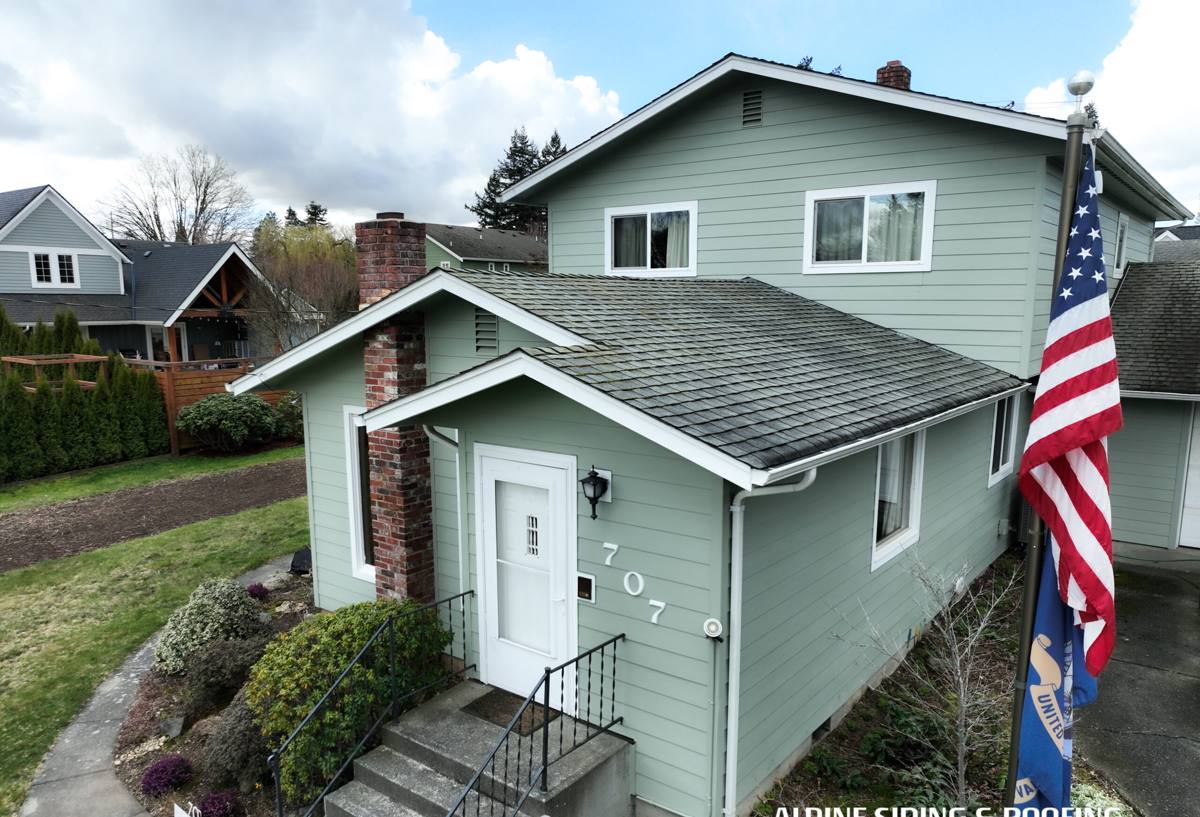
Why Sammamish Roofs Wear Differently Than You'd Expect
Asphalt shingles are rated and marketed on national averages — sun exposure in the Southwest, hail in the Midwest, wind on the coast. Sammamish doesn't match any of those profiles closely. What actually drives shingle wear here is moisture that lingers, not heat or storms that hit hard and pass.
Moss and Organic Growth
Tree-shaded lots, north-facing slopes, and long stretches of overcast, damp weather add up to a genuine moss season in Sammamish that can run for much of the year on the shadiest roof planes. Moss isn't just cosmetic. Its root structures work into the shingle mat, lift tabs at the edges, and hold water against the roof deck long after the rest of the roof has dried out. Left unaddressed for a few seasons, moss growth shortens shingle life noticeably and can lead to granule loss and soft spots.
Driving Rain and Wind-Driven Moisture
Storms moving through this part of King County often bring rain at an angle rather than straight down, especially during fall and winter systems. That matters at every transition point on a roof — valleys, sidewalls, chimneys, and skylights — where wind-driven rain can find gaps that a straight-down downpour never would. Flashing detail quality separates roofs that stay dry for 25 years from roofs that develop hidden leaks in year six.
Marine Air and Slow Drying
Humidity from the wider Puget Sound region keeps roof surfaces damp longer than in drier climates, which is part of why moss and algae get a foothold so easily here. Shingles that never fully dry out between rain events are more prone to granule loss and premature aging, particularly on north- and east-facing slopes that get the least sun.
What a Correct Asphalt Shingle Installation Involves Here
A shingle roof is a system, not just a layer of shingles nailed to plywood. In a climate like Sammamish's, the components underneath and around the shingles do as much work as the shingles themselves.
- Ice-and-water shield at vulnerable zones: Valleys, eaves, and roof-to-wall transitions get a self-adhering waterproof membrane underneath the shingles, not just felt paper.
- Synthetic underlayment across the field: A tear-resistant, water-shedding layer that outperforms old-style felt when a roof stays wet for extended periods, which is the norm here for months at a time.
- Proper nailing pattern and placement: Correct nail count and placement, in the manufacturer's nailing zone, is what keeps shingles from lifting in wind-driven rain and what keeps warranties valid.
- Balanced attic ventilation: Intake at the eaves and exhaust at the ridge, sized to the attic volume, so moisture from inside the house doesn't condense on the roof deck from below while rain sits on top from above.
- Metal flashing at every penetration and transition: Step flashing at sidewalls, counter-flashing at chimneys, and properly lapped valley metal or woven valleys done correctly — this is where most leaks actually originate, not in the open field of shingles.
- Starter strip and drip edge at all eaves and rakes: Small details that stop wind-driven rain from getting under the first course of shingles.
Skip any one of these and the roof may look fine for a year or two before a problem shows up as a stain on a ceiling or rot in the decking.
Signs a Sammamish Roof Needs Attention
Because moss and moisture damage build slowly, most Sammamish homeowners don't notice a problem until it's visible from the ground or shows up inside the house. Worth checking for, especially after the wetter months:
- Dark streaking or green-black growth on north-facing or shaded roof planes
- Granules collecting in gutters or at downspout outlets
- Shingle tabs that look curled, cupped, or lifted at the edges
- Soft or spongy spots when the roof is walked
- Daylight visible through the attic roof deck, or damp insulation below it
- Water stains on interior ceilings, especially near chimneys, valleys, or skylights
- Moss buildup thick enough to hold visible water after a dry spell
Any one of these on its own may be minor. Several together usually mean it's time for a real inspection rather than a wait-and-see approach.
Repair, Moss Treatment, or Full Replacement — How We Decide
Not every roof problem in Sammamish needs a full tear-off. We look at the age of the roof, how the damage is distributed, and what's happening at the deck level before recommending anything.
| Situation | Typical Approach | What We're Checking |
|---|---|---|
| Light-to-moderate moss, shingles otherwise sound | Careful moss removal plus treatment, not pressure washing | Granule loss under the moss, shingle flexibility, deck firmness |
| Isolated leak near a valley, chimney, or skylight | Targeted flashing repair | Whether the flashing detail was ever done correctly to begin with |
| Roof under 12-15 years old with scattered issues | Section repair or partial re-roof | Matching existing shingle line, remaining life on unaffected sections |
| Roof approaching or past its rated lifespan, widespread wear | Full replacement | Deck condition, ventilation setup, code requirements for the new install |
Pressure washing moss off a roof is a common mistake — it strips granules and can drive water under shingles rather than solving the underlying problem. We treat moss with methods that kill growth without damaging the shingle surface, and we're upfront when a roof is far enough along that treatment is just delaying an inevitable replacement.
Shingle Options and Honest Trade-Offs
We install quality architectural (laminate) asphalt shingles as our standard for Sammamish homes. They give better wind resistance and a heavier, more dimensional look than older 3-tab shingles, and the added mass helps them shed water at valleys and edges more reliably in a climate where water sits around longer than it does elsewhere.
We steer most Sammamish homeowners away from lighter-weight 3-tab shingles for anything but budget-driven, short-horizon situations. It's not that 3-tab shingles are defective — it's that in a climate with this much sustained moisture exposure, the thinner profile and lower wind rating give you less margin, and the cost difference over the life of the roof rarely favors the cheaper option once you account for earlier replacement.
Algae-resistant (often labeled "AR") shingles, which use copper-infused granules to slow blue-green algae staining, are worth the modest upcharge on most Sammamish roofs given the moisture and shade most lots deal with. We'll walk through specific manufacturer lines, warranty terms, and color options during your estimate rather than pushing one brand as a blanket answer — the right shingle depends on your roof's exposure, pitch, and how long you plan to stay in the home.
Our Process, Start to Finish
1. On-Site Inspection
We walk the roof (weather permitting) and check the attic from inside, looking at deck condition, ventilation, flashing, and the extent of any moss or granule loss. You get a straight assessment, not a sales pitch.
2. Written Estimate
A clear scope of work and price, spelling out underlayment type, flashing approach, ventilation changes if needed, and shingle selection — so there are no surprises once work starts.
3. Scheduling Around Sammamish Weather
Roofing is weather-dependent work, and we plan installation windows around forecasts to avoid tearing off a roof section into an incoming system. Tear-offs are staged so exposed decking is never left uncovered overnight.
4. Installation
Deck inspection and any needed repair, ice-and-water shield at vulnerable zones, synthetic underlayment, new flashing at every penetration and transition, correctly nailed shingles, and ventilation balanced for the attic.
5. Cleanup and Final Walkthrough
Magnetic sweep for stray nails, debris removal, and a walkthrough so you can see the finished work and ask questions before we consider the job done.
What Drives Cost on a Sammamish Asphalt Shingle Roof
Every roof is different, and we won't quote a number without seeing yours, but these are the factors that most affect price locally:
| Factor | Why It Matters Here |
|---|---|
| Roof pitch and complexity | Steeper, multi-plane roofs with more valleys mean more flashing work and labor time |
| Tear-off vs. layover | Most Sammamish homes need a full tear-off given moisture history under older layers; layovers trap moisture and aren't something we recommend here |
| Deck condition | Trapped moisture from moss or old flashing failures sometimes means replacing sections of decking, which isn't visible until tear-off |
| Ventilation upgrades | Older Sammamish homes often have undersized or unbalanced attic ventilation that's worth correcting during a re-roof |
| Shingle tier | Standard architectural vs. algae-resistant vs. premium heavyweight lines |
| Access and tree cover | Mature landscaping common on Sammamish lots can affect staging, debris removal, and crew access |
Why Hire a Crew That Already Works in Sammamish
Roofing crews that mostly work drier, more open parts of the country tend to under-spec ventilation and underlayment for a climate like this one, because the failures those choices cause don't show up for a few years. A crew working King County roofs regularly sees what actually fails here — which flashing details leak, which shingle tiers hold up under sustained moss pressure, and which attics need more airflow than the minimum code requires.
We're familiar with the permitting and inspection expectations for King County jurisdictions, and we size ventilation and material choices around what a Sammamish roof genuinely deals with over a Pacific Northwest winter, not around a national average spec sheet. That local pattern-recognition is the difference between a roof that needs attention again in eight years and one that goes the full distance of its rated life.
If you're seeing moss buildup, granule loss, or you're just not sure how much life is left in your current roof, we're happy to take a look. Fill out the form below for a free, no-pressure estimate — we'll give you a straight read on what your roof actually needs.