 King County
 Exterior Contracting in Bothell, Washington
Bothell sits in one of the greener, wetter corners of King County, where tree cover, elevation changes, and proximity to lakes and wetlands all combine to keep exterior surfaces damp for a large part of the year. Homes here range from older single-story ramblers to newer construction in the neighborhoods that have filled in around the Highway 522 corridor, and almost all of them share the same enemy: moisture that doesn't leave in a hurry. Whether you're dealing with siding that's starting to look tired, a roof that's overdue for attention, windows that fog or leak air, or a deck that's gone slick and gray, the pattern in Bothell is consistent — problems start small and stay hidden until they aren't.
King County Exterior works throughout King County, and Bothell is a regular part of our service area. We bring the same standards here that we apply everywhere else: no shortcuts on prep work, no products chosen for price alone, and a straight answer about what your home actually needs versus what would just be convenient to sell.
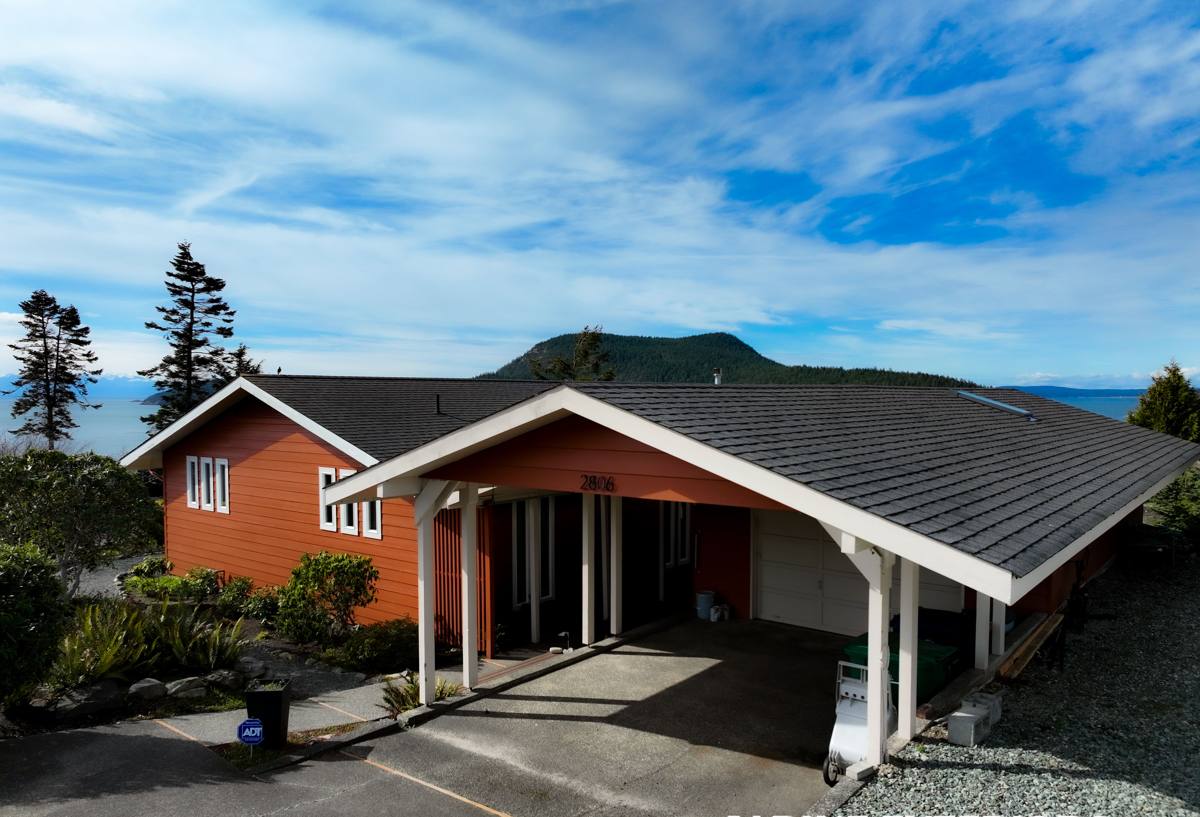
What the Bothell Climate Does to a House
The regional climate context that matters most here is simple to state and easy to underestimate: long stretches of driving rain, humidity that lingers under tree canopy and in shaded north-facing walls, and a moss season that can run most of the year in the right (or wrong) conditions. Add in the occasional wind event pulling moisture in off the Sound and you get a set of conditions that punishes any exterior material with weak points.
Moss and Organic Growth
Bothell's mature landscaping is part of what makes it a desirable place to live, but shade and moisture together are exactly what moss, algae, and lichen need to take hold. On roofing, moss lifts shingles and holds water against the deck below. On siding, it traps moisture against the substrate and accelerates rot in anything that isn't moisture-resistant by design. On decks, it turns walking surfaces slick and starts breaking down wood fiber from the surface in.
Sustained Rain, Not Just Occasional Storms
What separates this region from places that get occasional heavy rain is duration. A roof or wall system here doesn't need to survive one bad storm — it needs to shed water reliably for weeks at a stretch, season after season, without ever fully drying out in between. That's a different engineering problem than short, intense rain events, and it's why generic "weatherproof" claims don't tell you much. What matters is how a product performs under sustained wetting, not a single rating on a spec sheet.
Humidity and Temperature Swings
Even without extreme heat or cold, King County's steady humidity plus seasonal temperature swings create ongoing expansion and contraction in exterior materials. Products that aren't dimensionally stable — meaning they swell, shrink, or warp with moisture and temperature changes — develop gaps, cracked caulk lines, and paint failure faster here than in drier climates.
Siding: Why We Only Install James Hardie
King County Exterior installs James Hardie fiber cement siding exclusively. We don't offer vinyl, LP SmartSide, Cemplank, Allura, primed spruce, or cedar, and that's a deliberate professional standard, not an oversight or a lack of options.
Vinyl siding is inexpensive and low-maintenance in dry climates, but it's not dimensionally stable — it expands and contracts significantly with temperature, and in a climate with constant moisture cycling, seams and fastening points are where water finds a way behind the panel. Once water gets behind vinyl, it has nowhere good to go, and by the time staining or warping shows on the surface, moisture damage to the wall assembly underneath may already be underway.
Wood-based products — cedar, primed spruce, and engineered wood siding like LP SmartSide — all rely on a factory or field-applied coating to keep moisture out. That coating is the entire defense. In a region where surfaces stay damp for extended periods and moss holds water directly against the material, any coating failure, however small, gives moisture a foothold. Wood-based products also need more frequent recoating and caulk maintenance to hold that line, which is a real ongoing cost most homeowners underestimate when they compare upfront price alone.
James Hardie fiber cement is non-combustible, doesn't support rot the way wood-based products can, and holds its factory-applied ColorPlus finish far longer than field-applied paint. It's also dimensionally stable across the temperature and humidity swings common here, which means fewer failure points at seams, joints, and fastener locations over the life of the siding. Hardie's HZ5 product line in particular is engineered for climates like ours — colder, wetter, and more humid than the baseline HZ10 line built for milder regions.
Comparing Siding Options for This Climate
| Material | Moisture Behavior | Maintenance | Why It Matters in Bothell |
|---|---|---|---|
| Vinyl | Expands/contracts; water can migrate behind panels at seams | Low, but no repair once warped or cracked | Sustained rain finds gaps over time |
| Cedar / Primed Spruce | Coating-dependent; wood beneath is rot-prone once compromised | High — recoating and caulk on a cycle | Moss and shade accelerate coating failure |
| LP SmartSide / Cemplank / Allura | Engineered wood or fiber cement alternatives; coating and edge-sealing still matter | Moderate | Installation sensitivity is high; errors show up as moisture intrusion |
| James Hardie Fiber Cement | Non-combustible, dimensionally stable, factory-finished | Low — occasional wash, no recoating cycle | Built for sustained wet climates; HZ5 line matches our region |
Roofing Built for a Long Moss Season
Roofing work in Bothell has to account for moss and organic debris more than it does in drier parts of the state. We look at ventilation, underlayment quality, and flashing details as much as the shingle itself, because a roof that traps moisture under moss growth will fail from underneath long before the shingles themselves wear out. Proper attic and roof ventilation matters here specifically because it helps roof decking dry out between rain events instead of staying saturated, which is one of the biggest differences between a roof that lasts its full rated life and one that doesn't.
We also pay close attention to valleys, penetrations, and any place two roof planes meet, since those are the spots where sustained rain — as opposed to a single storm — eventually finds a way in if flashing wasn't detailed correctly the first time.
Windows: Sealing Out Persistent Moisture
Older homes in the Bothell area often still have original or early-replacement windows that were never built with today's sealing and glazing standards. In a climate where wind-driven rain is common and humidity stays elevated for long stretches, worn window seals don't just cost you on heating bills — they let moisture into wall cavities around the window frame, which is a slower and more expensive problem than the draft itself. Replacement windows done right start with correct flashing and integration into the wall's water management system, not just a new unit dropped into an old opening.
Decks: Standing Up to Rain and Shade
Decks take a direct hit from Bothell's climate because they're horizontal — water sits on them instead of running off a vertical wall. Combine that with shade from mature trees and you get surfaces that stay damp longer, grow moss faster, and, if built from wood without proper spacing and drainage, start trapping moisture between boards and joists where you can't see it. Composite decking handles this cycle better than untreated wood in most cases, but the details underneath — proper joist spacing, flashing where the deck meets the house, and drainage that actually moves water away from the structure — matter more than the decking material itself.
How We Approach a Bothell Project
- On-site assessment that looks at moisture history, shade exposure, and existing moss or algae growth, not just visible surface damage
- Honest scoping — if a small area needs repair rather than full replacement, we say so
- James Hardie fiber cement siding installed to manufacturer spec, including correct fastening, flashing, and joint treatment for our climate
- Roofing work that accounts for ventilation and moisture drying time, not just shingle replacement
- Window installation integrated into the wall's water management, not just unit swaps
- Deck work that addresses drainage and structure, not just surface boards
- Clear, plain-English explanations of what we found and why we're recommending a given fix
Why a Local Crew Matters
Exterior work in King County isn't generic exterior work. A crew that mostly works in drier regions of the state, or that's used to shorter rainy seasons, can miss the details that matter here — the ventilation gap that keeps a roof deck dry, the flashing detail that keeps wind-driven rain out of a wall assembly, the drainage plane that keeps moisture from tracking behind siding during a long wet stretch. We work throughout King County and see these same conditions repeatedly, which means we're not guessing at how a product or installation detail will hold up locally — we've watched it play out.
Signs It's Time to Call
| What You're Seeing | What It Often Means |
|---|---|
| Moss buildup on roof or siding that keeps coming back | Moisture is being retained longer than the surface can dry |
| Soft spots or discoloration on siding, especially near ground level or under eaves | Possible moisture intrusion behind the surface material |
| Drafts or fogging between window panes | Seal failure, often paired with moisture entering the frame area |
| Slick, dark, or spongy deck boards | Organic growth and moisture retention breaking down the wood surface |
| Paint or coating failure on wood siding or trim | Coating can no longer keep pace with moisture cycling |
Get a Free, No-Pressure Estimate
If you're weighing a siding, roofing, window, or deck project in Bothell, we're happy to take a look and give you a straight assessment — what's actually going on, what your real options are, and what we'd recommend if it were our own house. There's no pressure and no cost to have us out. Fill out the form below and we'll get in touch to schedule a time.