 King County
 What West Seattle's Climate Does to a Home's Exterior
West Seattle sits close enough to the water that homes here take on a different set of stresses than houses further inland in King County. The combination of salt-laden air off the Sound, driving wind-blown rain, and a long, damp shoulder season adds up over the years. Add in the region's extended moss and algae season — anywhere shade and moisture linger on a north- or west-facing wall, roof plane, or fence line — and you get exteriors that age faster than the manufacturer's brochure photos suggest, especially if the original materials or installation weren't suited to it.
None of this is exotic weather. It's just persistent. Wood trim swells and shrinks with every wet-dry cycle. Caulk joints open up. Paint film chalks and peels a few years sooner than it would in a drier climate. Moss gets a foothold on north-facing roof slopes and low-airflow siding and quietly holds moisture against the substrate long after a storm has passed. A home built or re-sided without that reality in mind will show it within five to ten years — sometimes sooner.
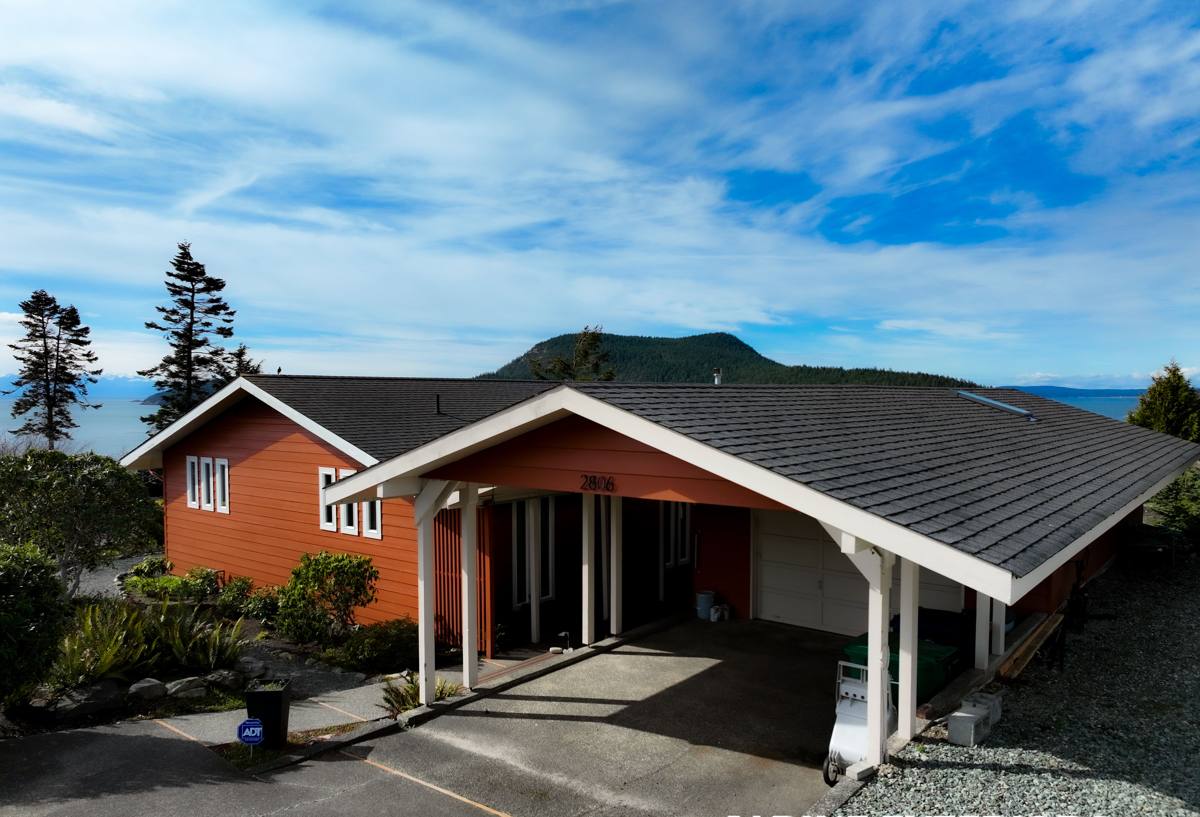
Siding in West Seattle: Why We Only Install James Hardie
We install James Hardie fiber cement siding exclusively. We don't install vinyl, LP SmartSide, Cemplank, Allura, primed spruce, or cedar lap. That's not a marketing position — it's a standard we hold because of what we've seen happen to the alternatives on homes exposed to this kind of weather.
Salt Air and Moisture
Salt air accelerates corrosion on fasteners and metal trim, and it's tough on any siding product with an engineered-wood or organic-fiber core, because those materials rely on their factory coating staying fully intact to keep moisture out. Once that coating is compromised — a scratch, a poorly sealed cut end, a nail that wasn't set right — moisture works its way in and the core material can swell, delaminate, or soften. Vinyl doesn't rot, but it flexes and can warp or crack under UV exposure and temperature swings, and it doesn't hold paint if a homeowner ever wants to change the color.
Moss, Algae, and a Long Wet Season
Fiber cement doesn't feed mold or fungal growth the way wood-based products can, because there's no organic material in the board for spores to consume. That matters on shaded elevations and under roof overhangs where West Seattle's climate keeps humidity high for weeks at a stretch. James Hardie's ColorPlus factory finish is also baked on and warranted against fading and peeling, which means less repainting over the life of the siding — a real advantage in a climate where exterior paint jobs don't hold as long as they do in drier parts of the country.
What We Ask Homeowners to Weigh
James Hardie costs more upfront than vinyl and is comparable to or slightly more than engineered wood siding. It's heavier, requires specific fastening and clearance details, and needs a crew that installs it correctly — gaps, flashing, and caulk joints matter as much as the board itself. We think that trade-off is worth it on homes in this climate: a non-combustible, dimensionally stable product with a strong transferable warranty and decades of real-world performance in wet coastal conditions.
Roofing for West Seattle Homes
Roofs here deal with sustained wet weather more than they deal with extreme heat or heavy snow load. The biggest threats are moss buildup on shaded or low-slope sections, wind-driven rain finding its way under poorly sealed flashing, and gutters that can't keep up during a heavy fall or winter system. We look closely at flashing details around chimneys, skylights, and valleys — that's where the vast majority of West Seattle roof leaks actually start, not in the open field of shingles. Proper attic ventilation also matters more here than homeowners expect, since trapped moisture from below can do as much damage to a roof deck as rain from above.
Common Roofing Signs Worth a Look
- Moss or dark streaking concentrated on north-facing or shaded slopes
- Granule buildup in gutters or downspouts
- Soft spots or sagging in the roof deck when walked
- Daylight or staining visible in the attic near valleys or penetrations
- Curling, cracked, or missing shingles after a windstorm
Windows: Sealing Out Wind-Driven Rain
Older single-pane or early dual-pane windows in West Seattle homes tend to show their age through drafts, condensation between panes, and wood or vinyl frames that have started to warp or rot at the sill. Because storms here often come with sustained wind alongside rain, window and door flashing has to be installed correctly, not just caulked over — caulk alone is a maintenance item, not a water barrier. When we replace windows, we pay close attention to head flashing and sill pan details so water is directed out and away from the wall assembly, not just sealed at the surface. Well-installed, properly rated windows also cut noise from wind and traffic and reduce the heating load during the long cool season, which matters for comfort as much as for efficiency.
Decks Built for Pacific Northwest Weather
A deck in this climate spends most of the year wet, shaded, or both — and that combination is exactly what breaks down poorly built or poorly maintained decking fastest. Ledger board attachment and flashing are the details that matter most for keeping water out of the house structure itself; framing and fastener corrosion resistance matter for how long the deck stands up on its own. Composite decking has become popular here because it doesn't need annual staining or sealing and resists the moss and mildew that untreated or under-maintained wood decks pick up quickly in shaded yards. Traditional wood decking still has its place for homeowners who prefer the look and are committed to the upkeep, but it needs real maintenance — cleaning, sealing, and periodic board replacement — to hold up through repeated wet seasons.
Why a Local Crew Matters
Exterior work in West Seattle isn't the same job as exterior work on the dry side of the state, or even in some of the less exposed pockets of King County. A crew that works this area regularly knows which elevations take the worst weather, where moss problems tend to start, and how local permitting and inspection processes actually run. That local knowledge shows up in small decisions — flashing details, fastener spacing, ventilation choices — that don't show up on a spec sheet but make the difference between an exterior that holds up for decades and one that needs attention again in five years.
Comparing Common Siding Materials
| Material | Moisture Resistance | Maintenance | Typical Lifespan |
|---|---|---|---|
| James Hardie Fiber Cement | Excellent — non-organic core, factory-sealed finish | Low — occasional wash, no repainting for years | 30-50+ years |
| Vinyl | Good, but can warp/crack over time | Low, but can't be repainted; fading is permanent | 20-30 years |
| Engineered Wood (LP SmartSide, etc.) | Moderate — depends on coating integrity | Moderate — cut ends and damage need prompt sealing | 20-30 years with diligent upkeep |
| Cedar / Primed Spruce | Fair — organic material, susceptible to rot and moss | High — regular staining/painting, moss treatment | 15-25 years, shorter in shaded/wet areas |
What Drives Project Cost
Every home is different, but a few factors consistently move the price on siding, roofing, window, and deck projects in this area:
| Factor | Why It Matters |
|---|---|
| Extent of existing damage or rot | Hidden sheathing or framing repair adds labor and material before new exterior work can go on |
| Home size and wall/roof complexity | More corners, valleys, and penetrations mean more flashing detail and labor time |
| Access and site conditions | Steep lots, tight side yards, or limited street access common in West Seattle can affect staging and labor |
| Product line and finish selected | Hardie's HZ5 products and premium ColorPlus finishes carry a higher material cost than base options |
| Window count and configuration | Larger openings, custom shapes, or structural changes add cost beyond standard replacement |
What to Look for When Hiring an Exterior Contractor
- Manufacturer certification for the specific siding product being installed
- A written scope that details flashing, house wrap, and fastening methods — not just "siding replacement"
- Proper licensing, bonding, and insurance for work in Washington State
- Willingness to explain trade-offs between materials rather than pushing one product for every home
- References or completed work you can actually see in the local area
- A clear warranty on both materials and workmanship, in writing
Getting Started
If you're weighing a siding replacement, a roof that's showing its age, drafty windows, or a deck that needs more than another round of sealant, we're glad to take a look and talk through what actually makes sense for your home and your budget. We offer free, no-pressure estimates for homeowners in West Seattle and throughout King County — use the form below to get started.