 King County
 Exteriors Built for Shoreline's Puget Sound Climate
Shoreline sits right up against the water in King County, and that location shapes everything about how a home's exterior ages here. Salt-laden air off Puget Sound works its way into fasteners, trim joints, and anything with a weak coating. Driving rain off the Sound doesn't fall straight down — it comes in sideways during winter storms and finds every gap in flashing, siding laps, and window trim. And the long stretch of gray, wet months between fall and spring gives moss, algae, and mildew months of uninterrupted growing time on roofs, decks, and north-facing siding. None of this is unique to Shoreline, but the combination of coastal exposure and heavy tree cover in older neighborhoods makes the wear pattern here a little more aggressive than you'd see further inland in King County.
We work on homes throughout Shoreline and the surrounding area, and the exterior problems we get called out for are consistent: siding that's absorbed moisture and started delaminating or bubbling, roofs with moss growth pushing under shingles, single-pane or failed-seal windows fogging up, and decks that have gone gray and soft faster than the homeowner expected. Understanding why those failures happen is the first step in specifying materials and installation details that actually hold up.
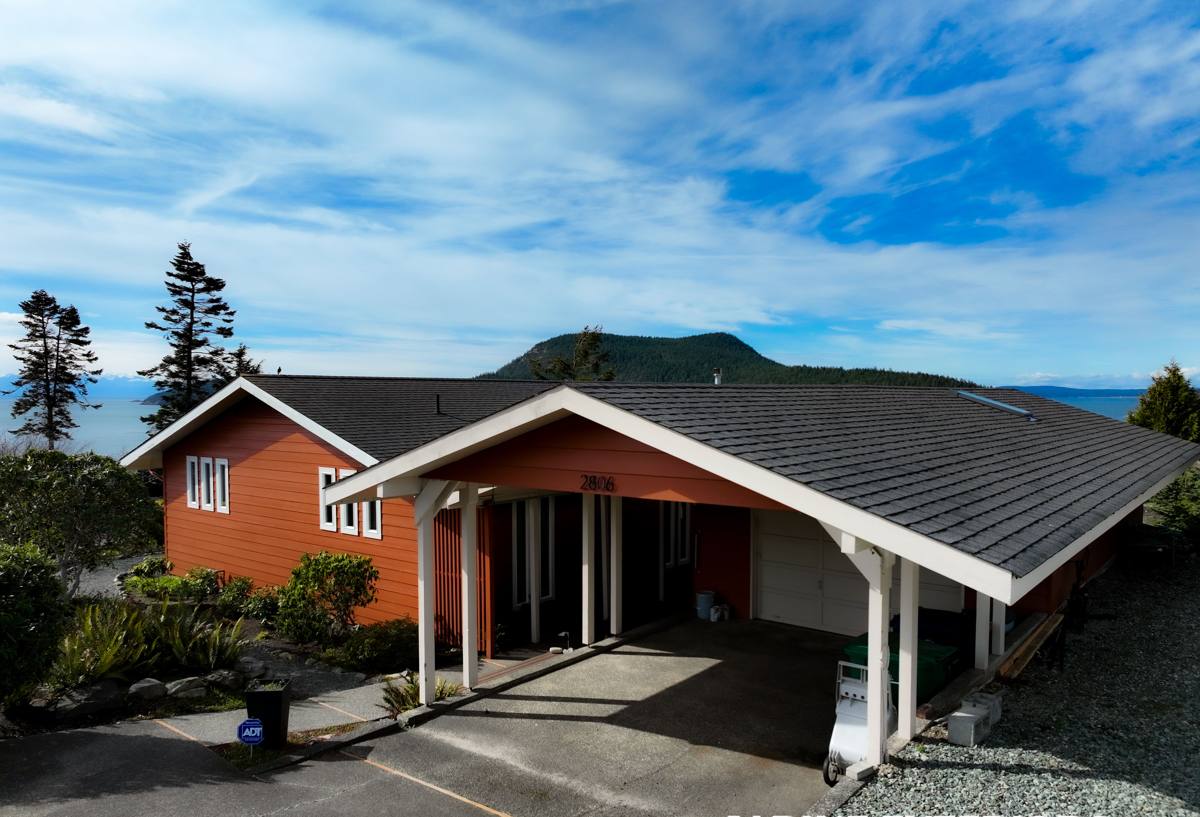
Siding That Can Handle Salt Air and Standing Moisture
Why We Only Install James Hardie Fiber Cement
We made a deliberate decision to install only James Hardie fiber cement siding, and we don't install LP SmartSide, vinyl, Cemplank, Allura, primed spruce, or cedar. That's not a knock on every homeowner who has one of those products on their house — it's a reflection of what we've seen hold up over time in this specific climate, and what we're willing to put our name behind.
Vinyl siding is affordable and low-maintenance in a dry climate, but it expands and contracts with temperature swings, and in a marine environment the joints and seams are a long-term weak point for wind-driven rain intrusion. It also softens and can warp near heat sources, and it's not repairable in the way a fiber cement plank is — a damaged section usually means a full panel replacement, and matching faded color years later is difficult.
Engineered wood products like LP SmartSide use treated wood strand technology, and the treatment has genuinely improved moisture resistance over older wood siding. But it's still a wood-based product, which means the failure mode when a seal or caulk joint fails is swelling, delamination at cut edges, and eventually rot — and in a climate with this much sustained rain and humidity, cut edges and end joints need to be perfectly sealed and maintained for the life of the product, which is a lot to ask over decades of exposure.
Primed spruce and cedar are traditional choices with real appeal, but raw or lightly primed wood needs an owner who stays on top of repainting and caulking on a strict schedule. Miss a cycle or two in a climate this wet, and moisture gets behind the paint film and starts breaking down the wood itself, especially at the bottom courses closest to grade and around window and door trim.
James Hardie fiber cement is non-combustible, dimensionally stable, and doesn't absorb water the way wood-based products do. The ColorPlus factory-applied finish is baked on under controlled conditions rather than field-painted, which gives more consistent coverage and a longer color life than site-applied paint, particularly in a climate where field painting has a short weather window. Hardie also engineers specific product lines (HZ5 and similar) for climate zones, which matters in a region that cycles through freeze-thaw, heavy rain, and salt exposure in the same year. It's backed by a strong transferable warranty, but the warranty only means something if the installation is done to spec — proper clearances, correct fastening, and sealed joints are what actually keep water out over 30-plus years, not just the material itself.
What Correct Installation Looks Like
- Minimum clearance from grade, decks, and roof lines so splash-back and standing water don't sit against the bottom edge
- Rain screen or proper drainage plane behind the siding so any moisture that does get past the surface can drain and dry
- Factory-cut and sealed edges wherever possible, with field cuts back-primed and caulked per manufacturer spec
- Corrosion-resistant fasteners appropriate for a marine-influenced climate
- Correctly flashed and sealed transitions at windows, doors, and roof intersections
Roofing for a Wet, Mossy Climate
Roofs in Shoreline take a beating from the same conditions that stress siding, plus the added weight and moisture retention of moss and organic debris. A roof surface that stays damp for weeks at a time under a moss mat ages faster than the manufacturer's rated lifespan would suggest, and moss growth at shingle edges and around penetrations is one of the most common ways water finds its way under the roofing material and into the deck below.
Good roofing work here isn't just about the shingle or membrane you choose — it's about the details that keep the roof shedding water instead of holding it: proper underlayment, correctly lapped and sealed flashing at every valley and penetration, adequate attic ventilation to control condensation from the inside, and gutter systems sized and pitched to actually move the volume of water a Puget Sound winter delivers. We look at all of that together rather than treating a roof replacement as just swapping shingles.
Windows That Actually Keep Wind-Driven Rain Out
Older single-pane and early dual-pane windows in this area often have two separate problems: failed seals that let moisture fog the glass, and poor perimeter flashing that lets wind-driven rain get behind the window frame into the wall cavity — which is a much more expensive problem than a foggy pane. When we replace windows, we're paying as much attention to how the new unit is flashed and sealed into the rough opening as we are to the window itself, because in a climate with this much sideways rain, that installation detail is often what separates a window that performs for decades from one that leaks within a few years.
Decks Built to Handle Shade, Moisture, and Moss
Shoreline's tree cover is part of what makes the neighborhood attractive, but shaded decks stay damp far longer after a rain than decks in full sun, which accelerates wood decay, encourages moss and algae growth on the walking surface, and makes fasteners and hardware corrode faster. We build and repair decks with attention to ledger flashing (a common source of hidden rot where the deck meets the house), proper spacing between boards for drainage and airflow, and hardware rated for wet, coastal conditions. For homeowners who want to get off the repaint-and-reseal cycle entirely, composite decking is worth a look — it doesn't eliminate the need for cleaning moss and debris off the surface, but it removes the wood rot and refinishing burden that shaded, wet decks are especially hard on.
Why a Local Crew Makes a Real Difference
Exterior work in King County isn't generic — permitting requirements, typical construction types in older Shoreline neighborhoods, and the specific way weather hits this stretch of the Sound all factor into how a job should be done. A crew that works this area regularly knows what to expect from inspectors, knows which details fail first on local homes, and isn't guessing at clearances and flashing details that matter more here than they would in a drier climate. That local knowledge shows up in fewer callbacks and fewer surprises once the siding or roof has been through its first real winter.
How We Approach a Shoreline Project
Every project starts with an honest look at the existing exterior — where moisture has already gotten in, which details failed, and what that tells us about how to detail the replacement differently. We walk the homeowner through material options, realistic cost ranges, and what maintenance (if any) the finished product will require, then handle the work with attention to the flashing, sealing, and drainage details that actually determine how long the job lasts. We're not interested in a fast install that looks good for the first year and then needs rework — we're building for the climate this house actually sits in.
What Drives Exterior Project Cost in Shoreline
| Factor | Why It Matters Here |
|---|---|
| Home size and wall/roof complexity | More corners, valleys, and penetrations mean more flashing detail and labor time |
| Existing moisture damage | Rot or delamination found during tear-off often needs repair before new material goes on |
| Material choice | Fiber cement, composite decking, and quality roofing systems cost more upfront but reduce long-term maintenance in a wet climate |
| Site access and tree cover | Shaded, tight-access lots common in Shoreline can add setup and cleanup time |
| Scope of work | Bundling siding, roofing, windows, or decks in one project can reduce overlapping site costs versus separate jobs |
Maintenance That Actually Matters in This Climate
- Clear moss and debris from roof valleys and gutters at least once a year, ideally before the heaviest fall rains
- Keep gutters and downspouts flowing freely so water doesn't back up against roof edges or siding
- Rinse moss and algae off shaded siding and deck surfaces rather than letting it build up over multiple seasons
- Check and re-caulk any exposed trim, window, and door joints periodically, even on low-maintenance materials
- Watch for soft spots or discoloration at deck ledgers and the bottom courses of siding closest to grade
If you're weighing a siding, roofing, window, or deck project for a Shoreline home, we're glad to take a look and talk through what your specific home is facing. Reach out for a free, no-pressure estimate — there's no obligation, and it's the fastest way to get a straight answer about condition, options, and realistic cost.