 King County
 Exterior Work Built for Sammamish's Climate
Sammamish sits up on the plateau east of Lake Sammamish, tucked against the foothills that catch a lot of the weather rolling in off Puget Sound. Homeowners here deal with a specific combination of conditions: a long wet season that runs from fall through spring, driving rain that comes in sideways during winter storms, and enough shade from mature trees and hillside topography to keep moss and moisture pressure high on north- and west-facing walls and rooflines for much of the year. It's not the harshest climate in the country, but it is a persistent one, and persistent moisture is exactly what wears down exterior materials that aren't built for it.
King County Exterior works throughout King County, and Sammamish is one of the areas where we see the clearest pattern: houses that were sided, roofed, or trimmed with the wrong material for this climate start showing problems years before they should. That's the whole reason this page exists — to walk through what your home's exterior is actually up against here, and how we approach siding, roofing, windows, and decks to hold up to it.
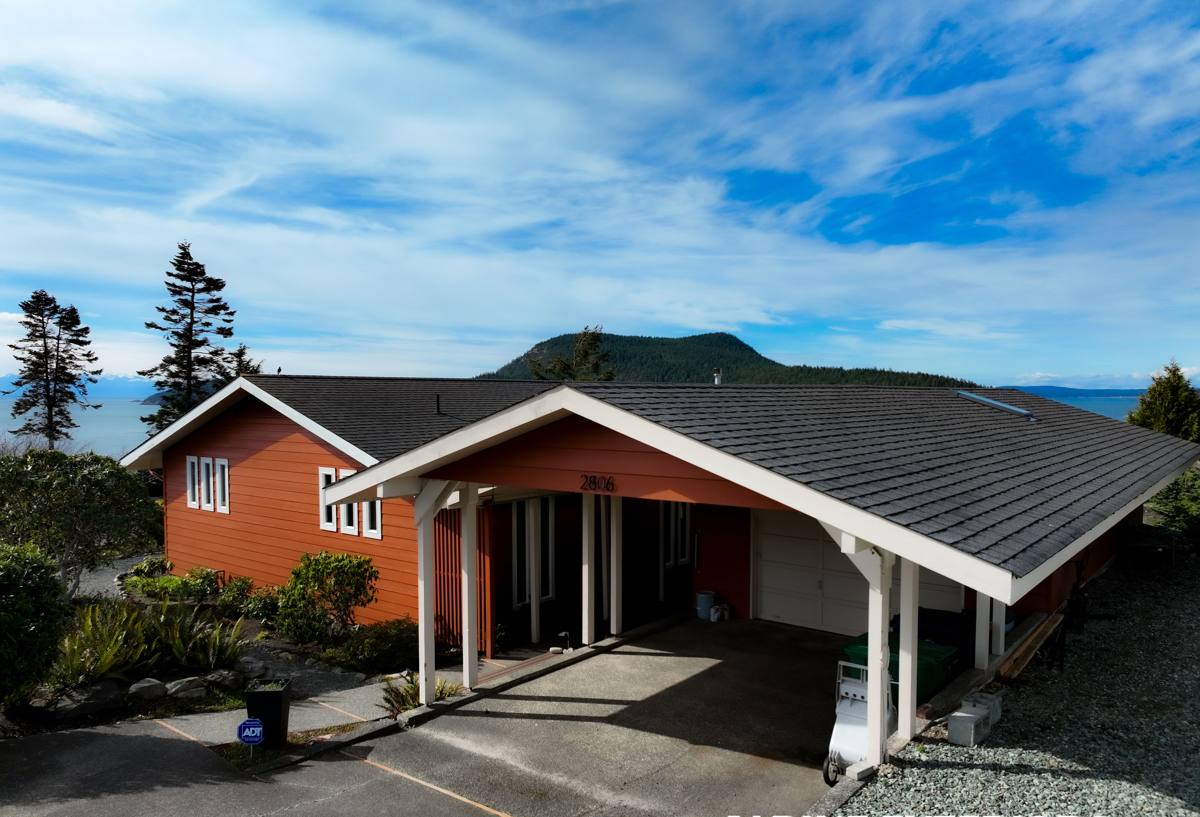
What the Local Climate Does to a House
Moisture and Moss
Sammamish gets a lot of shade from tree cover and the terrain itself, which is great for the neighborhood feel but tough on exteriors. Shaded, north-facing wall sections and roof planes stay damp longer after every rain event, and that extended dampness is exactly what moss, algae, and mildew need to establish. Once moss gets a foothold on a roof or siding surface, it holds moisture against the material even longer, which accelerates whatever degradation was already happening underneath.
Driving Rain and Wind-Driven Water
Storms coming through the Sound don't always fall straight down. Wind-driven rain gets pushed sideways into wall assemblies, especially at corners, around window and door openings, and at any point where two materials meet. Homes exposed on hillside lots or open yards catch more of this than sheltered lots, but almost every Sammamish property gets some degree of it during winter storm systems.
Temperature Swings and Seasonal Cycling
The Pacific Northwest doesn't have extreme heat or cold most years, but it does have a lot of freeze-thaw cycling in the shoulder seasons, plus repeated wet-to-dry swings. Materials that absorb moisture and then dry out over and over tend to swell, shrink, warp, or crack over time. That cycling is slow and unglamorous, which is exactly why it gets ignored until the damage shows up as a real problem.
Siding: Why We Only Install James Hardie
King County Exterior installs James Hardie fiber cement siding exclusively. We don't install vinyl, LP SmartSide, Cemplank, Allura, primed spruce, or cedar. That's a deliberate standard, not a limitation of what we're capable of installing — we've made a professional judgment about what holds up on homes in this climate, and we build our business around it.
The Trade-Offs With Other Materials
Vinyl siding is affordable and low-maintenance in dry climates, but it expands and contracts with temperature swings, can crack in impact events, and doesn't offer the same fire resistance or long-term color stability that fiber cement does. Wood products like cedar or primed spruce look great when new, but they're organic material in a climate that stays damp for months at a time — that means ongoing maintenance (painting, caulking, moisture checks) to keep rot and pest issues at bay, and if that maintenance schedule slips even one season, the damage can start before anyone notices. Engineered wood siding like LP SmartSide holds up better than raw wood but is still a wood-based product with edge-sealing and installation sensitivities that matter a lot in a wet climate. Other fiber cement brands like Cemplank or Allura are chemically similar to Hardie, but we've standardized on James Hardie specifically for its ColorPlus factory finish, its HZ5 product engineering for Pacific Northwest moisture and temperature patterns, and the strength of its transferable warranty.
Why Fiber Cement Fits This Climate
James Hardie siding is non-combustible, dimensionally stable across wet and dry cycles, and resistant to the moisture absorption that causes wood-based products to swell and rot. The ColorPlus finish is factory-applied and baked on, which means better fade resistance and no repainting cycle to manage on top of everything else a homeowner already has to keep up with. For a shaded, damp property in Sammamish, that stability is the difference between siding that looks the same in year fifteen and siding that needs real attention by year seven or eight.
| Factor | Fiber Cement (James Hardie) | Wood / Engineered Wood | Vinyl |
|---|---|---|---|
| Moisture resistance | High — engineered for wet climates | Moderate — needs ongoing sealing/painting | High but can trap moisture behind panels |
| Moss/algae resistance | Good with factory finish | Lower — organic surface feeds growth | Moderate |
| Fire resistance | Non-combustible | Combustible | Can soften/melt under heat |
| Maintenance cycle | Low — no repainting needed | High — recurring paint/caulk schedule | Low but limited repair options |
| Typical warranty structure | Long-term transferable | Varies, often shorter | Varies by manufacturer |
Roofing for a Wet, Shaded Climate
Roofs in Sammamish deal with the same moss and moisture pressure as siding, often worse, because roofs are horizontal and catch standing water and debris in ways vertical walls don't. Overhanging trees drop needles and leaves into valleys and behind chimneys, and if that debris isn't cleared, it holds moisture against the roof surface and creates the exact conditions moss needs to spread. A roof under heavy shade can moss over years faster than the same roof would in full sun a few miles away.
When we work on roofing in this area, we're paying close attention to ventilation, underlayment quality, and flashing details at every penetration and valley — these are the spots where wind-driven rain finds its way in if the installation isn't done right. We also talk with homeowners honestly about moss: it's a maintenance issue, not usually a structural failure on its own, but left unaddressed for years it can shorten the life of the roofing material and lead to problems that are more expensive to fix.
Windows That Handle Wind-Driven Rain
Window performance in this climate comes down to two things: how well the unit itself is built, and how well it's flashed and sealed into the wall assembly. A high-quality window installed with poor flashing will leak. A modest window installed correctly, with proper flashing, house wrap integration, and sealant detail at every joint, will usually outperform it. We install windows with attention to how water is directed away from the opening, not just what happens at the glass and frame.
Older single-pane or poorly sealed windows in Sammamish homes are common sources of condensation, drafts, and slow water intrusion around the frame — problems that often get blamed on "old windows" when the real issue is installation and flashing detail that was never done correctly in the first place.
Decks Built to Survive the Wet Season
Decks take the climate's abuse directly — full exposure to rain, standing water on horizontal surfaces, and, depending on the lot, shade that keeps boards damp for days after a storm. Ledger board attachment, proper flashing where the deck meets the house, adequate drainage and slope, and material choice all matter more here than in a drier climate. A deck built without attention to these details can develop rot at the ledger connection or support posts well before the surface boards show visible wear — and the ledger connection is a structural point, not just a cosmetic one.
Why a Local Crew Matters
Exterior work in King County isn't generic. A crew that mostly works in drier inland climates, or that treats every job the same regardless of shade, tree cover, and rain exposure, is going to make different decisions than a crew that works this specific area regularly. Flashing details, moisture barrier choices, ventilation planning, and even the timing of certain installation steps all get adjusted based on what a specific property actually faces — a shaded, tree-heavy Sammamish lot is a different job than an open, sun-exposed lot a few miles away, even though both are technically "the same city."
Working locally also means we're accountable locally. If something needs a follow-up visit, we're not driving in from out of the area to handle it.
Planning an Exterior Project
A few things worth thinking through before starting siding, roofing, window, or deck work on a Sammamish property:
- How much shade does the property get, and from which direction — this affects moss risk and drying time after storms
- Are there visible moss or algae patches on the current siding or roof, and how long have they been there
- Is there any soft or discolored siding near ground level, downspouts, or window sills
- When was the roof last inspected for flashing condition and debris buildup in valleys
- Are deck ledger boards and support posts showing any softness or discoloration
- What's the age and condition of existing windows, especially seals and frames
- Is there a maintenance history for the property, or is this the first real look at exterior condition in years
What to Expect From the Process
For most projects, the process starts with an on-site look at the specific conditions your home faces — not a generic estimate based on square footage alone. We look at shade patterns, existing material condition, drainage, and any trouble spots before recommending a scope of work. For siding specifically, that means confirming James Hardie is installed to manufacturer spec, with correct fastening, clearances, and flashing integration for a wet climate — details that matter as much as the material itself.
Get a Free Estimate
If you're dealing with moss buildup, aging siding, roof concerns, drafty windows, or a deck that's starting to show its age, we're happy to take a look and give you an honest read on what your home actually needs. Use the form below to request a free, no-pressure estimate for your Sammamish property.