 King County
 Redmond's Climate and What It Does to a House Exterior
Redmond sits on the Eastside of King County, tucked between Lake Sammamish and the Sammamish River valley, with more mature tree canopy than a lot of newer Puget Sound suburbs. That combination — lakes, greenbelts, and a lot of shade — shapes how exteriors age here. Homes don't just get rained on; they stay damp longer between storms because so many lots sit under fir, cedar, and maple cover that blocks sun and slows drying. Add a long wet season that typically runs from October through May, and you've got the two ingredients that do the most damage to siding, roofing, trim, and decking in this part of King County: standing moisture and organic growth.
Moss, Algae, and Shade
Redmond's tree-lined streets and green space mean a lot of roofs and north- or east-facing walls sit in partial shade for much of the day. That shade is part of what makes the neighborhood pleasant to live in, but it's also exactly the condition moss and algae need — cool, damp, and slow to dry. On untreated wood siding, painted trim, and asphalt shingles, that shows up as green-black streaking, soft spots, and, over years, real material breakdown. The moss season here isn't a few weeks in spring; it's closer to eight or nine months of the year with intermittent breaks.
Driving Rain and Wind-Driven Moisture
Redmond is inland, away from Puget Sound's saltwater shoreline, so it doesn't see the direct salt air exposure that waterfront King County communities deal with. What it does share with the rest of the region is a marine-influenced weather pattern that brings driving, wind-pushed rain during fall and winter storms. That kind of rain doesn't just fall straight down — it gets forced sideways into siding laps, trim joints, and window flashing, which is where a lot of hidden rot starts, usually well before it's visible from the ground.
Freeze-Thaw Swings
Eastside King County — Redmond, Sammamish, Kirkland — tends to see slightly colder snaps and more of the occasional snow or ice event than areas right on the Sound. That matters because water that's already worked its way into a gap or crack in siding, trim, or a deck ledger board expands when it freezes, widening the damage. It's a slower process than storm damage, but it's steady, and it's one more reason exterior materials and installation details matter more here than in a drier climate.
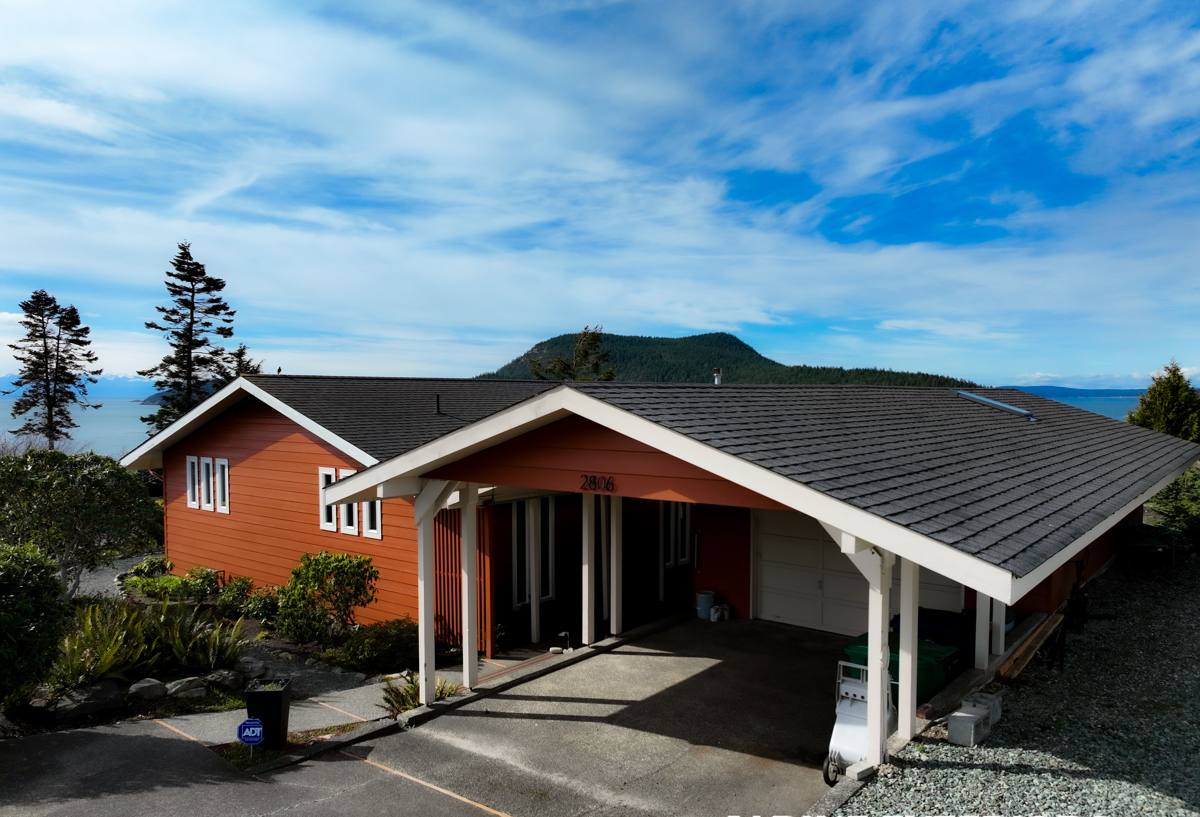
Why We Install Only James Hardie Fiber Cement Siding
We made a deliberate decision to install one siding system — James Hardie fiber cement — and not vinyl, not LP SmartSide, not Cemplank or Allura, and not primed spruce or cedar. That's not a marketing position; it's a response to what we've seen hold up in this climate versus what needs constant attention.
Fiber cement is non-combustible, which matters in King County given the dry, smoky stretches late summer now regularly brings even on the wetter Eastside. Hardie's ColorPlus finish is baked on at the factory rather than field-applied, which means the color coat resists the moss, mildew, and UV fading that eat away at site-painted wood siding faster in a shaded, damp environment like Redmond's. And Hardie engineers its HZ5 product line specifically for climates like ours — freeze-thaw cycles, sustained moisture, and long wet seasons — rather than using a one-size-fits-all formulation.
Wood siding, even good cedar, needs recoating on a schedule to keep moisture out, and in a climate with this much shade and rainfall, that schedule compresses. Vinyl expands and contracts with temperature swings and can warp or crack over time, and it isn't the same class of fire performance as fiber cement. LP SmartSide is an engineered wood product — better than plain wood in some respects, but still wood-based, meaning cut edges and any breach in the factory coating are vulnerable to moisture intrusion in a way fiber cement isn't. We'd rather install one product we trust completely than offer several and let a homeowner guess which one will actually perform on their specific lot.
Hardie also backs its ColorPlus products with a strong, transferable limited warranty, which matters to Redmond homeowners who may sell within the ownership window — a real consideration in a market with this much turnover.
Roofing Considerations for Redmond Homes
Roofs under heavy tree cover deal with more than rain — they deal with needle and leaf litter that traps moisture against shingles, valleys that stay wet longer, and moss that can lift shingle edges over time if it's never addressed. A roof in an open, sunny lot in a different part of King County might go years without a moss treatment; a shaded Redmond roof often needs more frequent attention to keep growth from taking hold at ridge lines and in valleys.
When we work on roofing here, we're paying close attention to underlayment quality, valley flashing, and ventilation — a roof that can't breathe traps moisture in the attic, which accelerates rot in sheathing and shortens the life of the roofing material itself, regardless of brand.
Windows: Comfort and Moisture Control in a Wet Climate
Old, poorly sealed windows are one of the most common sources of both energy loss and moisture intrusion in older Redmond homes. Condensation between panes, fogging, or soft trim around a window frame are usually signs that the seal or flashing has failed, not just that the glass is old. In a climate that stays damp for most of the year, a failed window seal gives water a direct path into the wall assembly behind it.
Replacement windows done right aren't just about the glass — proper flashing and integration with the siding around the opening is what actually keeps water out over the long run. That's part of why we treat window and siding work as connected jobs rather than separate trades: a beautiful new window installed with a poor flashing detail will leak eventually, especially with the wind-driven rain this region gets in the fall and winter.
Decks Built for King County's Wet Season
A lot of Redmond decks sit partially or fully shaded by mature trees, which means they stay wet longer after rain and accumulate more organic debris — needles, leaves, seed pods — than a deck in full sun. That debris holds moisture against decking boards and ledger connections, which is exactly where rot and structural issues start.
Ledger board attachment to the house is one of the most important — and most overlooked — structural details on any deck. It has to be flashed correctly to keep water from tracking behind the siding at the point where the deck meets the house, which is a common failure point we see on older decks in this area. Material choice matters too: some decking handles standing moisture and shade better than others, and drainage under the deck surface matters as much as the boards themselves.
Why a Local Crew Matters in Redmond
Exterior work here isn't generic. A crew that mainly works in drier parts of the state, or that treats King County as one uniform climate, can miss the specific conditions that shorten the life of siding, roofing, and decking in a shaded, high-rainfall Eastside neighborhood like Redmond. Knowing which walls take the worst wind-driven rain, how much shade a given lot actually gets through the seasons, and how fast moss returns after treatment comes from working in this specific area repeatedly, not from a general knowledge of Pacific Northwest weather.
A local crew is also easier to hold accountable — for warranty follow-up, for a callback if something needs a second look after the first hard rain, and for showing up again years down the line if a homeowner has questions about how their exterior is aging.
Comparing Exterior Siding Options
| Material | Moisture Behavior in Shade/Rain | Maintenance | Fire Performance |
|---|---|---|---|
| James Hardie Fiber Cement | Engineered for sustained moisture and freeze-thaw; factory finish resists moss staining | Occasional wash; no recoating on the ColorPlus finish for years | Non-combustible |
| Vinyl | Doesn't rot, but can warp or crack with temperature swings and impact | Low, but color fades and can't be repainted easily | Combustible; can deform in heat |
| LP SmartSide / Engineered Wood | Wood-based; vulnerable at cut edges and any coating breach | Requires monitoring of seams and coating integrity | Combustible, treated |
| Cedar / Primed Wood | Absorbs moisture readily; shade and rain accelerate rot without upkeep | Regular recoating/repainting on a compressed schedule in shaded lots | Combustible |
This is a general comparison, not a claim that every alternative fails — plenty of these products are installed successfully elsewhere. It's simply why, given what we see repeatedly in this climate, we standardized on one system rather than offering several.
What to Watch For as a Redmond Homeowner
- Green or black streaking on siding, especially on shaded north- and east-facing walls
- Moss buildup at roof valleys, ridges, or anywhere shingles stay damp longest
- Soft or spongy trim around windows, doors, or where the deck ledger meets the house
- Fogging or condensation between window panes
- Debris accumulation (needles, leaves, seed pods) on decks or in gutters that traps moisture
- Paint that's failing faster than expected on wood trim or siding in shaded areas
- Gaps or separation at caulked joints after a hard freeze
None of these are emergencies on their own, but left unaddressed through a full Redmond wet season, they compound quickly.
How We Approach a Redmond Project
We start with an honest look at the specific conditions on your lot — how much shade you actually get through the year, which walls take the worst weather, and what condition the current siding, roofing, windows, or deck are really in underneath the surface. From there we scope the work around materials that are built for this climate rather than defaulting to whatever's cheapest or fastest to install. On siding jobs, that means proper drainage planes, correctly lapped and fastened Hardie boards, and factory-finished color that won't need repainting on a compressed schedule. On roofing, windows, and decks, it means paying attention to the flashing and moisture-management details that actually determine whether the work lasts fifteen years or thirty.
If you're weighing a siding, roofing, window, or deck project on a Redmond home, we're happy to take a look and walk you through what we're seeing and why — no pressure, no obligation. Use the form below to request a free estimate.