 King County
 Every siding problem eventually raises the same question: patch it, or replace it? The honest answer depends on the material, how much of the wall is affected, how old the siding is, and what's happening underneath it. This page walks through how we actually make that call when we're standing in front of a house in King County, so you can go into a conversation with a contractor already knowing what questions matter.
Why This Decision Is Harder Than It Sounds
Siding damage is rarely just cosmetic. A cracked board, a stained panel, or a soft spot near a window trim is usually a symptom, not the problem itself. The real question underneath "repair or replace" is almost always "how much moisture has already gotten in, and for how long." Repairing the visible symptom without answering that question just delays a bigger bill.
That's especially true here. King County's combination of salt-laden air near the water, long stretches of driving rain, and a moss season that can run from fall through spring means siding is under near-constant moisture pressure for much of the year. Materials and installations that would hold up fine in a drier climate get tested hard here, and small gaps in flashing or caulking turn into real problems faster than homeowners expect.
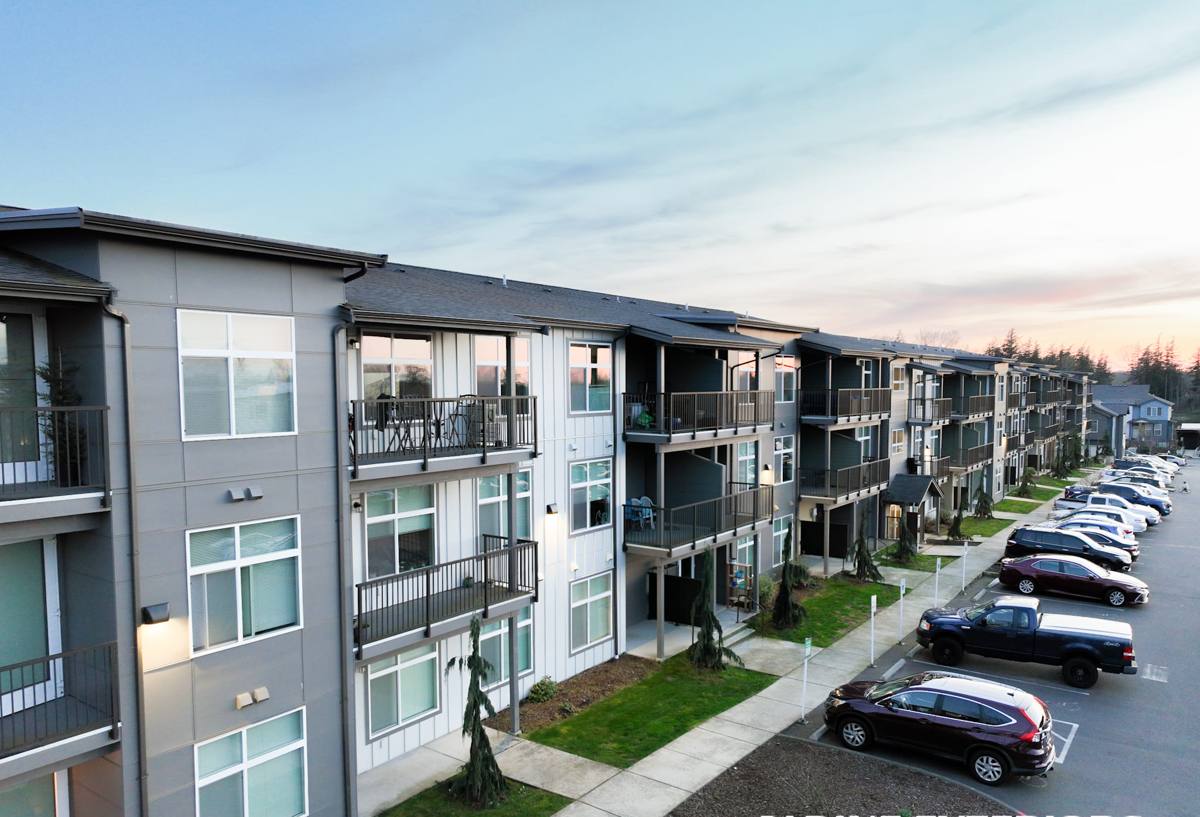
When Repair Genuinely Makes Sense
Repair isn't a compromise or a stopgap when it's the right call — sometimes it's simply the correct answer. Repair tends to make sense when:
- The damage is isolated to one or two boards or panels, not spread across a wall
- The siding is younger than roughly half its expected service life
- The underlying sheathing and house wrap are dry and intact once the damaged piece is removed
- The cause of the damage was a one-time event (impact damage, a failed piece of trim, a single leak that's since been fixed) rather than an ongoing systemic issue
- The existing siding is still available to match, or a near-match is acceptable to the homeowner
In these cases, a clean repair can look and perform fine for years. The mistake we see most often isn't repairing when replacement was needed — it's the reverse, where a homeowner (or a contractor looking for quick work) repairs the same wall two or three times over several years instead of recognizing a pattern.
The Repeat-Repair Warning Sign
If you've had the same section of siding repaired more than once, that's not bad luck — that's data. It usually means the actual source of moisture intrusion (bad flashing, a grading issue, a failed sealant joint, or the siding material itself absorbing water) was never fixed, only the symptom was. At that point, continuing to repair is spending money without addressing the cause.
When Replacement Is the Right Call
Full or partial replacement becomes the more sensible option when:
- Damage shows up in multiple, unrelated areas of the house rather than one isolated spot
- The siding is past or near the end of its realistic service life for its material type
- Moisture has reached the sheathing, framing, or insulation — repair without addressing what's behind the siding just reseals the problem in
- The material itself is the issue — for example, siding that swells, delaminates, or absorbs water as part of its normal aging process
- You're planning other exterior work (windows, trim, paint) where doing siding at the same time saves labor and disruption
- Matching the existing siding is no longer possible because the product has been discontinued or the color has faded unevenly
Replacement is also the more honest long-term option when a house has moisture damage that's clearly spread beyond a single wall section. Patching over multiple problem areas one at a time usually ends up costing more, in both money and repeated disruption, than addressing the whole elevation once.
How Material Changes the Math
Not all siding materials age or fail the same way, which is a big part of why "repair or replace" doesn't have a one-size-fits-all answer.
| Material | Typical Repair Difficulty | Common Failure Pattern |
|---|---|---|
| Vinyl siding | Panels can crack or fade unevenly; exact color matches get harder every year | Cracking in cold snaps, warping from heat/sun exposure, fading that makes patches visible |
| Wood (cedar, spruce) | Repairable but labor-intensive; requires ongoing paint/stain maintenance | Rot from sustained moisture exposure, especially in shaded, damp areas |
| Engineered wood (LP SmartSide and similar) | Moderate; edge and seam sealing is critical to any repair | Swelling or edge deterioration where factory sealant has worn or was missed at installation |
| Fiber cement (James Hardie) | Straightforward when installed to spec; factory finish helps color-match repairs | Failures typically trace to installation gaps (caulking, flashing) rather than the material itself |
This is part of why we standardized on James Hardie fiber cement for the homes we work on. It's non-combustible, engineered specifically for wet climates through Hardie's HZ5 product line, and finished with a factory-applied ColorPlus coating that holds color far more consistently than field-applied paint — which matters a lot when you're trying to match an old repair to existing siding years down the road. We don't install LP SmartSide, vinyl, Cemplank, Allura, or primed wood siding, not because those products have no merits, but because we'd rather stand behind one system we know performs well through everything a King County winter and wet season throws at it, install after install.
What to Check Before You Decide
Whether you're evaluating this yourself or having a contractor walk the house, a few checks will tell you most of what you need to know:
- Press gently on suspect areas — sponginess or give means moisture has already compromised the material or what's behind it
- Check corners, window and door trim, and anywhere two materials meet — these transition points fail before open wall sections do
- Look at north-facing and shaded walls separately — moss growth and slower drying times concentrate damage in these spots
- Ask how old the siding is and what it's rated for — a 15-year-old product nearing the end of its expected life is a different conversation than a 3-year-old one
- Ask whether the contractor is recommending replacement because it's actually needed, or because it's more profitable work than a repair
Reading the Signs of Moisture Behind the Siding
Some of the clearest tells that damage has moved past the siding itself and into the wall assembly include soft or bouncy wall sections when pressed, a musty smell in an adjacent interior room, peeling interior paint or wallpaper on an exterior wall, and visible staining or discoloration that spreads rather than staying confined to one spot. Any of these point toward replacement, or at minimum toward opening up the wall to assess before deciding anything.
The Cost Conversation, Honestly
Repair is cheaper up front, and for isolated, well-caused damage, it's the right amount of money to spend. But repair costs add up over time in a way that's easy to lose track of — a $400 repair this year, another $600 next year, a third repair the year after — and at some point the cumulative repair spend approaches what a well-planned replacement would have cost, without ever solving the underlying issue. Replacement costs more at the moment of the decision, but it resets the clock: a new, correctly installed siding system with a strong warranty gives you years without repeat visits for the same wall.
There's no universal dollar threshold where repair stops making sense and replacement starts — it depends on the extent of damage, the material, and the age of the siding. That's a conversation worth having with whoever is assessing your house, not a number to memorize in advance.
A Practical Way to Decide
If you're trying to make this call before a contractor even comes out, here's a simple gut check:
- Is the damage in one spot, or in several unrelated spots? One spot leans repair; several leans replacement.
- Has this exact area been repaired before? If yes, the underlying cause likely wasn't fixed — lean replacement.
- Is the siding past the midpoint of its expected lifespan for its material? If yes, lean replacement.
- Does pressing on the area reveal softness or give? If yes, get it opened up before deciding anything.
- Are you already planning other exterior work in the next year or two? If yes, bundling into replacement may save money overall.
None of these questions require special expertise to ask — they just require an honest look at the house rather than a reflexive patch job.
What We Recommend When Replacement Is the Answer
When a house in King County genuinely needs new siding, we install James Hardie fiber cement exclusively. It's a decision we made after weighing how different products actually perform in this region's combination of salt air, sustained rain, and moss-friendly damp shade — not a default or a marketing position. Hardie's engineered-for-climate HZ5 line, factory-applied finish, and strong transferable warranty give homeowners a system that's built to go the distance here, and it's the only system we put our name behind.
If you're not sure whether your siding needs a repair or a full replacement, we're happy to take a look and give you a straight answer — no pressure, no upsell. Request a free estimate below and we'll walk the house with you.