 King County
 Cedar Siding Looks Great in the Showroom. King County Weather Has Other Plans.
Cedar siding has a real following, and it's easy to see why. The grain, the warmth, the way it ages into that silvery patina some homeowners specifically want — cedar has genuine curb appeal that manufactured products spend a lot of marketing budget trying to imitate. If you're shopping for exterior siding in King County and cedar keeps coming up, you're not wrong to be interested. It's a legitimate building material with a long track record.
But we're a contractor that installs James Hardie fiber cement siding exclusively, and cedar isn't in our lineup. This isn't because cedar is a scam or a bad product in some absolute sense. It's because of what happens to wood siding once it's on a house sitting in our specific climate, year after year, and what that means for the homeowner who has to live with it. We'd rather explain that plainly than install something we know will cause callbacks and disappointment five years down the road.
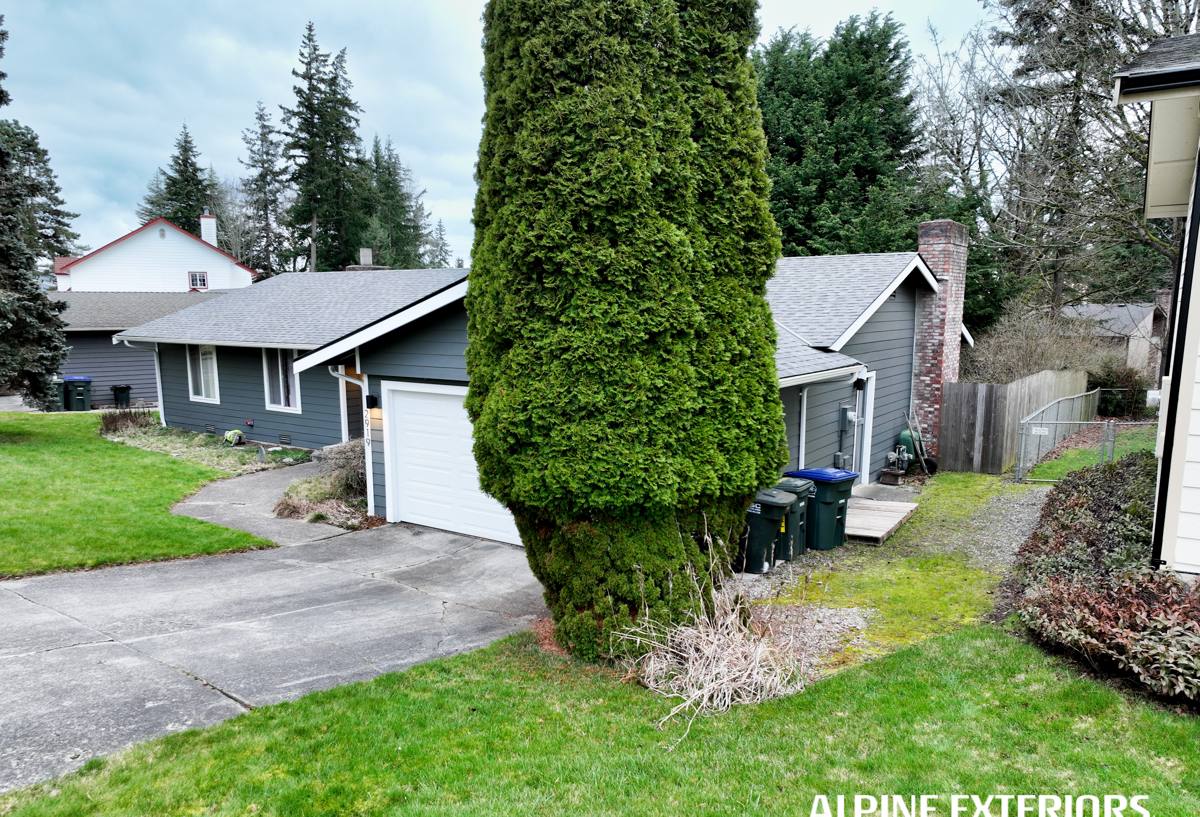
What Cedar Actually Is — and Where It Comes From
Cedar siding is milled from Western Red Cedar or similar species, typically sold as lap siding, shingles, or shakes. It's naturally resistant to insects and has some rot resistance built into the wood's own oils, which is part of why it's been used on Pacific Northwest homes for so long. It's a real wood product, not a composite, and that authenticity is exactly what draws people to it.
The trade-off is that cedar is still wood. It expands and contracts with moisture, it needs a finish to protect its surface, and once that finish starts to fail, the clock starts running on the substrate underneath. That's true of every wood siding product, not just cedar — but it matters more here than almost anywhere else in the country.
Why Our Climate Is the Real Issue
King County doesn't get brutal winters, but it gets something arguably harder on wood siding: sustained, low-grade moisture exposure for most of the year. Driving rain off Puget Sound, salt air along the shoreline communities, and a moss season that can run from fall through spring all combine to keep wood siding damp far more often than manufacturers' care guides assume. Wood needs to dry out between wet cycles to stay healthy. In a lot of our neighborhoods, it simply doesn't get that chance.
The Maintenance Reality Nobody Puts in the Brochure
Cedar siding is not a install-it-and-forget-it product. To keep it performing the way it's supposed to, it needs:
- Refinishing (stain or paint) on a recurring cycle — typically every 3-5 years depending on sun and moisture exposure, sooner on south and west-facing walls or anywhere near sprinklers
- Regular inspection for finish failure, checking, and cupping before those turn into moisture entry points
- Moss and algae treatment, which in our climate can mean at least annual attention, not occasional
- Prompt caulking and sealant maintenance at joints, seams, and penetrations
- Quick repair of any impact damage, since an exposed cut edge or crack is where rot usually starts
None of this is unreasonable to ask of a homeowner who wants real wood siding and is willing to stay on top of it. The problem is that most homeowners don't sign up expecting a recurring maintenance job — they sign up expecting a siding job. When the refinishing cycle gets skipped or delayed (and life happens, it usually does), the failure mode isn't cosmetic. It's moisture getting behind the siding.
What Happens When Maintenance Slips
Once a cedar finish fails and isn't renewed promptly, the wood starts absorbing and releasing moisture directly. In a marine climate with our rainfall totals, that cycle doesn't take long to cause cupping, splitting, and eventually rot — especially at butt joints, corners, and anywhere flashing detail was less than perfect. By the time rot is visible from the outside, there's often more damage in the wall assembly than the homeowner expects, because wood siding can look fine on the surface while the back side is already compromised.
Installation Sensitivity Is Part of the Problem Too
Cedar siding is far more forgiving of a bad afternoon on the job site than it should be — meaning bad installation mistakes don't always show up right away, they show up in year four or five. Correct cedar installation requires strict attention to back-priming (finishing the side of the board that goes against the wall, not just the face), proper rainscreen gaps, correct fastening to allow for wood movement, and flashing details that account for wood's expansion and contraction. Skip any of that and the siding can still look acceptable at final walkthrough. The failures show up later, on someone else's schedule.
We're not willing to put our name on a product where a rushed or under-detailed install can hide successfully for years before it becomes the homeowner's problem. That's a real factor in why we don't offer it, not just a preference.
How Cedar Compares to What We Actually Install
| Factor | Cedar Siding | James Hardie Fiber Cement |
|---|---|---|
| Moisture behavior | Absorbs and releases moisture; prone to cupping/rot if finish fails | Engineered to resist moisture-related warping and rot |
| Refinishing cycle | Typically every 3-5 years in this climate | ColorPlus factory finish warrantied for decades; no recurring repaint cycle in normal conditions |
| Fire performance | Combustible, like any wood product | Non-combustible fiber cement |
| Moss/algae resistance | Needs regular cleaning and treatment | Factory finish holds up with routine washing, no special treatment cycle |
| Installation forgiveness | Low — mistakes can hide for years | Manufacturer install specs are well-documented and inspectable |
| Warranty structure | Varies by supplier; often limited on the wood itself | Strong transferable manufacturer warranty on the product |
What We Install Instead, and Why
We install James Hardie fiber cement siding exclusively. It's a non-combustible product, which matters to a lot of our clients independent of anything siding-related, and it carries a factory-applied ColorPlus finish that's engineered to hold its color and resist fading without a repaint cycle every few years. Hardie also builds climate-specific HZ product lines, which means the version we're installing is actually engineered for the moisture and temperature patterns we see in the Pacific Northwest rather than a generic national spec.
None of that makes Hardie maintenance-free forever — no exterior product is. But the maintenance burden is dramatically lower than wood siding's, and the failure mode when something does go wrong (an impact, a caulk joint needing attention) is far more forgiving and far less likely to turn into structural rot behind the wall.
Where Cedar Still Makes Sense
We're not going to pretend cedar has no place. Homeowners who genuinely want the specific look of real wood, who plan to stay on top of a refinishing schedule, or who are working on a historic or architecturally specific project may have good reasons to choose it anyway — from a specialty contractor who installs and maintains it correctly. That's just not the business we've built. We'd rather tell you that directly than sell you a product we're not set up to support long-term.
What to Ask Before You Choose Any Siding Material
Whatever you land on, these are worth asking any contractor before you sign anything:
- What's the realistic maintenance schedule for this product in a marine climate, in writing, not verbally?
- Who is responsible for refinishing or upkeep, and what happens to the warranty if that schedule slips?
- What's the manufacturer's warranty, and does it transfer if you sell the home?
- Is the installer following the manufacturer's published installation instructions, including flashing and gap details?
- How does this product handle sustained rain and moss exposure specifically, not just "weather" in general?
Our Honest Bottom Line
Cedar siding isn't a bad product — it's a demanding one, and King County's rain, salt air, and moss season are exactly the conditions that punish any lapse in that demand. We've made a deliberate decision to install only James Hardie fiber cement because it gives homeowners a siding system that's engineered for this climate, backed by a strong manufacturer warranty, and far less dependent on a maintenance schedule being followed perfectly for decades. If you're weighing cedar against fiber cement for a home anywhere in King County, we're glad to walk through the real trade-offs with you, no pressure either way.
If you'd like a straightforward, no-pressure estimate on James Hardie siding for your home, our team is happy to take a look and walk you through what it would involve — just fill out the form below.