 King County
 Fiber Cement Isn't a Single Product — It's a Category
When homeowners hear "fiber cement siding," they often assume every brand performs the same way. It doesn't. Fiber cement is a manufacturing process — cellulose fiber, sand, cement, and water pressed and cured into boards — and how a manufacturer engineers that process, cures the product, and backs it with warranty coverage varies a lot. Cemplank is one of several fiber cement brands sold through building supply distributors, often positioned as a lower-cost alternative in the same aisle as premium options.
We get asked about Cemplank fairly often, usually by a homeowner comparing quotes where one contractor specs it and another specs James Hardie. This page explains what we know about the product category, why we made the call to install James Hardie exclusively, and what that means for a King County home dealing with Puget Sound weather.
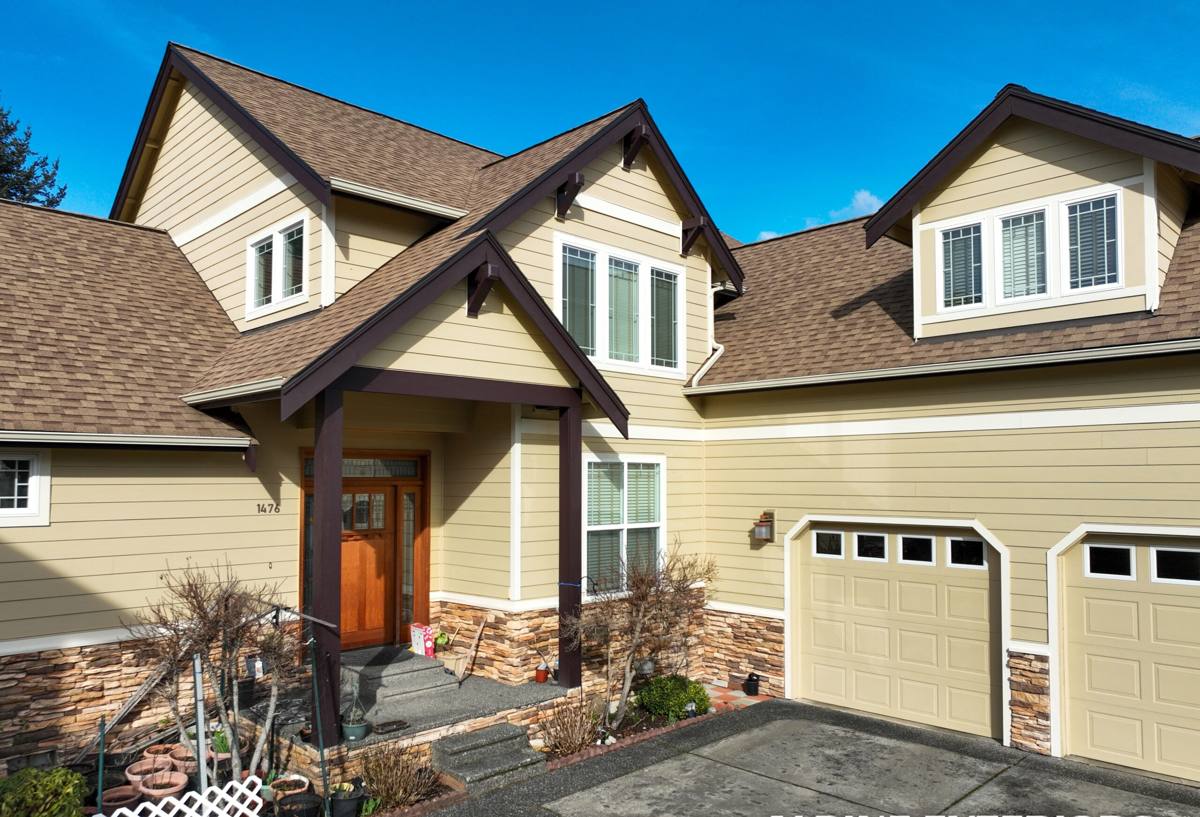
What Cemplank Gets Right
To be fair to the product: fiber cement as a category is a genuine upgrade over vinyl or untreated wood siding. It doesn't burn, it resists pests that go after wood fiber, and it holds paint or factory finish far longer than cedar or primed spruce. Cemplank boards meet the same basic ASTM standards that govern fiber cement manufacturing, and in a dry climate installed by a careful crew, a fiber cement product from most major brands can perform reasonably well for years.
The issue for us isn't that Cemplank is a bad material in some abstract sense. It's that we install exclusively in a marine climate where the margin for error on a fiber cement product is thin, and we've standardized on the manufacturer whose engineering, factory finish, and warranty structure we trust most for that specific environment.
Where Our Concerns Start: Regional Availability and Product Consistency
Fiber cement brands come and go in the Pacific Northwest distribution network, and product lines get discontinued or reformulated. When that happens, matching trim, replacing a damaged board five or ten years down the road, or finding touch-up paint that's a true factory match becomes a scavenger hunt. James Hardie has maintained a dedicated Pacific Northwest manufacturing and distribution presence and a stable, well-documented product lineup for decades. That matters more here than in a drier climate, because King County siding takes more abuse — driving rain off the Sound, prolonged damp seasons, and the moss and algae growth that comes with our shoulder-season humidity — which means repairs and touch-ups happen more often than they would in Arizona or eastern Washington.
Moisture Behavior Over Time
All fiber cement is moisture-resistant, not moisture-proof. The difference between brands often comes down to density, edge-sealing, and how consistently the factory finish (if any) is applied and cured. A board that absorbs water at cut edges or around fasteners, cycle after cycle through our wet winters and damp springs, is more prone to swelling, checking, or finish failure over a 15-20 year horizon than one engineered specifically for high-moisture regions. James Hardie's HZ5 product line was developed specifically for the freeze-thaw and moisture cycling common in the Pacific Northwest — that regional engineering is a meaningful part of why we chose it.
Factory Finish vs. Field-Applied or Basic Coatings
This is the single biggest practical difference homeowners feel over time. James Hardie's ColorPlus finish is baked on at the factory in multiple coat layers, under controlled conditions, and backed by its own dedicated finish warranty separate from the substrate warranty. Some competing fiber cement products, including certain Cemplank lines, are sold primed only or with a less extensive factory coating system, which shifts more of the finish quality — and its long-term durability — onto the field-applied paint job and the caulking practices of whichever crew installs it.
In a coastal-influenced climate with regular rain and UV cycling, a factory-cured, multi-coat finish simply holds color and resists cracking longer than a field-painted surface. We don't want to sell a homeowner a siding job where the 10-15 year repaint is baked into the plan from day one.
Installation Sensitivity
Fiber cement siding is only as good as its installation, regardless of brand — but some products are less forgiving of small errors than others. Manufacturer-specific fastening patterns, clearance requirements above rooflines and grade, caulking and flashing details around penetrations, and butt-joint treatment all affect how long the assembly stays watertight. A few of the things that matter most:
- Correct nail or screw placement and depth — overdriven fasteners crack the board's edge and create a moisture entry point
- Proper clearance between siding and roofing, decks, and grade to avoid wicking
- Rain-screen or drainage-plane detailing appropriate for our climate, not just a face-nailed installation
- Correctly caulked and primed cut edges, especially at butt joints and trim returns
- Manufacturer-approved fastener spacing at panel edges and corners
We install James Hardie to Hardie's published installation specifications because that's what keeps their product and finish warranties valid. Standardizing on one manufacturer's system, rather than switching between brands project to project, lets our crews execute those details consistently instead of relearning a new spec sheet every job.
Warranty Structure: What's Actually Transferable
Warranty paperwork is where a lot of homeowners get surprised later, usually when they go to sell the house. The questions worth asking about any fiber cement warranty are: does it cover the substrate, the finish, or both separately; is it prorated after a certain number of years; and is it transferable to a new owner without extra steps or fees. James Hardie's warranty terms are well-documented, cover the ColorPlus finish separately from the substrate, and are transferable — which matters in a King County real estate market where siding condition and warranty status routinely come up in inspections and negotiations.
| Factor | Typical Basic Fiber Cement (e.g. Cemplank lines) | James Hardie |
|---|---|---|
| Factory finish | Often primed-only or single-coat, varies by line | Multi-coat ColorPlus baked-on finish |
| Climate-specific engineering | General-purpose formulation | Regional HZ formulations (HZ5 for Pacific Northwest) |
| Warranty structure | Varies; check substrate vs. finish coverage | Separate substrate and finish warranties, transferable |
| Regional distribution stability | Product lines have shifted or been discontinued | Consistent long-term PNW manufacturing and stock |
| Repaint interval (typical) | Often 8-12 years if field-painted | 15+ years on factory finish, well maintained |
Why We Only Install One Fiber Cement Brand
There's also a practical business reason behind this, and we won't pretend otherwise: crews that install one manufacturer's system exclusively get very good at that system's details. They know the fastening spec cold, they know how the trim and corner pieces integrate, and they know the finish's cure characteristics. Switching between three or four fiber cement brands based on whichever is cheapest that month means relearning specs and increases the odds of a detail getting missed — and on a home in King County, a missed flashing or caulking detail shows up as a moisture problem in a few winters, not immediately.
Standardizing on James Hardie lets us commit to one set of installation standards, one warranty process, and one finish system that we've seen hold up in this specific climate over the long term.
What This Means If You're Comparing Quotes
If a contractor quotes Cemplank or another basic fiber cement brand at a noticeably lower price than a Hardie quote, that's not automatically a red flag — but it's worth asking direct questions before deciding:
- Is the finish factory-applied and warrantied, or will the crew field-paint after install?
- What does the substrate warranty cover, and is it prorated?
- Is the warranty transferable to a future buyer, and under what conditions?
- Is the product formulated for Pacific Northwest moisture cycling specifically, or general-purpose?
- How available will replacement boards and trim be in 10 years if you need a repair?
A lower upfront bid on a basic fiber cement product isn't necessarily a bad decision for every homeowner — budget matters, and it's still a better material than vinyl or untreated wood in most respects. We simply don't offer it, because we'd rather stand behind one system we trust fully in this climate than offer a menu of fiber cement options at different price points and different long-term risk levels.
What We Install Instead
James Hardie's HZ5 line is engineered for the freeze-thaw and high-moisture conditions common across King County, from the Sound-influenced lowlands to the wetter foothill communities. Paired with the ColorPlus factory finish and installed to Hardie's published spec — correct clearances, rain-screen detailing where appropriate, and properly sealed cut edges and joints — it's the combination we've found holds up best against driving rain, the long moss season, and the salt-air influence closer to the water.
If you're weighing fiber cement options for a King County home and want a straight answer about what will actually hold up here, we're happy to walk the exterior with you and put together a free, no-pressure estimate — no obligation, just an honest look at what your home needs.