 King County
 Bellevue's Exterior Challenges Are Real, Even If the City Looks Polished
Bellevue has a reputation as one of the more manicured communities in King County, but the homes here face the same weather pressures as anywhere else on the east side of Lake Washington. The proximity to the lake means persistent moisture in the air, and that moisture doesn't stay politely on the water. It settles into siding seams, collects on north-facing roof slopes, and lingers in the shaded corners of decks tucked under mature trees. Add in the Pacific Northwest's long, low-intensity rain season and the moss growth that comes with it, and you have a climate that quietly wears down exteriors that aren't built or maintained for it.
We work on homes throughout Bellevue and the surrounding King County area, and the pattern is consistent: it's rarely one dramatic storm that damages a home. It's the accumulation of small exposures — driving rain that finds its way behind poorly flashed trim, moss that holds moisture against a roof deck for months at a time, salt-tinged air off the lake slowly breaking down finishes that weren't engineered for a marine-influenced climate. An exterior that's a poor match for this environment will show it within a few years. One that's matched to it can go decades with routine care.
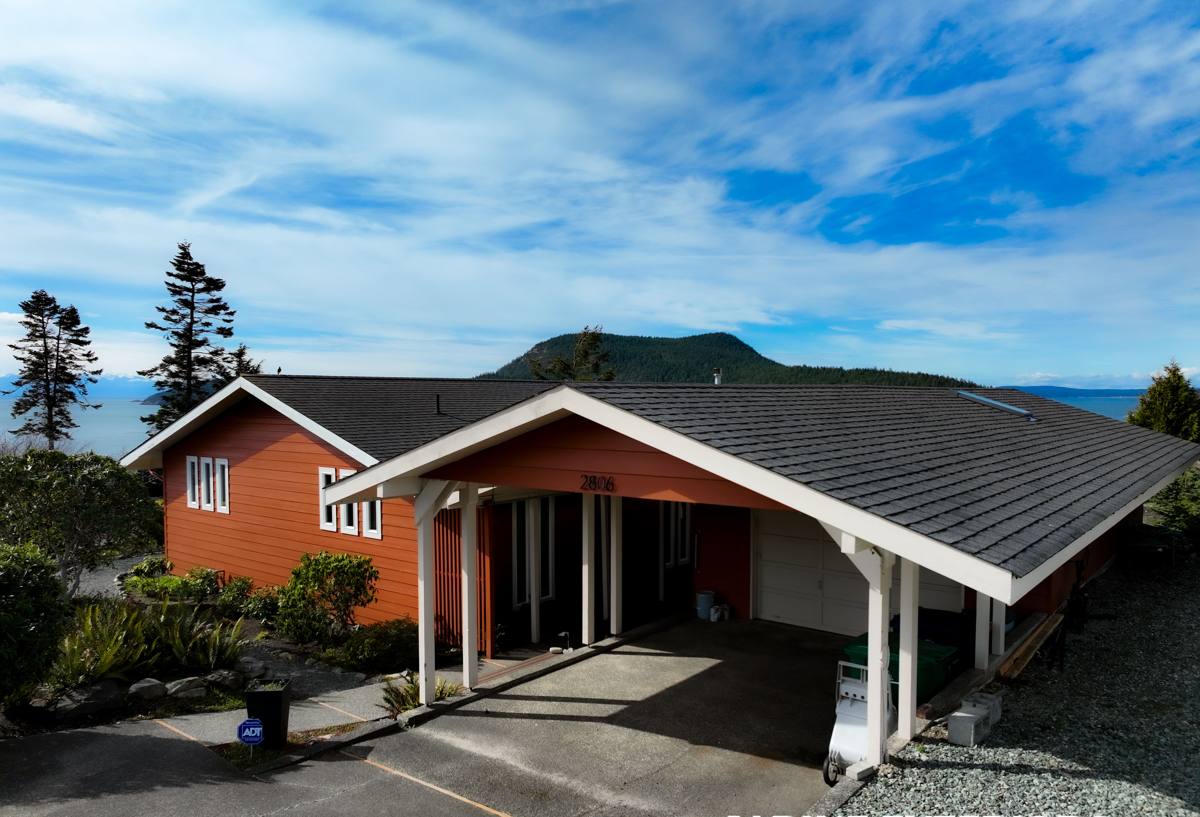
What Bellevue Homes Are Up Against
Moisture That Doesn't Let Up
King County doesn't get the sudden, violent downpours you'd see in other parts of the country as often. Instead, it gets long stretches of steady, driving rain — the kind that finds every gap in a building envelope over time. Siding materials that swell, delaminate, or absorb water are at a structural disadvantage here, not just a cosmetic one.
Moss and Algae Season
Shade, moisture, and mild temperatures are exactly what moss wants, and Bellevue's tree canopy and lake-effect humidity give it plenty of both. Moss on a roof isn't just unsightly — it holds water against roofing material and can work its way under shingles or shakes, accelerating decay in the roof deck underneath.
Salt Air and Lake Effect
Homes closer to Lake Washington and the broader Puget Sound region deal with a mild but persistent salt and mineral presence in the air. Over years, this contributes to the breakdown of paint finishes, corrosion of exposed fasteners, and a general dulling of surfaces that aren't rated for it.
Siding: Why We Only Install James Hardie
Siding takes the brunt of Bellevue's climate more than any other exterior component. It's the material standing between the house and years of driving rain, humidity, and moss-friendly shade. That's why we made a deliberate decision as a company to install only James Hardie fiber cement siding — nothing else.
We've evaluated the alternatives homeowners commonly ask about — vinyl, LP SmartSide, primed spruce, cedar, and other fiber cement brands like Cemplank or Allura — and each has real trade-offs that matter in this specific climate:
- Vinyl siding is affordable and low-maintenance in dry climates, but it can warp under sustained heat and, more relevant here, its seams and J-channels give water more opportunities to get behind the panel in a wet, wind-driven-rain environment.
- LP SmartSide is an engineered wood product. Wood-based substrates are inherently more vulnerable to moisture intrusion than fiber cement, and in a climate with Bellevue's rain totals and humidity, any breach in the factory coating becomes a slower-motion problem than it would be somewhere drier.
- Primed spruce and cedar are traditional, attractive choices, but they require the homeowner to stay ahead of repainting and sealing on a tight schedule. Miss a cycle in a climate this wet, and moisture gets a foothold fast.
- Other fiber cement brands (Cemplank, Allura) are legitimate products, but we standardized on one manufacturer and one installation system so our crews are installing to a single spec every time, with warranty backing we understand inside and out.
James Hardie's HZ5 product line is engineered specifically for climates like ours — freeze-thaw cycling, sustained moisture exposure, and everything Western Washington throws at a building envelope. It's non-combustible fiber cement, it holds its factory-applied ColorPlus finish far longer than field-applied paint on wood or engineered wood substrates, and the warranty is transferable if you sell the home. We're not installing it because it's trendy. We're installing it because, product for product, it's the best match for what Bellevue's climate does to a house over a 20- or 30-year timeline.
Roofing That Accounts for Moss and Moisture
A roof in Bellevule needs to shed water efficiently and resist moss colonization, especially on shaded or north-facing slopes. When we work on a roof here, we're paying close attention to flashing details around valleys, chimneys, and roof-to-wall transitions — the spots where driving rain most often finds a way in. We also talk homeowners through ventilation, since a well-ventilated attic reduces the condensation that can accelerate deck rot from the inside out, independent of what's happening on the outside surface.
Moss removal and prevention are part of an honest roofing conversation in this region. We won't pretend a roof here will stay moss-free without some attention — the climate simply won't allow it — but the right materials, proper ventilation, and periodic maintenance keep it manageable instead of destructive.
Windows: Sealing Out Driving Rain
Window failures in King County are rarely about the glass itself — they're about the seal and the flashing around the frame. Driving rain, pushed by wind off the lake, tests every window installation on a home's weather-exposed sides. When we replace windows, proper flashing integration with the surrounding siding is non-negotiable; a window installed without attention to how water sheds around it will eventually leak, regardless of how good the window itself is.
Energy performance matters too. Bellevue's mix of cool, wet winters and warm summers means a well-sealed, properly insulated window earns its keep on the utility bill as well as in comfort.
Decks: Built for a Wet, Shaded Climate
Decks in Bellevue often sit under tree cover or on the shaded side of a home, which means they hold moisture longer than a deck in full sun would. That has real implications for material choice, ledger board flashing, and joist spacing. A deck that isn't properly flashed at the house connection is one of the more common sources of hidden water damage we find on older homes in this area, because the problem develops behind the rim joist where it isn't visible until it's advanced.
Whether you're looking at composite decking or a traditional wood deck, we build with drainage and airflow underneath the deck surface in mind — standing moisture under a low deck in a shaded Bellevue yard is a long-term liability if it's not designed out from the start.
Cost Factors to Understand Before You Budget
Every home and project is different, so we won't quote numbers without seeing the work, but these are the variables that most affect cost on Bellevue exteriors:
| Factor | Why It Matters Here |
|---|---|
| Home size and story count | More surface area and steeper access on multi-story homes increase labor time |
| Existing damage or rot | Moisture-related damage found during tear-off often isn't visible until the old material is removed |
| Roof complexity | Valleys, dormers, and multiple roof planes add flashing detail and labor |
| Tree cover and access | Mature landscaping common in Bellevue can complicate staging and cleanup |
| Material selection | Product line, siding profile, and window grade all shift cost |
Why a Local Crew Matters in Bellevue
Exterior work isn't one-size-fits-all across King County. A crew that mostly works drier inland areas may not instinctively flash a valley the way a lake-adjacent, moss-prone roof demands. We work this specific climate regularly, which means we're not guessing about how Bellevue's rain patterns, shade, and humidity interact with a given material or detail — we've seen how it plays out over years on homes like yours.
Local also means accountability. We're not a crew that shows up from out of the area for one job and disappears. If a warranty issue comes up, we're close enough to handle it directly.
A Simple Checklist Before You Hire
- Ask what siding material they install and why — and whether they install more than one brand
- Confirm they carry current licensing and insurance for work in Washington State
- Ask how they handle flashing at windows, decks, and roof transitions specifically
- Get a clear explanation of warranty coverage — both material and labor
- Ask whether they've worked in your specific neighborhood or similar King County terrain
- Get everything in writing before work begins
Let's Take a Look at Your Home
If your Bellevue home's siding, roof, windows, or deck are showing signs of wear from the rain and moss cycle, we're happy to come take a look and give you an honest read on what's going on and what your options are. There's no pressure and no obligation — just a straightforward assessment from a crew that works this climate every day. Use the form below to request your free estimate.