 King County
 Ballard sits close enough to Puget Sound and Salmon Bay that salt-laden air is simply part of daily life for homes in the neighborhood. Add in Seattle's long wet season, deep shade from mature trees on many lots, and King County's mild but persistent moss-growing climate, and you get a combination that is genuinely tough on exterior building materials. A roof, siding system, window, or deck that performs fine in a drier inland climate can start showing problems here within a few years if it wasn't chosen or installed with this specific environment in mind.
We work throughout King County, and Ballard is one of the areas where we see the clearest evidence of climate-driven wear on homes. This page walks through what that wear looks like, how our services address it, and why having a crew that actually understands this stretch of Seattle's exterior matters more than it might seem.
What Ballard's Climate Actually Does to a Home
It helps to be specific about the mechanisms at work, rather than just saying "it's wet here."
Salt Air and Moisture
Proximity to the Sound and the ship canal means a steady low-level presence of salt in the air, especially on days with onshore wind. Salt air accelerates corrosion on exposed metal fasteners, flashing, and hardware, and it can contribute to surface breakdown on materials that aren't rated to handle it. Combined with near-constant humidity for much of the year, this creates conditions where anything with a weak point in its moisture barrier gets found out faster than it would in a drier region.
Driving Rain
Seattle rain isn't usually violent, but it is frequent and often wind-driven, which pushes water sideways into wall assemblies and around window and door openings rather than just falling straight down. Over years, driving rain exploits any gap in flashing, caulking, or siding laps. This is less about any single storm and more about cumulative exposure — a small installation flaw that would never matter in Phoenix becomes a slow leak here.
Moss and Shade
Ballard's tree cover and the region's long, mild, wet stretch from fall through spring create ideal conditions for moss and algae growth on roofs, siding, and decking. Moss holds moisture against a surface far longer than open air would, which accelerates rot in wood-based products and can shorten the life of roofing materials by trapping water under shingles or tiles. North-facing walls and shaded rooflines are usually the first places it shows up.
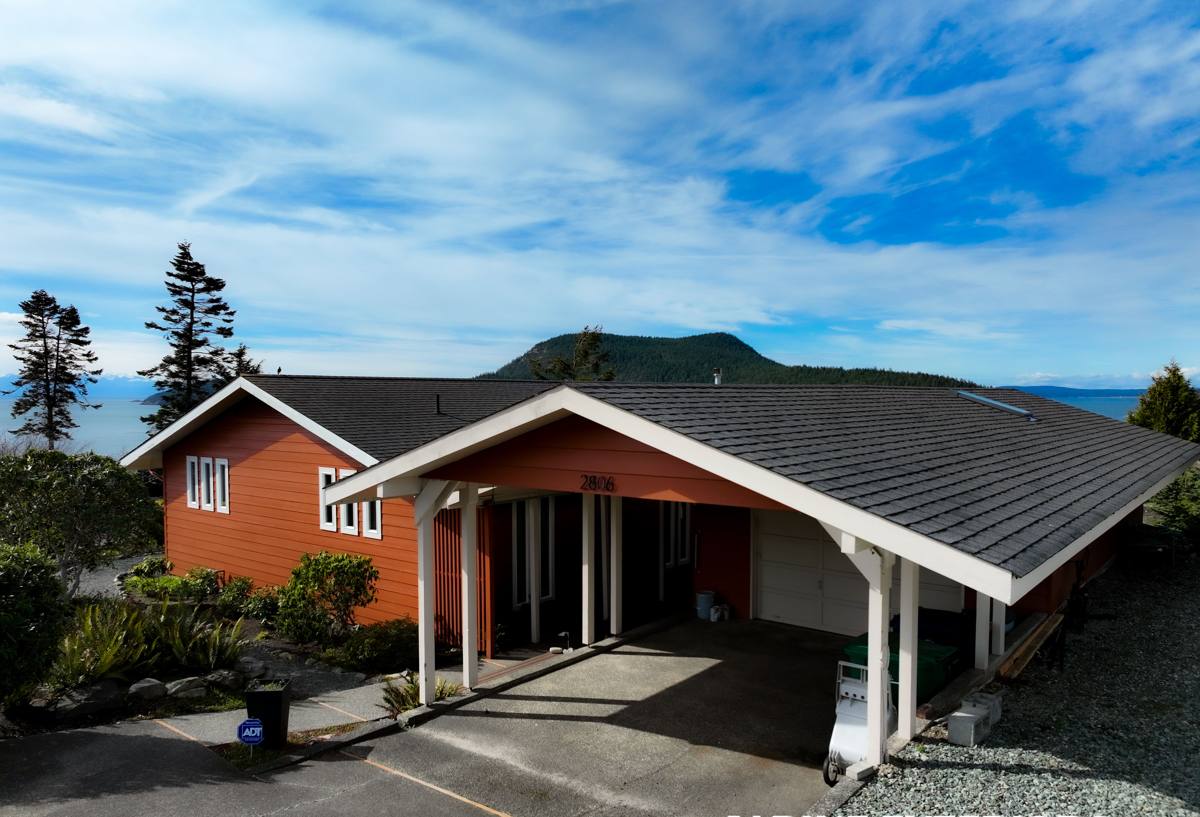
Siding: Why We Only Install James Hardie
Siding is the part of the exterior most constantly exposed to all three of the factors above — salt air, driving rain, and moss-friendly shade — which is why our material choice matters so much in a neighborhood like Ballard.
We install James Hardie fiber cement siding exclusively. We don't install vinyl, LP SmartSide, Cemplank, Allura, primed spruce, or cedar, and we're upfront about why: those products each have real trade-offs in exactly the conditions Ballard homes deal with year-round — moisture sensitivity, maintenance burden, or long-term durability concerns that we're not willing to put our name behind.
What Makes Hardie Fit This Climate
- Non-combustible core: fiber cement doesn't feed a fire the way wood-based products can, which matters across King County given regional wildfire risk in dry summer stretches.
- Dimensionally stable: it doesn't swell, warp, or rot the way wood and some engineered wood products can when exposed to sustained moisture and shade.
- ColorPlus factory finish: baked-on color resists fading and chipping better than field-applied paint, which matters when salt air and UV both work on a painted surface.
- HZ5 product line: Hardie's climate-engineered HZ5 formulation is built for wetter, harsher regions like the Pacific Northwest, rather than a generic one-size-fits-all board.
- Transferable warranty: a strong, transferable warranty backing the product protects the investment even if the home changes hands.
None of that means Hardie is maintenance-free — it still needs to be installed to spec, with correct clearances, flashing, and caulking, and it still benefits from periodic washing to keep moss and mildew from building up on the surface. But the material itself isn't the weak link the way some alternatives can be in this climate.
Roofing in a Moss-Prone Neighborhood
Roofs in Ballard deal with the same driving rain and shade issues as siding, plus the added weight and moisture retention of moss buildup over time. A well-installed roofing system with proper underlayment, flashing at penetrations and valleys, and adequate ventilation handles this far better than a roof that was installed to a lower standard or left un-maintained.
What We Look At
- Flashing condition around chimneys, skylights, and roof-to-wall transitions — the most common source of slow leaks
- Ventilation adequacy, since trapped attic moisture accelerates deck rot from the inside out
- Moss and debris accumulation in valleys and along shaded slopes
- Fastener and flashing corrosion, given salt air exposure
Regular moss removal and gutter clearing go a long way toward extending a roof's life here, but they don't substitute for correct installation in the first place. We build roofs to handle Ballard's specific mix of rain volume, shade, and salt exposure, not a generic regional spec.
Windows: Sealing Out Driving Rain
Window failures in this climate are rarely about the glass — they're almost always about the seal around the frame. Driving rain finds gaps in old caulking, degraded flashing tape, or improperly shimmed frames, and once water gets behind a window it can sit there for a long time before it's visible from inside.
Replacement or new window installation is also a natural point to address any siding or trim damage discovered around openings, since that's frequently where moisture problems concentrate first.
Decks: Built for Shade and Standing Moisture
Decks in shaded Ballard yards face some of the toughest conditions on the property. Boards that don't dry out between rain events are more prone to rot, and moss on deck surfaces creates a slip hazard as well as a moisture trap. Proper spacing between boards, ledger flashing where the deck meets the house, and material choices suited to sustained damp exposure all matter more here than they would in a sunnier, drier part of the county.
Comparing Exterior Material Performance in This Climate
| Factor | Wood / Cedar | Vinyl | James Hardie Fiber Cement |
|---|---|---|---|
| Moisture resistance | Prone to rot without diligent upkeep | Doesn't rot, but can warp with heat/cold cycling | Dimensionally stable, engineered for wet climates (HZ5) |
| Fire resistance | Combustible | Can soften/melt under heat | Non-combustible core |
| Moss/algae susceptibility | High if not cleaned regularly | Moderate, can trap moisture at seams | Lower, but still benefits from periodic cleaning |
| Finish longevity | Needs repainting/staining every few years | Color can fade, limited repaint options | Factory-baked ColorPlus finish holds up longer |
| Warranty structure | Varies widely, often limited | Varies by manufacturer | Strong, transferable warranty |
Why a Local Crew Matters
Exterior work in Ballard isn't the same job as exterior work in a drier, more sheltered part of King County. A crew that mainly works inland neighborhoods may not automatically account for salt air corrosion on fasteners, the moss cycle on shaded north walls, or the specific flashing details that matter when driving rain is a regular event rather than an occasional storm.
We work across King County, which means we see these patterns repeatedly and build our installation details around them — not as an afterthought, but as the baseline standard for every job in a neighborhood like this one.
Signs It's Time to Call Someone Out
- Moss or dark streaking building up on roofing, siding, or deck boards, especially on shaded or north-facing surfaces
- Soft spots, discoloration, or peeling around window and door trim
- Visible gaps or deteriorated caulking at siding joints and window frames
- Rust staining around roof fasteners, gutters, or flashing
- Deck boards that stay damp long after rain has stopped
- Interior signs like musty smells, ceiling stains, or peeling paint near exterior walls
None of these on their own mean a major problem, but they're worth having looked at before they turn into one — especially given how long Ballard's wet season runs each year.
What to Expect When You Reach Out
We start with an honest look at the exterior — siding, roof, windows, deck, whatever's relevant — and explain what we're seeing in plain terms. If Hardie siding makes sense for the home, we'll explain why; if the issue is really about roofing, flashing, or moss maintenance rather than a full siding job, we'll say that too. The goal is a home that's genuinely built for this climate, not just a sale.
If you're dealing with any of the wear signs above, or just want a straight assessment of how your home's exterior is holding up against Ballard's salt air and moss season, we're happy to take a look. Reach out for a free, no-pressure estimate using the form below.