 King County
 Allura Isn't a Bad Product — It's Just Not the One We Stand Behind
We get asked about Allura fairly often, usually by homeowners who got a quote from another contractor and want a second opinion before they commit. So let's be straightforward about it: Allura is a real fiber cement siding manufacturer, not a knockoff or a bargain-bin product. It's cellulose-reinforced fiber cement, the same basic technology as James Hardie, and in the right hands it can be installed correctly and perform reasonably well.
We just don't install it. Not because it's junk, but because after years of doing exterior work across King County — through wet winters, salt-tinged air off Puget Sound, and the long stretch of gray months that grow moss on anything that holds moisture — we standardized on one fiber cement system we can fully stand behind from the first nail to the transferable warranty. That system is James Hardie. Here's the honest reasoning behind that call, not a sales pitch against a competitor.
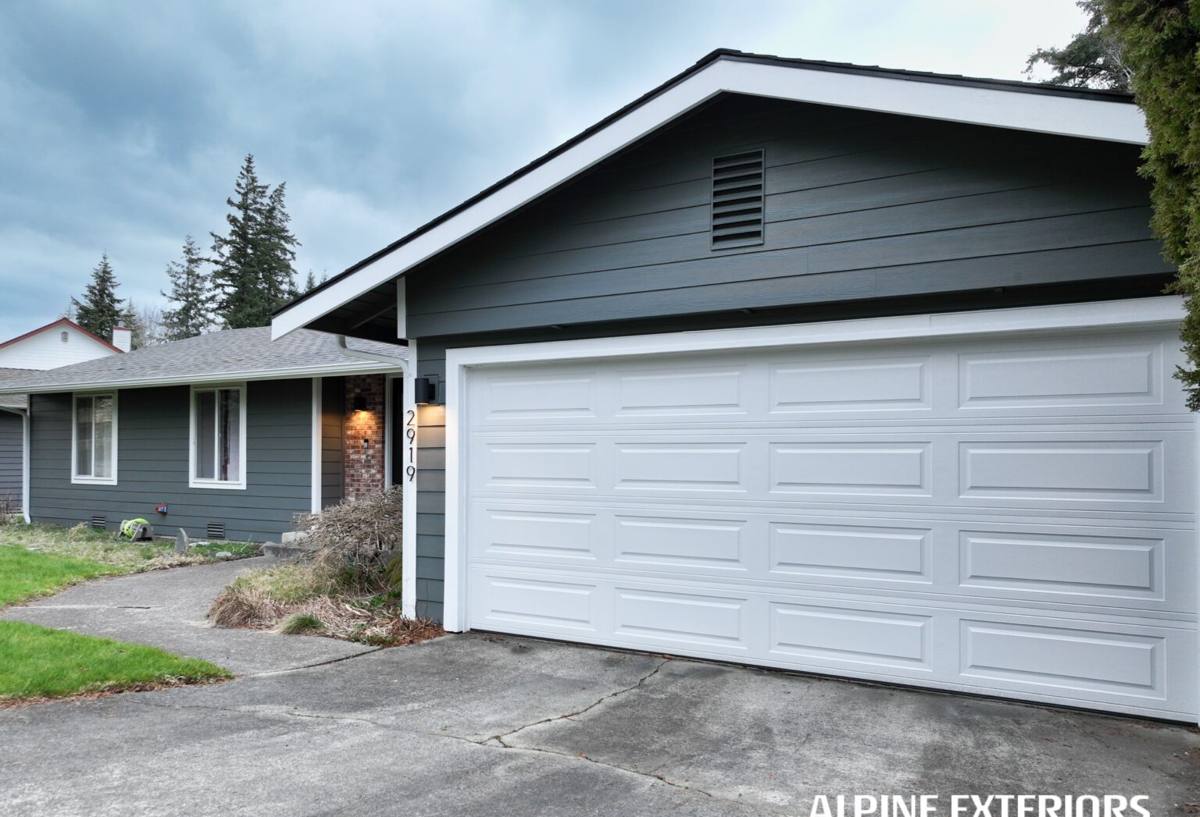
What Allura Gets Right
To be fair to the product: fiber cement as a category, whether it's Allura, Hardie, or Cemplank, beats wood and vinyl on the fundamentals that matter most in this climate. It doesn't rot, it resists pests, it holds paint far better than wood siding, and it's non-combustible. Allura's panel and lap products are manufactured to recognized ASTM standards and sold through legitimate building supply channels. Homeowners who already have Allura on their home aren't sitting on a defective product — they're sitting on a product that, like any fiber cement siding, lives or dies on the quality of the installation and finish.
Where the differences show up are in the details: factory finish systems, climate-specific engineering, warranty structure, and how much support and consistency stand behind the product once it's on your wall. Those details matter more here than they would in a dry, mild climate, because King County siding takes on more water exposure over its lifetime than siding almost anywhere else in the country.
The Factory Finish Gap
Field-Applied Paint vs. Baked-On Finish
A lot of Allura siding gets installed primed, with the finish coat applied on-site after installation — the same way old-fashioned wood siding has always been painted. Field-applied paint depends heavily on weather conditions at the time of application, the skill and patience of the painting crew, and how many coats actually go on. In a region where dry, calm painting windows are genuinely scarce for a good chunk of the year, that's a real liability.
James Hardie's ColorPlus finish, by contrast, is baked on in a factory under controlled conditions before the boards ever leave the plant. It's not something we're layering on with a brush in a driveway between rain showers. That finish is engineered specifically to resist fading, chipping, and cracking, and it comes backed by its own dedicated finish warranty separate from the substrate warranty.
Why This Matters More Here
Moss and algae staining, driving rain that hits siding at an angle instead of straight down, and salt air near the Sound all accelerate the breakdown of a lesser finish. A factory finish that's cured and tested before installation gives us — and you — much more confidence that the color you pick is the color you'll still have in ten years, without a repaint.
Climate-Engineered Products vs. One-Size-Fits-All
James Hardie makes region-specific formulations of its siding, engineered around the moisture and freeze-thaw conditions of different parts of the country. The HZ5 formulation used in the Pacific Northwest is built around exactly the conditions King County throws at a house: sustained damp weather, driving rain off the Sound, and a moss season that can run most of the year on a shaded north-facing wall.
Allura does not offer that same tier of documented, climate-zone-specific engineering across its full product line the way Hardie does. That doesn't mean every Allura installation fails in the Pacific Northwest — plenty hold up fine when installed correctly. But when we're choosing the one fiber cement system to put our name behind on every job, we want the version that was explicitly engineered for our weather, not a general-purpose formulation.
Installation Sensitivity and Cut-Edge Sealing
Fiber cement siding, any brand, is only as good as its installation — and this is where a lot of siding problems actually originate, regardless of manufacturer. Every cut edge, nail penetration, and butt joint has to be properly sealed and back-primed, because raw fiber cement will wick moisture at an exposed edge. Get sloppy on caulking and flashing details and you'll see swelling, staining, or paint failure at the joints within a few years — on any fiber cement brand.
We've found that Allura's field documentation and finish requirements are less consistent from batch to batch and product line to product line than Hardie's, which makes it easier for edge-sealing steps to get skipped or done inconsistently by crews who install multiple brands. Standardizing on one manufacturer's installation manual, fastening schedule, and clearance requirements — and training our crews around that single system — removes a whole category of "which spec sheet applies here" mistakes.
Warranty Structure and What "Transferable" Actually Means
Both manufacturers offer warranties, but the strength and clarity of that warranty matters a lot when you're the one making a claim fifteen years from now, or selling the house to someone who inherits it. James Hardie's warranty on its siding is well-documented, widely recognized by real estate appraisers and inspectors, and transfers to a subsequent homeowner without a lot of friction — which matters for resale value in a market like King County's.
Allura's warranty coverage exists too, but it's less commonly encountered by local inspectors and appraisers, which can create friction — real or perceived — when it comes time to sell. We'd rather install a product where the warranty paperwork is instantly recognizable to anyone who touches the home afterward.
Product and Cost Comparison
| Factor | James Hardie (what we install) | Allura |
|---|---|---|
| Finish system | Factory-baked ColorPlus, separate finish warranty | Often field-primed and painted on-site |
| Climate engineering | Region-specific HZ formulations, HZ5 for the Pacific Northwest | General fiber cement formulation |
| Warranty recognition | Widely recognized by appraisers/inspectors, easy transfer | Less commonly encountered locally |
| Local availability | Strong supply and installer network in King County | More limited regional distribution |
| Material cost | Moderate-to-higher upfront | Often somewhat lower upfront |
| Long-term maintenance | Minimal if installed to spec | Depends heavily on finish and joint sealing quality |
Allura's lower upfront material cost is real and worth acknowledging — it's often a few dollars less per square foot than Hardie depending on the product line. Whether that's worth it depends on how long you plan to own the home and how much you value not touching the exterior finish again for a couple decades.
Why We Only Install One Brand
There's also a practical, unglamorous reason behind this: quality control gets harder every time you add a second or third product line to your crew's rotation. Fastening patterns, clearance requirements, caulking specs, and touch-up paint all differ between manufacturers. Every brand we'd add is another set of installation details our crews have to keep straight, and another place for a mistake to slip in.
By installing exclusively James Hardie, our crews get deep, repetitive experience with one system's quirks — how it cuts, how it takes fasteners, how it behaves in King County's wet-then-dry cycles — instead of spreading that knowledge thin across several brands. That specialization is a bigger factor in how long your siding lasts than most homeowners realize.
What to Ask Any Siding Contractor Before You Sign
- Which fiber cement brand and product line will actually be installed — get it named on paper, not just "fiber cement"
- Is the finish factory-applied or field-painted, and what does the finish warranty cover separately from the material warranty
- What clearance is being left at grade, decks, and roof lines to keep the bottom edge out of standing water
- How are cut edges and joints being sealed, and with what products
- Is the warranty transferable to a future homeowner, and how many years does it run
- Has the contractor installed this specific product line in this climate before, not just fiber cement in general
What We Actually Install
We put James Hardie on King County homes because we've seen it hold its color and its seams through the driving rain, the salt air, and the long moss season this area is known for — and because we can back it with a warranty that a future buyer's inspector will recognize without a second look. We're not going to tell you Allura is a bad product, because it isn't a defective one. It's just not the one we've chosen to build our name on.
If you're comparing siding options for your home, we're happy to walk through what we'd actually install and why, with no pressure to sign anything. Reach out for a free estimate and we'll take a look at your home's specific exposure and talk through what makes sense.