 King County
 Exterior Contracting for Queen Anne Homes
Queen Anne sits on one of the highest points in Seattle, with views over Elliott Bay and the Sound on one side and the city skyline on the other. That elevation and exposure is part of what makes the neighborhood desirable, and it's also exactly why exteriors up here take a beating that flatter, more sheltered parts of King County don't see as much. Wind off the water carries salt and moisture onto siding and trim, driving rain hits harder on exposed elevations, and the shade from mature trees on the quieter residential streets keeps moss and algae going strong for most of the year. We work on homes throughout Queen Anne and the surrounding Seattle neighborhoods, and we've built our approach around what actually holds up under those conditions rather than what looks good on a spec sheet.
King County Exterior handles siding, roofing, windows, and decks. We don't subcontract out the trades to different crews with different standards — the same company that flashes your windows is checking the drainage plane behind your siding and making sure your roof edges tie into everything correctly. On a house exposed to wind-driven rain, those connections matter as much as the materials themselves.
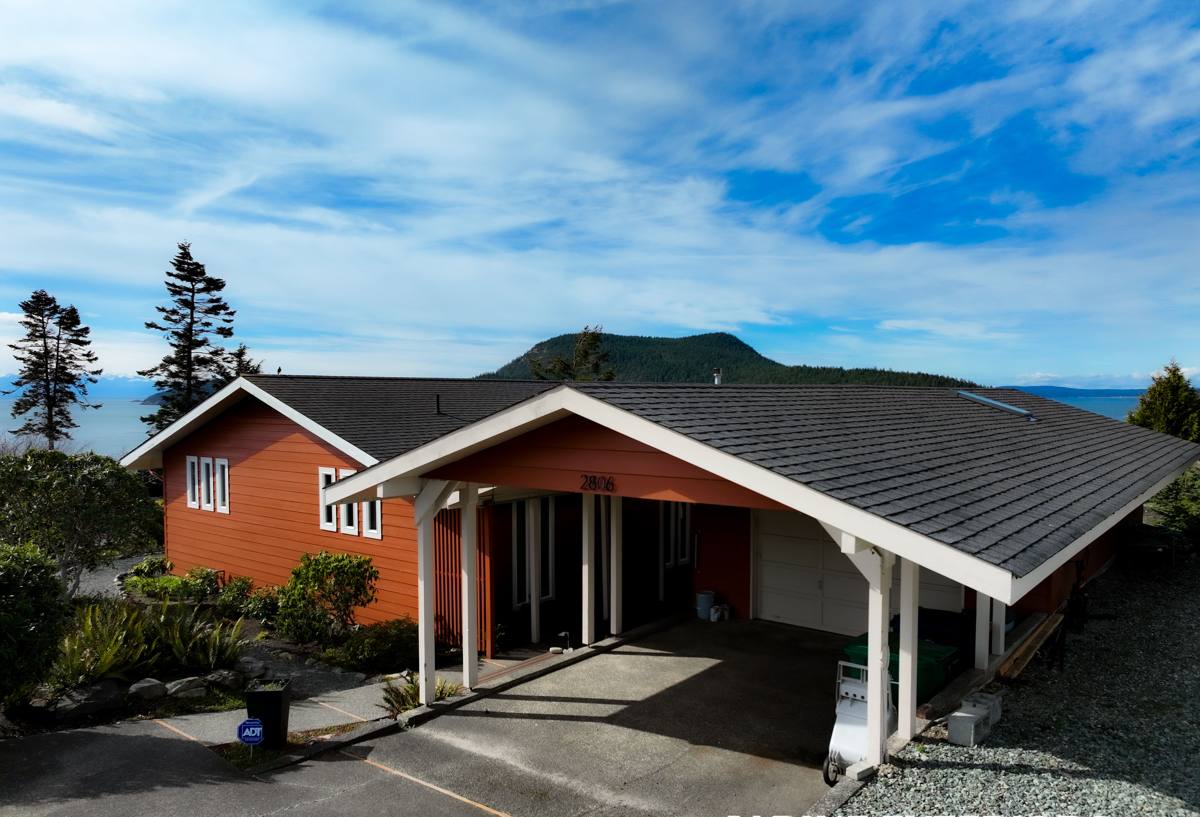
What Queen Anne's Climate Does to a House
Seattle's marine climate is mild compared to most of the country, but "mild" doesn't mean easy on a building. The combination of near-constant moisture, salt-laden air off Puget Sound, and long stretches without direct sun creates a specific set of problems for exteriors:
Salt Air and Wind Exposure
Homes on Queen Anne's western and northern slopes catch wind coming off the water. That air carries fine salt particles that accelerate corrosion on fasteners, flashing, and any metal trim that isn't rated for coastal exposure. Over years, cheap or mismatched hardware fails well before the siding or roofing around it does, which is how you end up with streaking, staining, and eventually water intrusion at points that should have been the strongest part of the assembly.
Driving Rain
Rain in the Pacific Northwest is rarely a downpour — it's more often a sustained, wind-pushed drizzle that finds every gap, seam, and poorly lapped joint over time. On exposed elevations, wind-driven rain gets pushed sideways and upward into places a builder in a drier climate might not think twice about. This is why the quality of the water-resistive barrier, flashing details, and siding overlaps matter more here than in most of the country. A product or installation that's "good enough" in a dry climate can fail here.
Moss and Algae
Shade, moisture, and mild temperatures are a perfect combination for moss and algae growth. On roofs, moss holds water against shingles and can work its way under tabs and flashing, shortening the life of the roof. On siding, algae staining is mostly cosmetic but it's a sign that a surface is staying damp longer than it should — which, over time, is also a durability issue, not just an appearance one.
Siding: Why We Only Install James Hardie
King County Exterior installs James Hardie fiber cement siding exclusively. We don't install vinyl, LP SmartSide, Cemplank, Allura, or primed wood siding like cedar or spruce, and we're upfront about why: in a climate like Queen Anne's, the material you choose has an outsized effect on how the house performs ten and twenty years down the road, not just how it looks on install day.
The Trade-Offs With Other Materials
- Vinyl siding is inexpensive and low-maintenance in dry climates, but it expands and contracts with temperature swings, can warp or crack in wind, and doesn't hold paint if you ever want to change the color. It also isn't a great match for the look many Queen Anne homes are going for, particularly older craftsman and Tudor-influenced homes in the neighborhood.
- LP SmartSide and other engineered wood products use treated wood strand technology, which performs reasonably well when installation is precise, but any breach in the factory coating or field-cut edges exposes wood fiber to moisture — a real concern in a climate where surfaces stay damp for extended stretches.
- Cemplank and Allura are also fiber cement, and fiber cement as a category is the right call for this region. But we've standardized on one manufacturer, one factory finish system, and one warranty structure so that every job we do is consistent, and after comparing product lines and installation systems, James Hardie is the one we stand behind.
- Primed cedar or spruce siding can look beautiful, but raw wood siding requires ongoing maintenance — recaulking, repainting, and vigilance about moisture — that most homeowners underestimate. In a climate this wet, that maintenance schedule gets demanding fast, and gaps in it show up as rot.
Why James Hardie
James Hardie fiber cement is non-combustible, dimensionally stable, and manufactured with regional climate zones in mind — the HZ5 product line is engineered for the moisture and freeze-thaw patterns of the Pacific Northwest. The ColorPlus factory finish is baked on under controlled conditions, which holds color and resists fading and chipping far better than field-applied paint, and it comes with a strong transferable warranty that follows the house if you sell. None of that matters if the installation is sloppy, which is why our crews follow Hardie's fastening, clearance, and flashing specifications on every job rather than treating them as optional.
Roofing in a Wet, Shaded Climate
Roofing decisions in Queen Anne need to account for moss, sustained moisture, and the fact that many lots have significant tree cover. We look at ventilation, underlayment quality, and flashing details around chimneys, skylights, and valleys — the places where a roof actually fails — rather than just swapping shingles. A roof that's ventilated correctly dries out between rain events instead of staying damp, which slows moss growth and extends the life of the material underneath.
Windows: Sealing Out Wind-Driven Rain
Window failures in this climate are almost always about the installation, not the window itself. Flashing that isn't integrated correctly with the water-resistive barrier, or a rough opening that wasn't properly sealed, lets wind-driven rain track behind the frame and into the wall cavity — often for years before it shows up as a stain or soft spot inside. When we replace windows, we treat the flashing and sealing details as the real work, with the window itself being only part of the job. We also talk with homeowners about energy performance, since Queen Anne's older housing stock often has single-pane or early double-pane windows that are due for an upgrade regardless of exterior condition.
Decks: Built for Exposure
Decks in Queen Anne face the same moisture and moss pressure as roofs and siding, plus direct foot traffic and UV exposure on sunnier lots. Proper ledger flashing, joist protection, and drainage away from the house are the details that determine whether a deck lasts a decade or needs major repair in half that time. We build decking systems that account for water shedding first, appearance second — though with the right materials you don't have to sacrifice either.
Comparing Siding Options for Queen Anne Homes
| Material | Moisture Performance in PNW Climate | Maintenance | Do We Install It |
|---|---|---|---|
| James Hardie Fiber Cement | Engineered for this climate zone (HZ5); stable in sustained moisture | Low — factory finish, occasional wash | Yes |
| Vinyl | Can warp/crack with temperature swings and wind | Low, but can't repaint | No |
| LP SmartSide / Engineered Wood | Good if coating stays intact; vulnerable at cut edges | Moderate — inspect coating integrity | No |
| Cemplank / Allura (Fiber Cement) | Comparable category performance to Hardie | Low | No — we standardize on Hardie |
| Primed Cedar / Spruce | Requires consistent upkeep to prevent moisture intrusion | High — recaulk, repaint, monitor | No |
Why a Local Crew Matters
Exterior work in Seattle isn't the same job as exterior work in a dry, low-wind climate, and a crew that mostly works inland or in different weather patterns doesn't always account for the specific failure points that show up here — salt exposure on west-facing walls, moss buildup in shaded valleys, wind-driven rain at window and door openings. A local crew that works throughout King County sees these patterns repeatedly and builds them into every estimate and installation, rather than treating them as exceptions.
What to Expect From an Estimate
- An on-site walk-through of your home's exposure — which elevations face wind and rain, where moss or algae staining shows up, and where past repairs may point to a recurring issue
- An honest assessment of your current siding, roofing, windows, or deck condition, including what's actually failing versus what's cosmetic
- A written scope that explains the materials and methods we'd use, and why
- A straightforward answer if a product you're asking about isn't something we install, along with the reasoning
Getting Started
If you're dealing with siding that's showing its age, a roof holding onto moss longer than it should, windows that let in drafts or moisture, or a deck that needs attention, we're happy to take a look. Reach out for a free, no-pressure estimate — we'll walk the property, talk through what we see, and give you a straight answer on what your home actually needs.