 King County
 Why Ballard Decks Need a Different Approach
Ballard sits close enough to Puget Sound and the Ship Canal that salt-laden air is a daily fact of life for anything built outdoors. Add King County's long wet season, driving rain off the water, and the shade from mature trees on many older Ballard lots, and you get a set of conditions that punishes the wrong decking choice fast. A deck that would hold up fine in a dry inland climate can start showing problems within a couple of seasons here — fastener corrosion, moss creeping into board gaps, and wood fiber breaking down from repeated wet-dry cycling.
Composite decking was designed for exactly this kind of environment. It doesn't absorb water the way wood does, it doesn't need annual staining, and modern capped composite boards resist the moss and algae growth that's nearly unavoidable on a shaded, damp deck in this part of King County. That said, composite is not maintenance-free or install-proof — how it's installed matters as much as the material itself, especially in a climate this consistently wet.
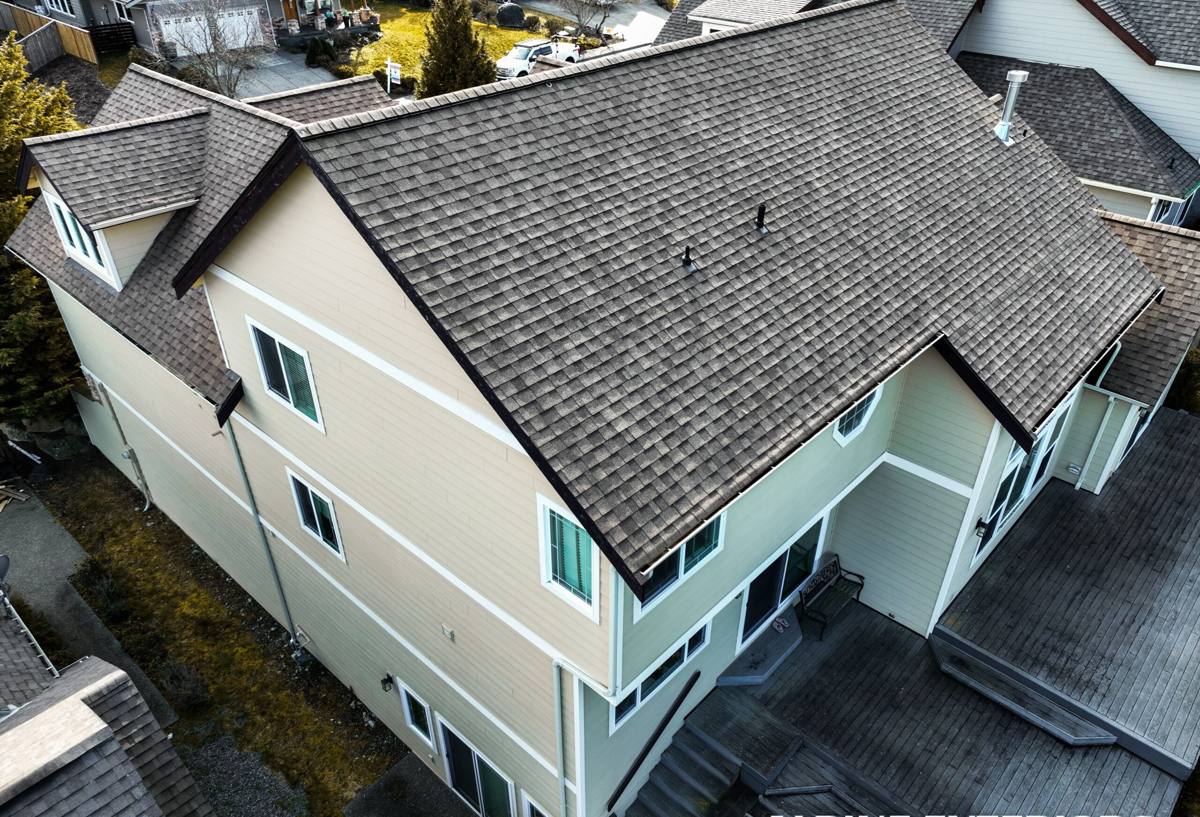
What Ballard's Climate Actually Does to a Deck
Salt Air and Metal Fatigue
Homes closer to the water deal with airborne salt that accelerates corrosion on anything metal — screws, joist hangers, brackets, and railing hardware. Standard hardware can start rusting and staining boards around fastener points well before the decking itself shows wear. This is one of the most common problems we see on older Ballard decks: the boards are fine, but the fasteners have failed and are leaving rust streaks or losing grip.
Driving Rain and Moisture Intrusion
Rain in this area doesn't just fall straight down — wind off the Sound and the Ship Canal pushes it sideways, which means it gets under railings, into ledger board connections, and behind any trim that isn't properly flashed. A deck built without attention to water management will trap moisture in places you can't see until rot has already set in underneath.
Moss, Algae, and Shade
Many Ballard lots have tree cover or sit close to neighboring homes, limiting direct sun on part or all of a deck. Combined with King County's long wet stretch from fall through spring, that shade creates ideal conditions for moss and algae to take hold on decking surfaces, especially at board edges and in fastener grooves where debris collects.
Freeze-Thaw Cycling
King County doesn't get the deep freezes of colder climates, but it does get repeated cycles of cold snaps followed by rain and warming. For wood decking, that cycle of swelling and contracting is what eventually opens up cracks and loosens fasteners. Composite handles this cycling far better because it doesn't absorb and release water the same way.
Why We Recommend Composite for Ballard Specifically
We install composite decking as our standard recommendation for Ballard homeowners who want a deck that holds up without a demanding upkeep schedule. That's not a knock on wood — a well-maintained cedar or pressure-treated deck can look great — but "well-maintained" in this climate means annual cleaning, sealing, and vigilant moss control, and most homeowners don't have the time for that every year. Composite shifts the maintenance burden from an annual ritual to occasional cleaning.
| Factor | Composite Decking | Traditional Wood |
|---|---|---|
| Moisture absorption | Very low; capped boards resist water uptake | Absorbs water, prone to swelling and warping |
| Moss and algae resistance | Capped surface resists growth, easier to clean off | Porous surface holds moisture, moss takes hold faster |
| Annual maintenance | Periodic wash-down, no staining or sealing needed | Sanding, staining, or sealing recommended yearly |
| Fastener/hardware exposure | Hidden fastener systems common, less hardware exposed | Often face-screwed, more hardware exposed to salt air |
| Upfront cost | Higher material cost | Lower material cost |
| Long-term cost | Lower over the life of the deck due to reduced upkeep | Higher over time from repeated maintenance and repairs |
The honest trade-off is upfront cost. Composite material runs more than pressure-treated lumber, and depending on the board line, can approach or exceed higher-grade cedar. We tell homeowners straight: if you plan to sell in a year or two and want the lowest possible install cost, wood might make sense. If you're staying in the home and want to stop thinking about your deck every spring, composite pays for itself in avoided maintenance.
What a Correct Composite Install Actually Involves
The board itself is only part of what makes a deck last in this climate. The substructure and hardware decisions underneath matter just as much, and this is where we see the most corners cut on lower-quality installs around King County.
Framing and Substructure
We build or evaluate the joist framing to confirm proper spacing for the specific composite product being used — composite boards often require tighter joist spacing than wood, especially on angled or picture-frame layouts, and using wood spacing standards on composite leads to sagging over time.
Corrosion-Resistant Hardware
Given the salt air exposure in Ballard, we use fasteners and structural hardware rated for coastal or high-moisture exposure rather than standard-grade hardware. This is one of the most overlooked details in budget deck builds and one of the first things to fail when it's skipped.
Ledger Board Flashing
Where the deck attaches to the house, proper flashing keeps driving rain from working its way behind the ledger board and into the wall structure. This connection point is the single most common source of hidden rot on decks in wet climates, and it's not something you can inspect just by looking at a finished deck.
Airflow Underneath
We account for ventilation beneath the deck surface so moisture doesn't get trapped against the joists. Decks built low to the ground or against grade without adequate airflow tend to hold dampness longer after every rain, which shortens the life of the substructure even when the decking above is composite.
Board Spacing for Drainage
Proper gapping between boards lets water drain through rather than pool on the surface — important in a climate where a light Ballard drizzle can last for days at a time.
Our Process, Start to Finish
- On-site assessment: We look at your existing deck or build site, note drainage patterns, shade exposure, and proximity to the water, and flag any structural issues before quoting.
- Material selection: We walk through composite board options and hardware upgrades appropriate for your specific exposure — a deck under tree cover needs different considerations than one in open sun near the water.
- Permitting: Where required by King County or city code, we handle permit submission so the build is documented and compliant.
- Demo and substructure work: If replacing an existing deck, we remove old decking and inspect the framing underneath — this is often where hidden rot or hardware failure turns up.
- Framing and flashing: We build or reinforce the substructure to spec, with corrosion-resistant hardware and proper ledger flashing.
- Composite installation: Boards are installed with correct spacing and fastening method for the product line, including hidden fastener systems where applicable.
- Final walkthrough: We go over the finished deck with you, including what maintenance (if any) is actually needed going forward.
Maintenance: What Composite Still Needs
Composite decking is low-maintenance, not no-maintenance. In Ballard's climate, a little seasonal attention goes a long way toward keeping a deck looking and performing like new.
- Sweep off leaves and debris regularly, especially in fall — trapped organic matter holds moisture against the boards and feeds moss growth
- Wash the deck surface a couple of times a year with a mild soap and water solution to prevent algae buildup in shaded areas
- Check railing and stair hardware periodically for early signs of corrosion, particularly on decks closer to the water
- Keep gutters and downspouts near the deck clear so runoff isn't dumping extra water onto the deck surface
- Avoid pressure washing directly into board seams at high pressure, which can force water into fastener channels
- Trim back overhanging branches where possible to reduce shade and speed up drying time after rain
Why Hiring a Crew That Already Works Ballard Matters
A deck built by a crew unfamiliar with this specific coastal-influenced pocket of King County is more likely to make assumptions that don't hold up here — using standard hardware instead of corrosion-resistant fasteners, skipping extra ledger flashing because "it usually doesn't rain that much," or spacing boards to a generic spec instead of accounting for the shade and moisture patterns unique to a given lot. We work on homes throughout Ballard and the surrounding King County area regularly, so these aren't hypotheticals for us — they're the details we build in as standard practice because we've seen what happens when they're skipped.
Local experience also means we're realistic about timelines. Wet-season scheduling in King County means we plan around weather windows rather than promising a install date that ignores the forecast, and we're upfront if conditions mean waiting a few extra days is the better call for a proper install.
Common Questions About Sizing and Layout
Every Ballard lot is a little different — narrow side yards, sloped backyards toward the water, or decks that need to tie into an existing patio or stair system. Composite decking is flexible enough to handle most of these layouts, but the framing plan needs to be worked out specifically for your site rather than applied generically. This is part of why an on-site assessment matters more than a phone quote: dimensions, slope, and existing structure all affect both the substructure design and the final cost.
If you're weighing a new composite deck or thinking about replacing an aging wood deck before another wet King County winter sets in, we're happy to take a look and put together a straightforward, no-pressure estimate. Fill out the form below and we'll get you scheduled.