 King County
 Board & Batten Siding Built for Shoreline's Coastline Climate
Shoreline sits right along Puget Sound, which means homes here deal with a combination of weather stresses that inland King County neighborhoods don't see nearly as often: salt-laden air blowing off the water, driving wind-rain that hits walls sideways instead of just falling straight down, and a moss and algae season that can run eight or nine months out of the year in shaded, north-facing exposures. Board and batten siding — with its bold vertical lines and deep shadow reveals — is one of the most requested looks for Shoreline remodels and new builds, but the material behind that look matters just as much as the style. A board and batten pattern cut into the wrong substrate will telegraph every one of those climate stresses back at the homeowner within a few years: swollen seams, peeling paint at the battens, and moss creeping up from the ground line.
We install board and batten exclusively in James Hardie fiber cement. This page covers what that means specifically for a Shoreline property — what the climate demands, what a correct installation looks like, and how our process is built around this neighborhood's conditions rather than a generic install checklist.
Why Board & Batten Is a Popular Choice Here
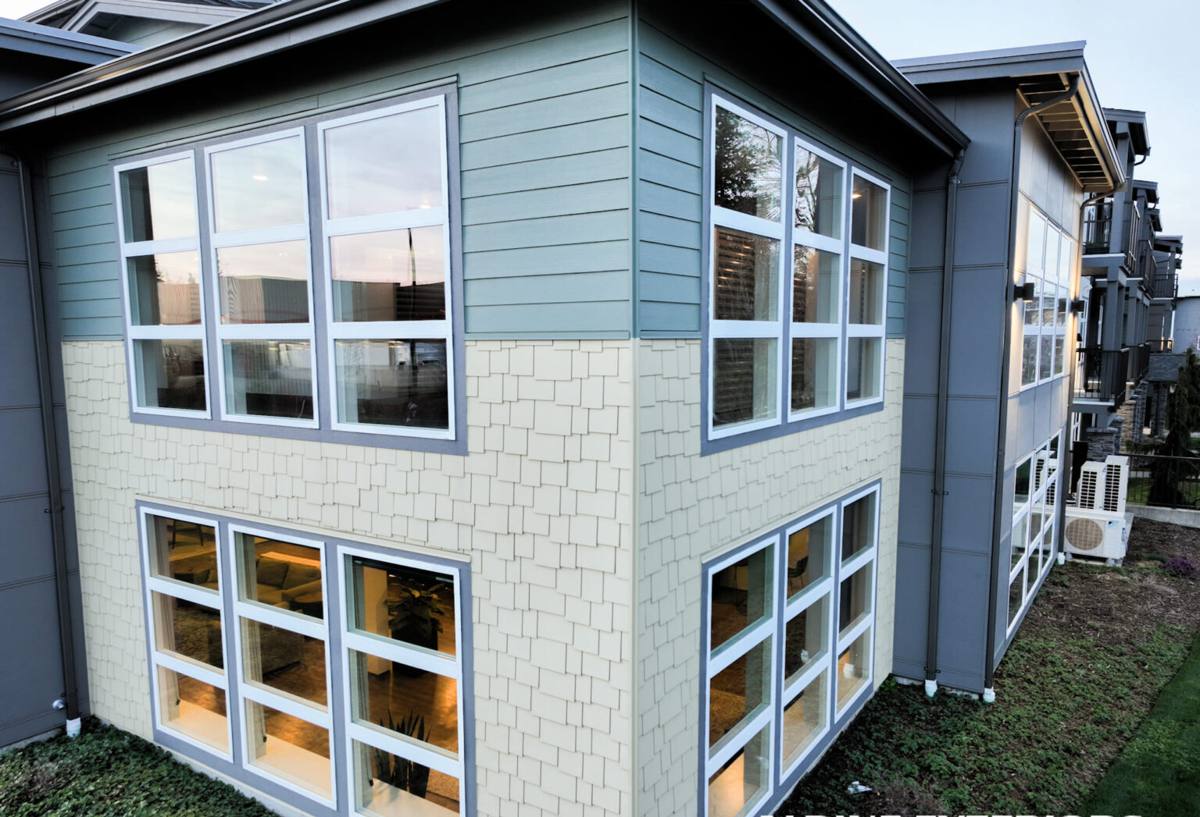
Board and batten has a real functional history, not just an aesthetic one. The wide vertical boards with narrow battens covering the seams were originally a practical response to keeping wind-driven moisture out of gaps between boards — which is exactly the problem Shoreline's exposure to Puget Sound creates. Beyond function, it's a look that works well with the mix of craftsman, modern farmhouse, and contemporary remodels common in this part of King County, often paired with lap siding on the same elevation to break up a facade or highlight a gable, entry, or accent wall.
The style choice is sound. The question we push homeowners to think harder about is what material is doing the actual weather-resisting behind that vertical board look.
What Shoreline's Climate Specifically Demands
- Salt air exposure: Properties within a mile or two of the Sound see airborne salt that accelerates corrosion of fasteners and finishes not rated for it, and it can chalk or dull lower-grade paint finishes faster than inland exposures.
- Driving, wind-driven rain: Storms coming off the water don't just fall on a wall, they push into it. Seams, butt joints, and batten laps need to be detailed to shed water under wind pressure, not just under gravity.
- Long moss and algae season: Shaded north and east walls, tree-covered lots, and the mild, damp Puget Sound winter combine to keep siding surfaces wet for extended stretches, which is exactly what moss and algae need to establish.
- Temperature swings that stress joints: Shoreline doesn't get extreme heat, but the freeze-thaw cycles and damp-to-dry swings through fall and winter still work on any material that expands and contracts at a different rate than what's fastening it down.
What Happens When Board & Batten Is Installed in the Wrong Material
Board and batten's biggest structural vulnerability, regardless of what it's made from, is the batten strip itself — a narrow piece of trim fastened over a seam, holding moisture against the substrate underneath at exactly the point where two boards meet. In a wood or engineered wood product, that's the first place we'd expect to see swelling, soft spots, or paint failure, because the batten traps moisture against a seam long after the surrounding wall face has dried out.
In vinyl board and batten, the concern runs a different direction: vinyl doesn't rot, but it isn't dimensionally stable under UV and temperature swings the way fiber cement is, and it doesn't hold paint if a homeowner ever wants to change color — you're stuck with the manufacturer's factory tone for the life of the product. In a marine climate with salt air also working on top of that expansion and contraction, seams and battens on lower-grade materials tend to show their age visibly at the joints — the exact detail lines that make board and batten attractive in the first place.
None of that means every non-Hardie product is destined to fail. It means the batten-and-seam geometry of this specific siding style is unforgiving of moisture-sensitive substrates, and Shoreline's exposure to the Sound removes any margin for error.
Why We Install James Hardie for This Application
James Hardie fiber cement is cement, sand, and cellulose fiber — it doesn't rot, doesn't feed moss the way wood-based products can, and doesn't expand and contract with humidity the way wood or wood-composite battens do. That last point matters more for board and batten than almost any other siding style, because the batten-over-seam detail is precisely where dimensional movement shows up first.
Hardie's ColorPlus factory-applied finish is baked on and warrantied against fading and chipping, which holds up better against direct sun exposure and salt air than field-applied paint — and it means Shoreline's coastal glare and moisture don't have the same effect on the finish that they'd have on a repainted surface. Hardie's HZ5 product line is engineered specifically for climates like ours: freeze-thaw cycling, sustained damp exposure, and wind-driven rain are what it's built to handle, rather than being a general-purpose product pressed into service here.
Board & Batten-Specific Installation Details We Follow
- Correct batten spacing and fastening pattern per Hardie's published installation instructions — not a generic trim nailing schedule
- Rain-screen or drainage plane behind the siding assembly so any moisture that does get past the surface has a path to drain and dry, rather than sitting against the wall sheathing
- Properly flashed and caulked butt joints, with joints staggered and sealed per manufacturer spec rather than butted tight and left to the paint film
- Correct fastener type and depth — coastal exposure calls for fasteners rated for the environment, not standard interior-grade hardware
- Ground clearance maintained at the base of the wall, which is one of the most common places moss and rot problems start on any siding style in this region
Our Process for a Shoreline Board & Batten Project
1. On-Site Assessment
We look at sun and shade exposure per elevation (moss risk varies a lot wall to wall on the same house), proximity to the water, existing moisture damage behind current siding, and how the board and batten pattern will lay out around windows, corners, and roof lines.
2. Substrate and Drainage Check
Before new siding goes up, we check what's underneath. If there's existing water damage, inadequate flashing, or no drainage plane, we address that first — putting new siding over a compromised substrate just hides the problem for a while.
3. Layout Planning
Board and batten reads differently than lap siding — batten spacing needs to be planned around window and door openings so the pattern lines up cleanly, not just run edge to edge and trimmed wherever it lands.
4. Installation to Manufacturer Spec
Fastening pattern, joint treatment, flashing details, and clearances follow James Hardie's published requirements for this climate zone and product line — which is also what keeps the manufacturer's warranty intact.
5. Final Walkthrough
We walk the finished elevations with the homeowner, checking sightlines, batten alignment, and trim details before calling the job complete.
Comparing Board & Batten Material Options for a Marine Climate
| Factor | James Hardie Fiber Cement | Wood / Engineered Wood | Vinyl |
|---|---|---|---|
| Moisture & rot resistance | Does not rot; cement-based | Vulnerable at seams and battens if moisture gets in | Won't rot, but seams can trap moisture behind panel |
| Salt air performance | Factory finish resists chalking and fade | Field paint chalks and wears faster near the Sound | Can become brittle over time under UV and salt exposure |
| Moss/algae resistance | Cement substrate doesn't feed growth the way wood fiber can | More prone to moss/algae in shaded, damp exposures | Resistant to growth but can trap moisture behind panel |
| Repaintable | Yes, when needed down the road | Yes, requires more frequent repainting | No — locked into factory color |
| Dimensional stability | Minimal expansion/contraction | Moves with humidity, stresses seams | Expands/contracts more with temperature swings |
Maintenance Expectations After Installation
Even with a moisture-stable material like Hardie, board and batten in a Shoreline exposure benefits from a bit of routine attention:
- Periodic rinse-down of shaded, north-facing elevations to keep moss and algae from establishing, especially through the wet season
- Visual check of caulked joints and trim intersections every year or two, since caulk is a maintenance item on any siding system regardless of the substrate behind it
- Keeping gutters and downspouts clear so roof runoff isn't dumping extra water down a wall face
- Maintaining clearance between siding and soil, mulch, or plantings at the base of the wall
This is meaningfully less upkeep than a wood or engineered-wood board and batten system would need in the same location, but it isn't zero-maintenance — no exterior siding product is, regardless of what's advertised.
Why Local Experience Matters for This Job
Board and batten installation quality shows up in details that are easy to get wrong if a crew isn't used to marine exposure: batten spacing that doesn't account for expansion, fastener choices that aren't rated for salt air, or a drainage plane that's skipped to save a step. A crew that already works Shoreline and the surrounding King County shoreline communities has already seen how these houses perform through a full wet season and knows which elevations need the most attention before problems start. That local pattern recognition is worth more than a generic installation manual, even a good one.
Get a Straightforward Estimate
If you're weighing board and batten for a Shoreline home, we're glad to walk your property, look at sun exposure and existing siding condition, and give you a straightforward assessment of what the job actually involves. Reach out using the form below for a free, no-pressure estimate.