 King County
 Roofing Built for Issaquah's Climate, Not a Generic Spec Sheet
Issaquah sits where the flatlands of King County start climbing into the foothills, and that location shapes what a roof has to deal with. Homes here sit under heavier tree cover than much of the county, get long stretches of steady rain off and on for months at a time, and see moss and moisture problems that a drier neighborhood simply doesn't. A roof installed with a one-size-fits-all approach — the kind you'd get from a crew that mostly works elsewhere and treats Issaquah as a side job — tends to show its weaknesses within the first few wet seasons. Ours doesn't, because we build every new roof around how water, moss, and wind actually move across a King County roofline.
This page is about one job specifically: full new roof installation for homes in and around Issaquah. Not repairs, not a patch here and there — a complete roof system installed correctly from the deck up.
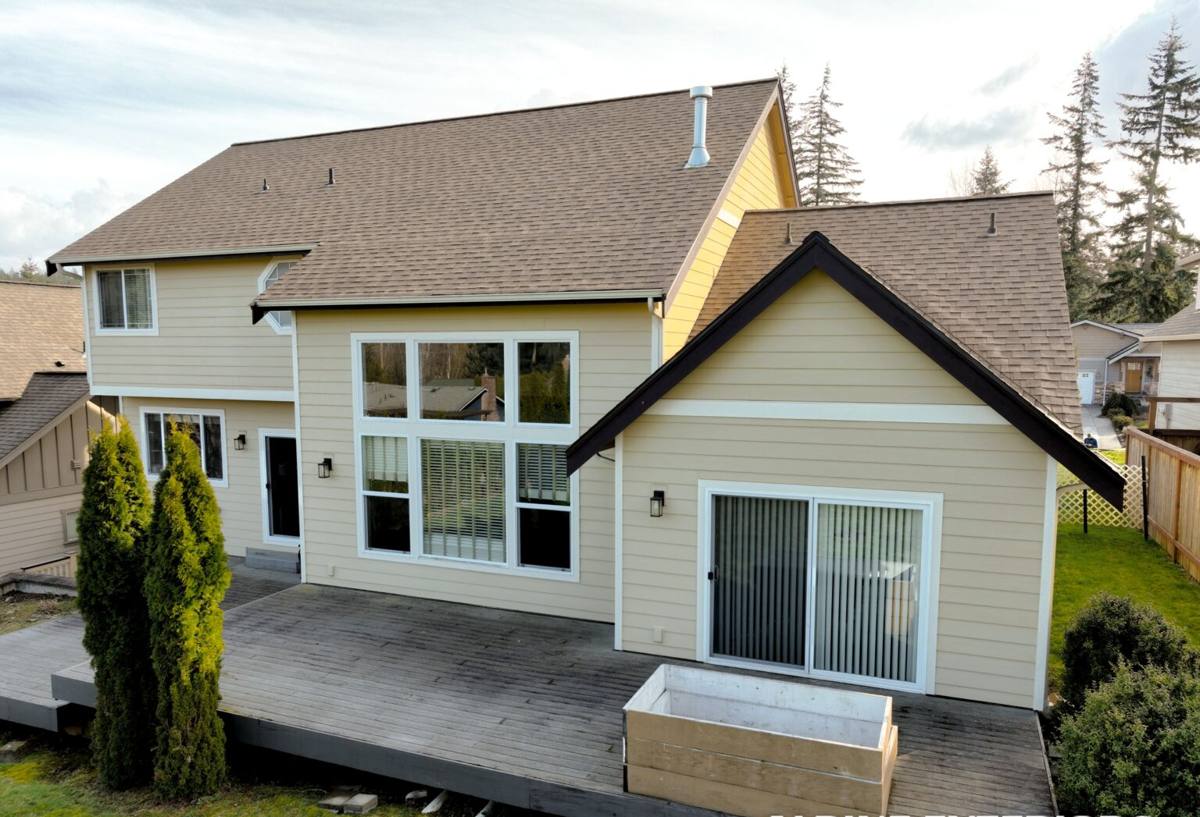
What Issaquah's Climate Actually Does to a Roof
Understanding the local conditions is the whole reason a "correct" roof installation looks different here than it would in a dry climate. A few things stand out:
- Driving rain over long durations. King County doesn't usually get short, hard downpours — it gets days and weeks of steady, wind-driven rain. That tests every seam, flashing detail, and underlayment lap on a roof, not just the field of the shingles.
- Heavy tree cover and shade. Issaquah's proximity to forested slopes means many roofs stay damp longer after rain than a roof out in the open would. Shaded, north-facing slopes in particular hold moisture.
- A long moss and algae season. Cool, damp conditions for much of the year create ideal moss growth conditions. Left unmanaged, moss lifts shingle edges, holds water against the roof deck, and shortens the life of an otherwise good roofing system.
- Regional humidity and salt-influenced air. Like much of the Puget Sound region, King County air carries more moisture and corrosive potential than an inland dry climate, which matters for metal flashing, fasteners, and vents.
- Wind events. Fall and winter storms bring gusty wind that finds any weak spot in fastening, sealing, or edge detail.
None of these are exotic problems — they're the normal cost of roofing in this part of the Pacific Northwest. But they mean a new roof installation in Issaquah has to be planned differently than one in a dry, low-tree-cover area, starting with ventilation and moisture control and carrying all the way through to how the crew seals every penetration.
What a Correct New Roof Installation Involves
Tear-Off and Deck Inspection
We don't install new roofing over old, failing layers. A full tear-off lets us inspect the roof deck for rot, soft spots, or moisture damage that's invisible from the ground or even from the attic. In a climate like Issaquah's, hidden deck damage from long-term moisture intrusion is one of the most common surprises we find — and one of the most important to catch before new roofing goes down, not after.
Deck Repair Where Needed
Any damaged or delaminated sheathing gets replaced before anything else happens. Installing a new roof over a compromised deck just hides the problem and shortens the life of the new system.
Ice and Water Protection at Vulnerable Areas
Eaves, valleys, and areas around chimneys and skylights get self-adhering waterproof underlayment. These are the spots where wind-driven rain and ice damming (during the occasional hard freeze) are most likely to force water backward under the roofing material. Given how much rain Issaquah roofs handle over a year, this step isn't optional — it's where a lot of long-term leaks originate if skipped.
Synthetic Underlayment Across the Field
Modern synthetic underlayment outperforms old felt paper in wet climates: it holds up better to prolonged moisture exposure and gives the roof a reliable secondary water barrier if anything ever gets past the surface layer.
Flashing Done Right
Flashing around chimneys, walls, valleys, and roof-to-wall transitions is where most roof leaks actually start — not in the open field of shingles. We install new metal flashing rather than reusing old pieces, and we pay particular attention to step flashing at sidewalls and counter-flashing at masonry, since these details fail quietly for years before a leak becomes visible inside the house.
Ventilation Balance
A roof needs balanced intake and exhaust ventilation to manage moisture from inside the home and to keep the roof deck at a stable temperature. Under-ventilated roofs in shaded, damp climates like Issaquah's are more prone to trapped moisture, which accelerates deck rot and moss growth from underneath.
Roofing Material Installation
Whatever material is chosen — see the comparison below — it's installed to manufacturer specification for nail placement, exposure, and overlap, with attention to wind-rated fastening given the storm patterns this area sees.
Final Detail Work
Ridge caps, exposed fastener sealing, pipe boot installation, and a final walk-through checking for any missed penetration or gap. Small details left undone are exactly what turns into a callback two winters later.
Choosing a Roofing Material for an Issaquah Home
There's no universally "best" roofing material — the right choice depends on your home's roof pitch, budget, shade exposure, and how much long-term maintenance you want to take on. Here's how the common options compare for a climate like this one:
| Material | Performance in Rain/Moss Climate | Typical Lifespan | Maintenance Load |
|---|---|---|---|
| Architectural asphalt shingles | Solid performer when properly ventilated and flashed; moss-resistant granule options available | 25–30 years | Periodic moss/debris removal recommended |
| Standing seam metal | Sheds water and moss buildup extremely well due to smooth, steep-shed surface | 40–50+ years | Low |
| Wood shake | Traditional Pacific Northwest look, but requires more diligence against moisture retention in shaded areas | 20–30 years (with upkeep) | Higher — needs regular treatment and moss management |
| Synthetic composite shingle | Good moisture resistance, consistent appearance, less prone to moss-driven cupping than wood | 30–50 years | Low to moderate |
For heavily shaded lots — common around Issaquah's tree-lined neighborhoods — we often steer homeowners toward metal or moss-resistant shingle products specifically because they hold up better under prolonged dampness with less ongoing maintenance. That said, the right call always depends on the specific roof, and we'll walk through the honest trade-offs for your home rather than pushing one product across the board.
Our Process, Start to Finish
- On-site inspection. We assess the existing roof, deck condition, ventilation, and any problem areas specific to your property's sun and shade exposure.
- Written estimate. A clear scope of work and pricing, no vague allowances or surprise add-ons buried in fine print.
- Material selection. We go over options suited to your roof's pitch, shade level, and budget — including how each performs against moss and moisture specifically.
- Scheduling around weather. Roofing in King County means working around rain windows. We plan installs to minimize the time your home has an open roof deck.
- Tear-off, deck repair, and installation. Completed by a crew familiar with the flashing and ventilation details this climate demands.
- Cleanup and final walk-through. Site cleared of debris and nails, and we walk the finished roof with you before calling the job done.
Signs an Issaquah Home Needs a New Roof, Not Another Repair
- Granule loss heavy enough that shingles look patchy or bald in sun-exposed areas
- Moss buildup returning within months of cleaning, especially on shaded slopes
- Soft or spongy spots when walking the roof, indicating deck damage underneath
- Daylight visible through the roof deck from inside the attic
- Repeated leaks around the same flashing points despite prior patch repairs
- Shingles curling, cracking, or lifting at the edges
- The roof is past 20–25 years old with no major work done
If your roof is showing one or two of these signs, a targeted repair might still make sense. If several apply at once, a full replacement is usually the more cost-effective path — repeated repairs on an aging roof in a wet climate tend to cost more over time than a properly installed new system.
Why Local Installation Experience Matters Here
A crew that mostly works in drier parts of the state, or that treats every job with the same generic spec regardless of climate, is more likely to under-ventilate a shaded roof, skip extra ice-and-water protection at valleys, or use a fastening pattern that isn't matched to King County wind and rain patterns. None of those shortcuts show up on installation day — they show up two or three winters later, as a moss problem that won't go away or a leak that starts at a flashing detail that was never sealed correctly.
Working roofs in and around Issaquah regularly means knowing which neighborhoods sit under heavier tree canopy, which roof orientations hold moisture longest, and which flashing and ventilation choices actually hold up through a full King County wet season — not just on paper, but on real roofs a season or two later.
Permits, Warranty, and What to Expect Afterward
Roofing permits in King County jurisdictions are typically required for full replacements — we handle that as part of the process so you don't have to navigate it yourself. On the warranty side, you're generally looking at two separate things: the manufacturer's material warranty and the contractor's workmanship warranty. Both matter, since most roof failures trace back to installation detail rather than the material itself. We'll walk through both plainly before work starts, with nothing left to assume.
After installation, a new roof in this climate still benefits from periodic checks — clearing debris from valleys, keeping moss in check, and a visual inspection after major storms. A well-installed roof doesn't need constant attention, but a little seasonal awareness goes a long way in a climate that stays damp as much of the year as King County's does.
Get a Straightforward Estimate
If your roof is aging, showing moss you can't get ahead of, or you're just planning ahead for a home in Issaquah, we're happy to take a look and give you an honest read on where things stand. The estimate is free, there's no pressure attached to it, and you'll get a clear explanation of what your roof actually needs — not a generic sales pitch. Use the form below to get started.