 King County
 Why Queen Anne Homes Need a Different Approach to Windows
Queen Anne sits high above the rest of Seattle, and that elevation cuts both ways. The views are part of what makes the neighborhood what it is, but that same exposure means wind off Puget Sound hits these homes harder and more often than it hits houses tucked into lower, more sheltered parts of King County. Add in the long stretch of wet months we get every year, and window assemblies here are under near-constant pressure from moisture, wind-driven rain, and salt-laden air moving in off the water.
A lot of the housing stock on the hill is older — craftsman bungalows, older Victorians, and mid-century houses that have been added onto or updated more than once over the decades. Original window openings in these homes are frequently non-standard sizes, out of square from decades of settling, or framed in a way that doesn't match anything you'll find on a shelf at a big box store. That's the core reason "custom" matters here: it's not a marketing word, it's what the actual building conditions require.
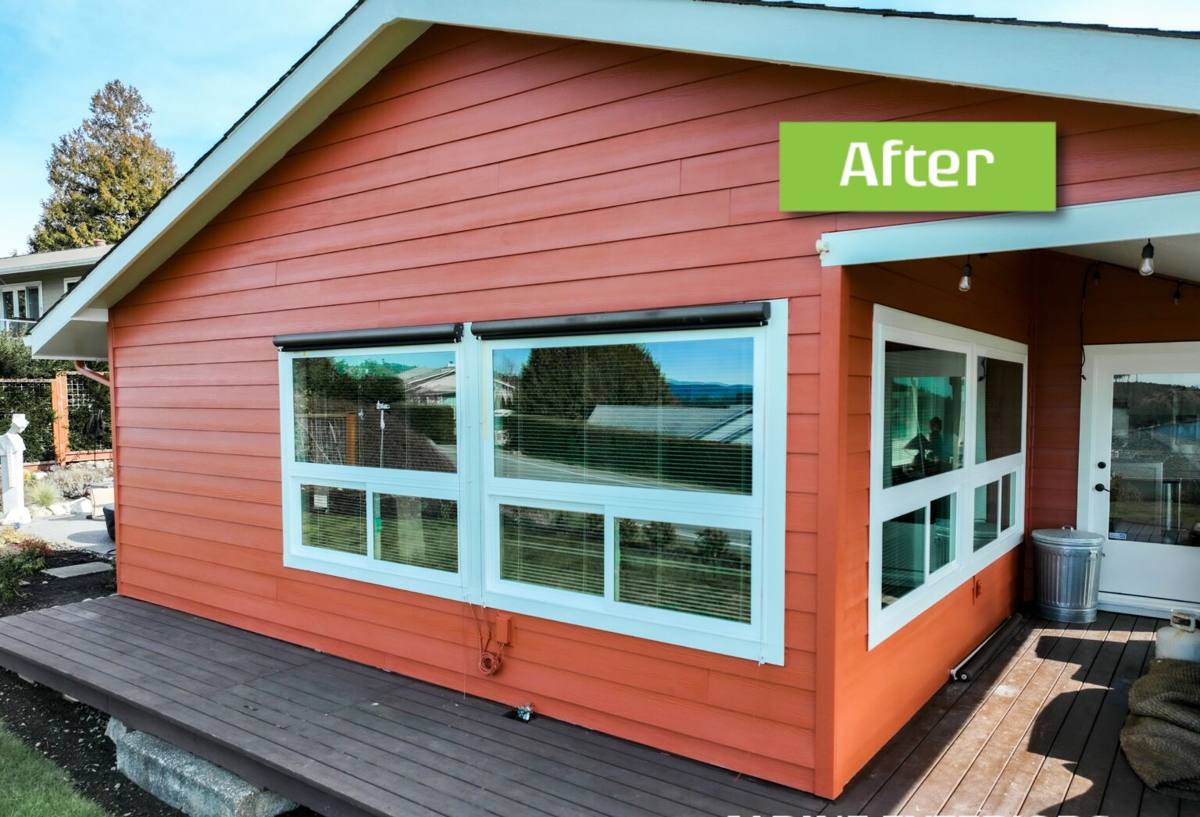
What "Driving Rain" Actually Does to a Window Assembly
Driving rain isn't just rain that falls harder — it's rain pushed sideways by wind, which means it hits window components that were never designed to shed water horizontally. On an exposed hillside lot, that pressure finds every weak point: a nail fin that wasn't lapped correctly under the house wrap, a sill pan that's missing or improperly sloped, or old caulk that's shrunk and cracked at the corners.
Over time, water that gets behind the window doesn't just cause a stain on the interior sill. It saturates the framing lumber around the opening, which leads to rot, and it can travel down into the wall cavity where it stays wet long after the storm has passed. This is a slow problem — most homeowners don't notice it until there's visible damage, and by then the fix is bigger than a window replacement.
Salt Air and Hardware Corrosion
Proximity to the Sound means airborne salt settles on exterior surfaces, including window hardware. Cheaper aluminum cranks, hinges, and locking mechanisms corrode faster in this environment than they would further inland. It's a slow, cosmetic problem at first — pitting, stiffness in the operation — but it eventually affects how well a window seals and locks, which matters for both weather performance and basic security.
Moss Season and Window Perimeters
Moss doesn't grow on glass, but it absolutely grows in the shaded, damp perimeter areas around windows — on wood trim, in corner joints, and anywhere organic debris collects and stays wet for months at a time. Moss and the moisture it holds against wood trim accelerate rot in exactly the spots where a window's weather seal depends on solid material underneath it. A window can be perfectly installed and still fail early if the trim around it is quietly rotting under a mat of moss.
Signs a Queen Anne Home's Windows Need Attention
- Visible gaps, cracked caulk, or daylight around the window frame from the interior
- Soft or discolored wood on the sill, jamb, or exterior trim
- Persistent condensation between panes on double-pane units (a sign the seal has failed)
- Windows that are hard to open, close, or lock — often a sign of frame movement or corroded hardware
- Musty smell or visible mold near window openings, especially on north- or west-facing walls
- Drafts you can feel on a windy day even with the window fully latched
- Peeling paint or bubbling on interior trim near the window, which usually points to trapped moisture
What Correct Custom Window Work Involves
"Custom" starts with accurate measurement, not a catalog size. On older Queen Anne homes especially, we measure each opening individually — width, height, and diagonal, at multiple points — because openings settle unevenly and rarely stay perfectly square over 60-100 years. A window built to the actual opening fits tighter and seals better than a stock size forced into a space it wasn't made for.
Beyond sizing, correct installation in this climate depends on a handful of details that are easy to skip and expensive to fix later:
- Sill pan flashing that directs any water intrusion back out, rather than letting it pool at the bottom of the frame
- Proper flashing sequence around the window so water sheds over each layer correctly, shingle-style, from the bottom up
- Continuous, compatible sealant at all frame joints and where the window meets siding or trim
- Correct shimming and fastening so the frame stays square and doesn't rack under wind load
- Interior and exterior trim work that's sealed and finished to shed water rather than trap it
Any one of these done wrong can undo the benefit of an otherwise good window. We treat the flashing and sealing details as the actual job, not a formality on the way to hanging the sash.
Choosing Materials for This Environment
There's no single "best" window material for every home — the right choice depends on the home's age, exposure, and how it's maintained. Here's how the common options hold up under Queen Anne's specific conditions:
| Material | How It Handles Salt Air & Rain | Maintenance | Best Fit |
|---|---|---|---|
| Vinyl | Resists corrosion well; no paint to maintain | Low | Budget-conscious replacements, rear or less-visible elevations |
| Fiberglass | Very stable in wind and moisture; holds paint well if color-matching is needed | Low to moderate | Exposed, wind-facing walls; homes wanting a painted look |
| Aluminum-clad wood | Exterior resists weather; interior keeps traditional wood look | Moderate | Historic-style homes where interior wood trim matters |
| Solid wood | Requires diligent upkeep in this climate; hardware and paint need regular attention | High | Strict historic-accuracy projects with an active maintenance plan |
For most Queen Anne homes, we steer clients toward vinyl or fiberglass on exposed elevations because they hold up with the least ongoing attention. Where a home's character depends on a traditional wood appearance — often the case on the hill's older craftsman and Victorian houses — aluminum-clad wood gives a reasonable middle ground, as long as the homeowner understands it's not zero-maintenance.
Our Process on Queen Anne Projects
1. On-Site Assessment
We look at each window opening individually, not just the glass. That means checking the condition of the surrounding trim, sill, and framing, and identifying any existing moisture or rot before we talk about the new window itself.
2. Custom Measurement and Ordering
Every opening is measured on-site to its actual dimensions. On older homes with irregular framing, this step is what prevents gaps, forced fits, and callback issues down the line.
3. Removal and Opening Prep
Old windows come out carefully to avoid damaging surrounding siding or trim. Any rot or damaged framing found underneath gets repaired before the new window goes in — installing a new window into a compromised opening just moves the problem forward a few years.
4. Flashing, Installation, and Sealing
This is where the weather performance actually gets built in — sill pan, flashing sequence, shimming, and sealing, done to hold up against sideways rain and wind, not just calm-day weather.
5. Trim and Finish
Interior and exterior trim is finished and sealed to shed water, matching the home's existing look wherever that's the goal.
Why Local Experience on This Specific Hill Matters
Wind exposure, moisture behavior, and even moss growth patterns vary block by block across King County depending on elevation, tree cover, and which direction a home faces relative to the water. A crew that regularly works Queen Anne homes has already seen how these specific conditions play out on this specific terrain — which elevations take the worst of the wind-driven rain, which framing quirks show up again and again in homes of a certain age, and which installation shortcuts fail early here even if they'd hold up fine somewhere more sheltered. That local pattern recognition is hard to substitute with general contracting experience alone.
It also matters for permitting and code awareness specific to Seattle and King County jurisdiction, and for knowing realistically how a project will go given the neighborhood's older housing stock, tight lots, and access challenges on hillside properties.
Cost Factors for Custom Window Projects
Every home is different, so we won't quote a number without seeing the actual openings, but the main factors that drive cost on a Queen Anne project are generally the same across jobs:
- Number of windows and whether sizes are standard or fully custom
- Material choice (vinyl, fiberglass, aluminum-clad wood, etc.)
- Condition of the existing framing and trim — hidden rot repair adds cost but shouldn't be skipped
- Access and elevation of the work (second-story or steep-lot windows take more time)
- Whether trim, siding, or interior finish work needs to be matched to the home's existing style
We'd rather walk a homeowner through these factors honestly during an on-site look than throw out a broad estimate that doesn't reflect their actual home.
If you're noticing drafts, moisture, or aging windows on a Queen Anne home, we're glad to take a look and give you a straightforward, no-pressure estimate — just fill out the form below to get started.