 King County
 Seattle's Climate Is Hard on Siding — Here's Why
Seattle sits in a marine environment that punishes siding in ways drier parts of the country never have to think about. Homes near Puget Sound deal with salt-laden air that accelerates corrosion on fasteners and trim. The region's driving rain — wind-blown, sideways, sometimes lasting for days — pushes moisture into every gap, seam, and nail hole that isn't sealed correctly. And Seattle's long, damp season creates ideal conditions for moss, algae, and mildew to colonize any siding surface that holds moisture or lacks a hard, factory-cured finish.
None of this is exotic. It's just the reality of building envelope performance in a wet coastal climate. But it means siding installation in Seattle isn't a job you want done by a crew that mostly works drier inland regions, or by a product that wasn't engineered with this kind of exposure in mind. What holds up in Spokane or Boise doesn't automatically hold up here.
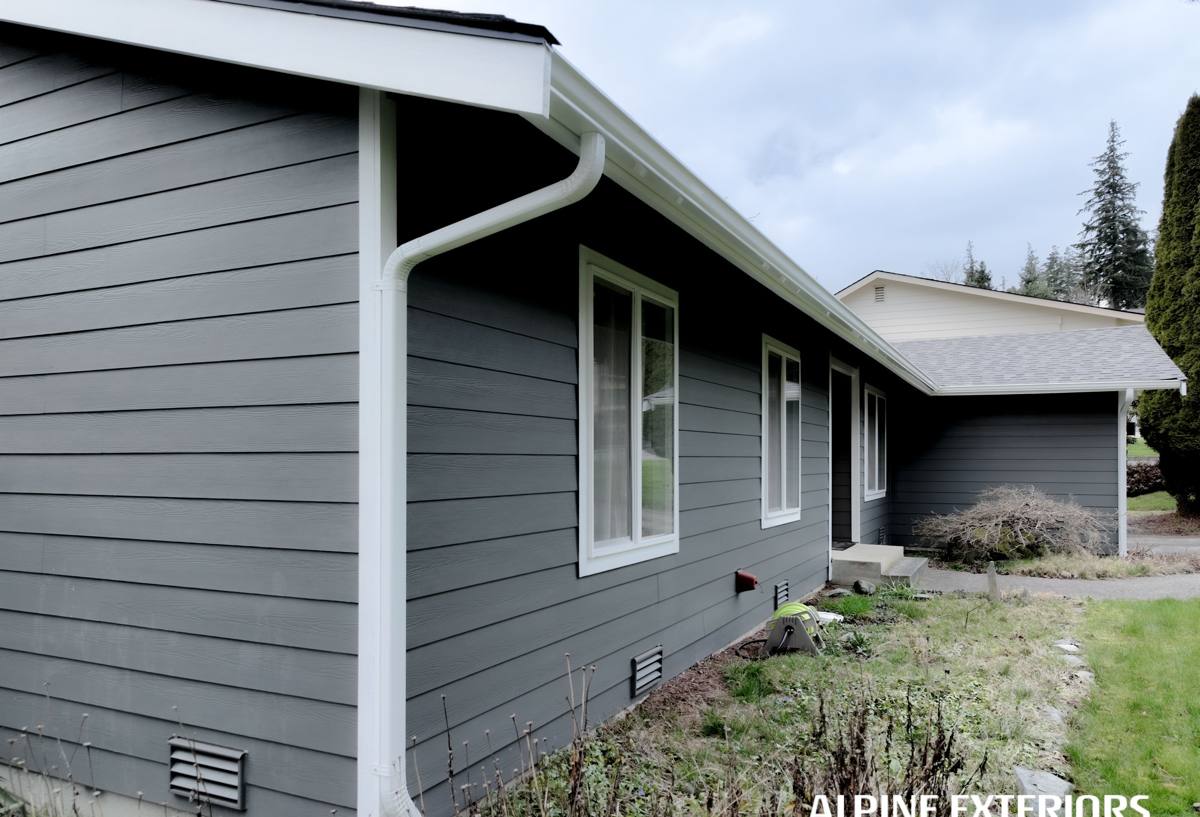
What Seattle Homes Actually Need From Siding
Before talking about products or process, it helps to define the job. Good siding in this climate has to do four things simultaneously, year after year, without babysitting:
- Shed water fast. Every seam, corner, and penetration needs to move water away from the wall assembly, not just resist it briefly.
- Resist moisture absorption. Materials that swell, wick, or hold water are the ones that eventually rot, cup, or delaminate.
- Hold a finish under UV and damp cycling. Seattle doesn't get brutal heat, but it gets constant wet-dry cycling, which is its own kind of stress on paint and coatings.
- Discourage biological growth. Moss and algae need a surface to grip and moisture to feed on — the siding's texture and finish either help or hurt here.
Any siding material can be marketed as weather-resistant. The honest question is how it performs after ten or fifteen years of actual Puget Sound weather, not in a showroom.
Why We Install Only James Hardie Fiber Cement
We made a deliberate decision to install one siding system — James Hardie fiber cement — and nothing else. That's not a sales gimmick; it's a standard we hold because of what we've seen matter most in this specific climate.
Non-combustible and dimensionally stable
Fiber cement doesn't expand and contract with moisture the way wood-based products do, and it doesn't burn. In a region where wildfire smoke and ember exposure have become a real seasonal concern even west of the mountains, that stability matters.
ColorPlus factory finish
James Hardie's ColorPlus finish is baked on in a controlled factory environment, not brushed or sprayed on-site in variable Seattle weather. That finish is engineered to resist fading and cracking, and it holds up better against the kind of constant damp-then-dry cycling this climate produces than field-applied paint typically does.
HZ climate-engineered product lines
Hardie builds region-specific formulations — HZ5 for climates like ours — designed around the moisture and freeze-thaw conditions of the Pacific Northwest, rather than a one-size-fits-all product.
A warranty that's actually transferable
Hardie backs its siding with a strong, transferable limited warranty. For a homeowner planning to sell within the warranty window, that's a real asset — not just paperwork.
Why We Don't Install Vinyl, LP SmartSide, or Cedar in This Climate
We get asked about these regularly, and we think homeowners deserve a straight answer rather than a sales pitch away from them.
Vinyl siding
Vinyl is inexpensive and low-maintenance in dry climates, but it relies on overlapping panels and expansion gaps that can allow wind-driven rain to get behind the material in a climate like Seattle's. It also becomes brittle over time and can crack under impact in cold snaps, and its seams give moss and algae plenty of grip lines to colonize.
LP SmartSide (engineered wood)
LP SmartSide is a wood-strand product with a resin coating, and it performs reasonably well when installation details — caulking, flashing, ground clearance — are executed perfectly and maintained forever. The risk is that any breach in that coating exposes engineered wood to moisture, and wood-based products swell and can rot from the inside in a climate with as much sustained rainfall as ours.
Cedar and primed spruce
Real wood siding has genuine appeal, and we understand why homeowners want it. But natural wood in Seattle needs recurring refinishing, is a preferred food source for moss and mildew, and is the most maintenance-intensive option in a wet marine climate. We're not willing to install a product we know will require that level of ongoing upkeep to avoid rot.
Our position isn't that these products are junk — they're reasonable choices in the right climate, installed to spec, and maintained on schedule. Our position is that for Seattle's marine weather, fiber cement is the material that asks the least of the homeowner over the long run.
What a Correct Siding Installation Involves
The material is only half the job. Most siding failures we're called to diagnose trace back to installation shortcuts, not the product itself. A correct James Hardie installation in this climate includes:
- Proper water-resistive barrier and flashing. Every window, door, and penetration gets flashed to direct water outward and down, never trapping it behind the cladding.
- Correct fastener placement and type. Hardie specifies fastener type, spacing, and embedment depth precisely — corrosion-resistant fasteners matter even more given salt air exposure near the Sound.
- Proper clearances. Siding needs clearance from grade, roofing, and decks so water has somewhere to go instead of wicking into the bottom edge of the material.
- Sealed and primed cut edges. Any field-cut edge of fiber cement needs to be sealed per manufacturer spec to maintain the moisture barrier.
- Correct joint and seam treatment. Butt joints and panel seams need proper caulking or flashing details so they don't become entry points for driving rain.
Skipping any one of these doesn't usually show up as a problem in year one. It shows up in year eight or ten, as staining, soft spots, or paint failure — by which point it's a repair job, not a five-minute fix.
Comparing Siding Options for a Seattle Home
| Factor | Vinyl | LP SmartSide | Cedar | James Hardie Fiber Cement |
|---|---|---|---|---|
| Moisture tolerance in driving rain | Moderate | Moderate, coating-dependent | Low without upkeep | High |
| Resistance to moss/algae growth | Moderate | Moderate | Low | High with proper finish |
| Maintenance over 15 years | Low, but cracks/fades | Moderate to high | High (recurring refinishing) | Low |
| Fire resistance | Low (melts) | Moderate | Low | Non-combustible |
| Typical lifespan when installed correctly | 20-30 years | 20-25 years | 15-25 years with upkeep | 30-50+ years |
These are general performance patterns, not guarantees — actual results depend heavily on installation quality and maintenance for any material.
Our Process for a Seattle Siding Installation
We approach every project the same methodical way, because consistency is what prevents callbacks:
- On-site assessment. We look at your home's exposure — how much direct rain and wind it takes, existing moisture damage, and current siding condition — before recommending anything.
- Detailed scope and material plan. We spec the correct Hardie panel or lap profile, HZ5 formulation, and ColorPlus color for your home and exposure.
- Tear-off and substrate check. We remove existing siding and inspect the sheathing underneath for hidden rot or moisture damage before anything new goes up — this is often where the real problems are found.
- Weather barrier and flashing installation. This step is what actually keeps water out, done to manufacturer and code spec.
- Hardie installation to manufacturer specification. Correct fasteners, clearances, seams, and cut-edge sealing throughout.
- Final walkthrough. We review the completed work with you before considering the job finished.
Why Hiring a Crew That Already Works Seattle Matters
Siding installation isn't a generic skill that transfers cleanly across climates. A crew that primarily works in drier parts of Washington or elsewhere may not default to the flashing details, clearances, and fastener choices that matter most here. A crew that works King County regularly already knows how this weather behaves against a wall assembly — where driving rain typically hits hardest, how moss establishes on north-facing exposures, and what corrosion looks like on fasteners that weren't rated for salt air. That familiarity shows up in the details that don't get skipped.
If your current siding is showing staining, soft spots, moss buildup, or failing paint, or if you're planning ahead for a home in the Seattle area, we're happy to take a look and give you a straight assessment — no pressure, no obligation. Reach out for a free estimate using the form below.