 King County
 Decks in West Seattle Take a Different Kind of Beating
West Seattle sits close enough to Puget Sound that homes here deal with a slightly different mix of weather than decks built further inland in King County. Salt-laden air off the water accelerates corrosion on fasteners and hardware. Driving rain — the kind that comes in sideways during a winter storm rather than falling straight down — gets pushed under railings, into ledger connections, and along the top of joists in ways that vertical rain never would. And the long, wet, mild stretch from fall through spring gives moss and algae months to establish themselves on any horizontal surface that doesn't drain and dry quickly.
None of this means a deck can't last for decades in this neighborhood. It means the details that get skipped on a quick, cheap build — flashing, fastener grade, gap spacing, ventilation underneath — matter more here than they would in a drier part of the country. A deck built without those details in mind doesn't fail dramatically. It just quietly rots, rusts, and grows slippery a few years earlier than it should have.
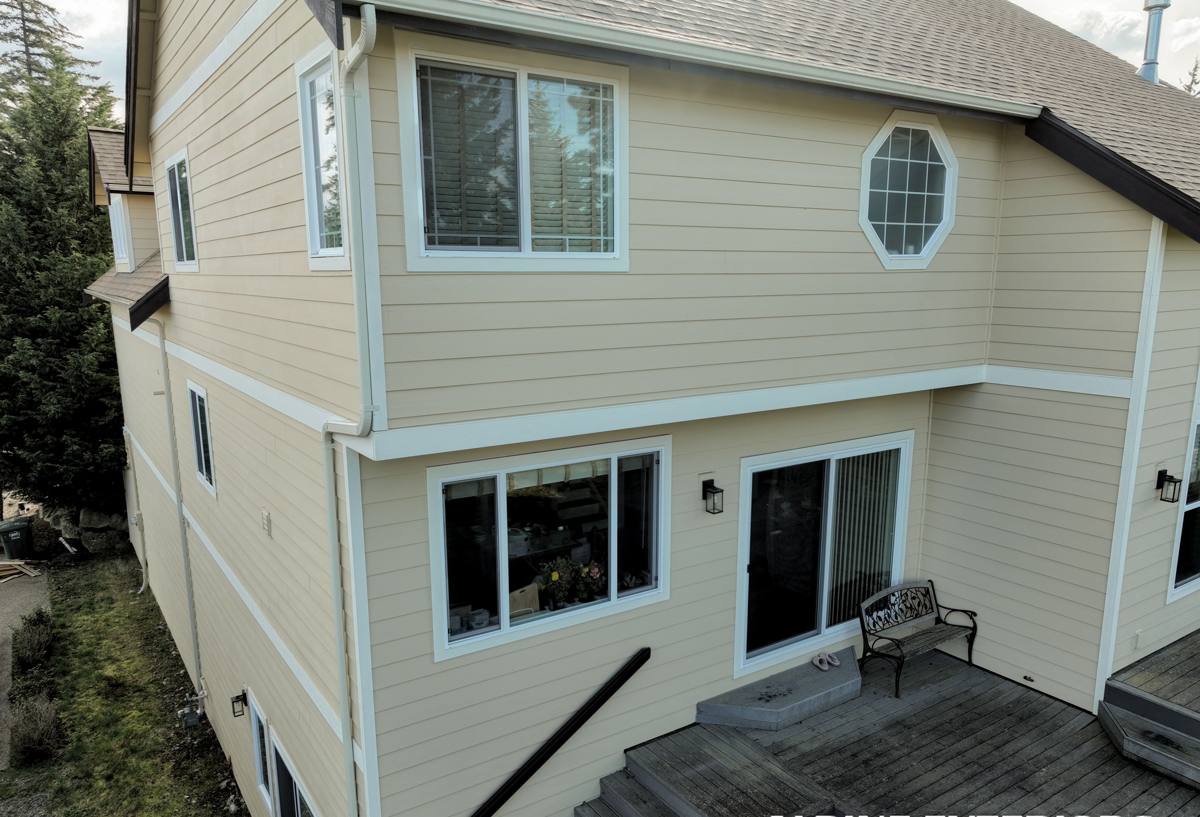
What West Seattle Homes Actually Need From a Deck
Drainage First, Everything Else Second
The single biggest factor in how long a deck lasts around here is how fast water gets off it and out from underneath it. That starts with the ledger board connection to the house — proper flashing so water sheds away from the wall framing instead of tracking behind the siding — and continues through board spacing, joist slope, and keeping the space under the deck from turning into a permanently damp crawlspace where mold and rot take hold unnoticed.
Fasteners and Hardware That Won't Rust Out Early
Salt air corrodes standard hardware faster than most homeowners expect, especially on decks that get any exposure to wind off the water. We build with corrosion-resistant fasteners and structural hardware rated for exterior, coastal-adjacent use — not because code requires the top tier everywhere, but because replacing rusted-out joist hangers on a five-year-old deck is a bad way to spend a Saturday.
Surfaces That Don't Turn Into Skating Rinks
Moss doesn't care what your decking is made of — it will grow on wood, composite, or anything else that stays damp and shaded long enough. What changes is how much it matters. A deck with good airflow underneath, reasonable sun exposure, and board spacing that lets water drain instead of pool will stay far cleaner than one boxed in with no ventilation. This is a design decision made before the first board goes down, not something you can fully fix with a pressure washer later.
Decking Material Comparison
There's no single "right" material for every West Seattle deck — it depends on budget, how much upkeep you want to do, and how much sun or shade the deck gets. Here's how the common options actually compare in this climate.
| Material | Moisture & Moss Behavior | Maintenance | Typical Lifespan |
|---|---|---|---|
| Pressure-treated wood | Absorbs moisture; needs sealing to resist swelling and mildew | Annual cleaning, periodic sealing or staining | 15–20 years with upkeep |
| Cedar | Naturally moisture- and insect-resistant, but still needs finish to hold color and shed water long-term | Regular cleaning, refinishing every few years | 15–20 years with upkeep |
| Composite decking | Doesn't absorb water like wood, but surface texture can hold moisture and grow moss without airflow | Periodic washing, no sealing/staining | 25–30 years |
| Capped composite / PVC | Best moisture resistance of the group; sheds water and resists staining | Occasional washing | 25–30+ years |
We'll walk through these trade-offs honestly during your estimate — including the real maintenance commitment each one requires, not just the sales pitch. A wood deck someone actually seals every year or two can outperform a neglected composite deck, and vice versa.
Framing and Structure — Where Deck Failures Actually Start
Most deck problems that homeowners notice — soft spots, bounce, a railing that feels loose — trace back to the structure underneath, not the decking boards on top. Correct footing depth and placement, joist sizing appropriate to the span, proper blocking, and a ledger connection that's actually flashed and fastened to code are what keep a deck solid for decades. This is also where corner-cutting is easiest to hide, since it's covered up once the decking goes down.
On a rebuild or major repair, we evaluate the existing structure before assuming it can be reused. In King County's wet climate, a deck that looks fine from the top can have joists or a ledger board that have been slowly deteriorating from underneath for years.
Our Deck Building Process
- On-site assessment. We look at the site, existing structure (if any), drainage, sun/shade exposure, and how you actually plan to use the space.
- Design and material walkthrough. We talk through layout, railing style, and decking material options with honest pros and cons for your situation and budget.
- Permitting. Depending on size, height, and location, your deck may require a permit through King County or the applicable local jurisdiction. We handle this step so it's not left to you to figure out.
- Demolition of the old deck, if applicable. Removed and hauled away, with the ledger area inspected for hidden damage before rebuilding.
- Framing and structural work. Footings, ledger flashing, joists, and blocking installed to code, using corrosion-resistant hardware suited to this area's air and moisture exposure.
- Decking, railing, and stairs. Installed with attention to board spacing and drainage, not just visual fit.
- Final walkthrough. We go over the finished deck with you, including what maintenance it does and doesn't need going forward.
Permits and Code Considerations in King County
Deck permitting requirements vary by jurisdiction within King County, and by factors like deck height, size, and proximity to property lines. Guardrail height, stair geometry, and footing depth are all governed by building code, not preference — and an inspector will check them. We handle the permit process as part of the job rather than leaving homeowners to navigate it, and we build to pass inspection the first time, not to a lower standard that gets flagged and has to be redone.
Common Problems We See on Older West Seattle Decks
When we're called out to look at an existing deck in this area, a handful of issues show up repeatedly:
- Soft or spongy decking near the house, usually tied to a ledger board that was never properly flashed
- Rusted or corroded joist hangers and fasteners on decks that get regular exposure to wind off the water
- Heavy moss buildup on shaded sections with little airflow underneath
- Railings that have loosened over time due to moisture working into post connections
- Standing water or pooling on decking boards installed with insufficient slope or gap spacing
Some of these are cosmetic annoyances. Others — particularly ledger and hardware issues — are structural and worth addressing before they get worse, since they're much cheaper to fix early than after they've caused broader rot.
Keeping a New Deck in Good Shape
Whatever material you choose, a little seasonal attention goes a long way in this climate:
- Sweep leaves and debris off the deck regularly, especially in fall — trapped organic matter holds moisture and feeds moss
- Rinse or wash the surface a couple times a year to slow moss and algae buildup, more often in shaded areas
- Check railing posts and stair connections annually for looseness
- For wood decks, reseal or refinish on the schedule the product calls for — don't wait until it's visibly gray and dry
- Keep gutters and downspouts near the deck clear so runoff isn't dumping extra water onto or under it
- Trim back vegetation that shades the deck and keeps it from drying out between rains
Why Hiring a Crew That Already Works in West Seattle Matters
A deck contractor who works across King County regularly sees how the region's rain patterns, salt exposure near the water, and moss season actually play out over years, not just at the moment of installation. That shows up in small decisions — where to add extra ventilation underneath, which hardware grade to spec, how much slope to build into the decking — that a generic build wouldn't necessarily account for. It also means familiarity with local permitting processes, so that step doesn't become a bottleneck or a surprise mid-project.
We're not interested in cutting corners that show up as problems five years down the road. A deck is a significant investment, and we'd rather build it right the first time than get called back for repairs on something that should still be solid.
If you're thinking about a new deck, a replacement, or aren't sure whether your current one needs repair or a full rebuild, we're happy to take a look. Reach out for a free, no-pressure estimate using the form below.