 King County
 Building Decks That Actually Hold Up in Bellevue
Bellevue sits in one of the wetter corners of King County, and that shapes every decision that goes into a deck built to last here. A deck design that works fine in a dry climate can fail within a few years on a Bellevue property if it wasn't built with our rain patterns, humidity, and moss growth in mind. We build decks for homes throughout the Bellevue area, and we design and construct every one around the reality of Western Washington weather rather than around a generic national spec sheet.
The combination of driving rain, damp marine air, and long stretches of overcast, humid weather during much of the year creates conditions where moisture gets trapped in places it shouldn't, moss and algae take hold on shaded or north-facing surfaces, and untreated or poorly detailed wood starts to break down from the inside out. A well-built deck in this climate isn't just about picking a good-looking material — it's about the framing underneath, the flashing details, the fasteners, and the drainage that most homeowners never see.
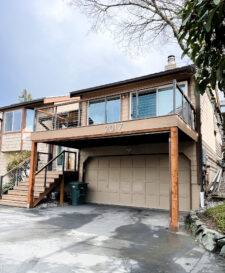
What Bellevue's Climate Does to a Deck Over Time
Moisture That Doesn't Dry Out Quickly
Unlike drier climates where a deck gets soaked and then bakes dry in the sun, Bellevue decks often stay damp for days at a time during fall, winter, and spring. That extended dampness is what actually causes rot — it's rarely a single storm that damages a deck, it's moisture sitting against wood, fasteners, or ledger boards for weeks on end without a real chance to dry.
Moss and Algae on Shaded Surfaces
Decks under tree cover, on the north side of a house, or in yards with limited afternoon sun grow moss and algae far faster here than in most parts of the country. Beyond looking bad, moss holds moisture against the decking surface and makes boards slippery and dangerous underfoot, especially on stairs.
Driving Rain and Wind-Driven Water
Storms coming off the water don't just fall straight down — wind pushes rain sideways and up under railings, ledger boards, and any gaps in flashing. Decks that were only detailed to shed water from directly above often end up with hidden leaks at the house connection, which is one of the most common and most expensive deck failures we get called out to fix.
What a Properly Built Deck Requires Here
Ledger Board Flashing
The ledger board — where the deck attaches to the house — is the single most common failure point on decks in this climate. It has to be properly flashed with a water-resistant barrier and correct step flashing so water is directed away from the house framing, not trapped behind the deck where it can quietly rot the rim joist for years before anyone notices.
Footings Set Below Frost Depth and On Solid Bearing
King County soils vary block to block, and a footing that isn't set deep enough or isn't bearing on solid, undisturbed soil can shift over time, especially with our saturated winter ground. Proper footing depth and sizing is a code requirement, not an optional upgrade.
Fasteners and Hardware Rated for Wet Exposure
Standard hardware corrodes faster in a consistently damp climate. Structural connectors, screws, and joist hangers need to be rated for exterior, ground-contact, or wet-use exposure so they don't weaken years before the decking itself shows any wear.
Airflow and Drainage Underneath
A deck built tight to the ground or against a slope with no way for water to move through and away traps moisture underneath the structure. Grading, gapping, and ventilation underneath the deck matter as much as anything visible on the surface.
Choosing the Right Decking Material for This Climate
There's no single "best" decking material for every home — the right choice depends on budget, how much upkeep you're willing to do, and how much sun or shade the deck gets. Here's how the common options actually perform under Bellevue conditions:
| Material | Moisture & Moss Resistance | Maintenance | Typical Lifespan Here |
|---|---|---|---|
| Pressure-treated wood | Moderate — needs sealing to resist moisture and moss | Annual cleaning and re-sealing recommended | 15-20 years with upkeep |
| Cedar | Good natural resistance, but still needs sealing | Periodic cleaning and staining/sealing | 15-25 years with upkeep |
| Composite decking | Very good — doesn't absorb water like wood | Occasional washing to remove surface algae/moss | 25-30+ years |
| PVC/capped decking | Excellent — fully sealed surface | Low; occasional washing | 25-30+ years |
Composite and PVC products cost more upfront but hold up well against the moss and moisture issues we see constantly in this area, which is why we recommend them for shaded or low-sun lots. Wood decks can absolutely work well here too — they just require an honest commitment to yearly maintenance that a lot of homeowners underestimate when they choose wood for the lower initial cost.
Common Deck Problems We Find on Bellevue Homes
- Soft or spongy spots near the ledger board, usually from years of trapped moisture behind poor flashing
- Slippery, moss-covered boards on shaded decks or north-facing stairs
- Rusted or corroded fasteners and hardware that were never rated for wet exposure
- Railings that have loosened because posts weren't properly anchored or flashed at the base
- Standing water or debris trapped between boards spaced too tightly for our rainfall volume
- Undersized or shallow footings that have allowed the deck to settle unevenly
If any of these sound familiar on a deck you already have, it's worth having it looked at before a cosmetic issue turns into a structural one. Not every deck problem means a full rebuild — sometimes it's a repair to the flashing, drainage, or hardware that solves it.
Our Deck Building Process
1. On-Site Assessment
We walk the site, look at drainage, sun exposure, existing structure (if there is one), and how the deck will connect to the house, then talk through material options that fit your budget and how much maintenance you actually want to do.
2. Design and Permitting
We handle the design details — footing layout, framing plan, and ledger connection — and take care of the King County or Bellevue permitting process where required, so you're not left navigating that on your own.
3. Demolition and Site Prep (If Replacing an Existing Deck)
Old decking, framing, and any compromised structural elements are removed and hauled off, and we check the ledger area and framing underneath for hidden rot before building over it.
4. Framing and Structural Work
Footings, posts, beams, and joists go in first, built to current code for our snow and wind loads, with wet-rated hardware and proper flashing at every connection point.
5. Decking, Railing, and Finish Work
Decking material is installed with correct board spacing for drainage, railings are anchored securely, and any stairs are built with the same attention to water management as the deck itself.
6. Final Walkthrough
We walk the finished deck with you, cover basic care for the material you chose, and answer any questions before we consider the job done.
Permits and Code in Bellevue
Most new decks and many significant deck rebuilds in Bellevue and the surrounding King County area require a building permit, particularly when the deck is attached to the house or elevated above a certain height. Permitting exists to make sure footings, framing, and railings meet safety standards — it's not just paperwork. We manage the permit process as part of the job so the work is inspected and documented correctly, which also matters later if you sell the home or file an insurance claim.
Maintaining Your Deck Through a Bellevue Winter
- Clear leaves and debris from between boards regularly, especially in fall
- Sweep or rinse moss and algae off the surface before it builds up and gets slick
- Check that gaps between boards haven't closed up with swelling or debris buildup
- Inspect railings and stair connections for looseness once a year
- Re-seal wood decking on the schedule recommended for the product — don't wait until it looks dry and gray
- Look at the ledger board area periodically for any staining, soft spots, or gaps in flashing
A few minutes of seasonal upkeep goes a long way toward avoiding the expensive repairs that come from moisture sitting unnoticed for a year or more.
Why Hire a Crew That Already Works in Bellevue
A contractor who builds decks across King County sees the same failure patterns repeatedly — the ledger boards that rot from the inside, the footings that were never sized right for our soil, the decking materials that looked fine in a showroom but couldn't handle a real Bellevue winter. That experience shows up in the details: where we place flashing, which hardware we use, how we handle drainage on a sloped or shaded lot. It's the difference between a deck that needs major repair in eight years and one that's still solid in twenty-five.
We're not guessing at what works in this climate — we're building to it, on every project, because it's what the homes and weather here actually require.
If you're planning a new deck or need an honest look at one that's showing its age, we're happy to come take a look. Estimates are free, there's no pressure, and you'll get a straight answer about what your deck actually needs — just fill out the form below to get started.