 King County
 Why Storm Damage Hits West Seattle Roofs Differently
West Seattle sits up on bluffs and ridgelines overlooking Puget Sound, which gives a lot of homes a great view and gives their roofs a much rougher time than roofs a few miles inland. The elevation and open exposure to water on multiple sides mean wind gusts hit harder and more often, salt-laden air moves across roofing metal and fasteners year-round, and fall and winter storms tend to arrive as driving, sideways rain rather than a gentle straight-down soak. On top of that, the mild, wet Pacific Northwest climate and heavy tree cover across King County keep roofs shaded and damp for long stretches of the year, which is exactly what moss needs to get established.
None of that means West Seattle roofs are poorly built. It means they're doing more work than roofs in drier, more sheltered parts of the region, and storm damage here often layers on top of slow, ongoing wear from salt exposure and moss rather than showing up as a single clean event. A repair that only addresses what a storm just did, without accounting for what the climate has already been doing, tends to fail again within a season or two.
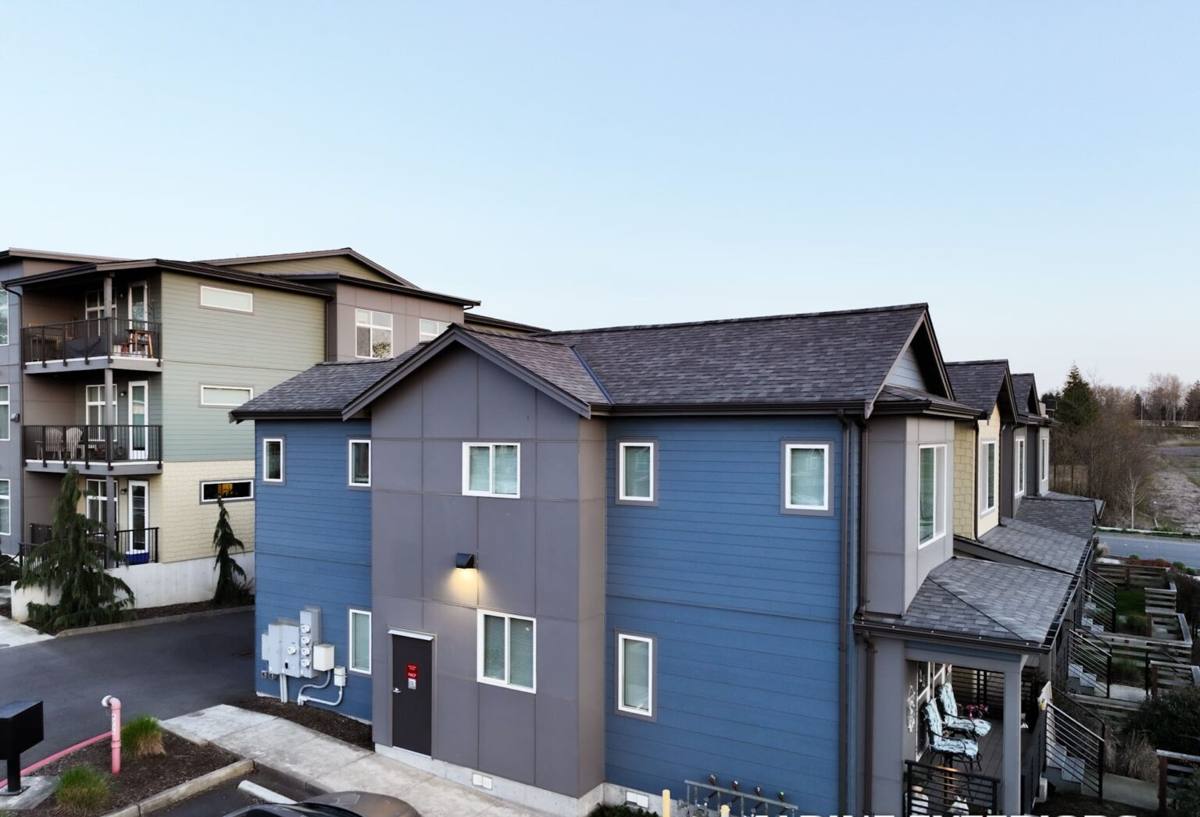
What Storm Damage Actually Looks Like on a West Seattle Roof
Wind and Uplift
Strong gusts off the Sound can lift shingle edges, loosen ridge caps, and pull flashing away from chimneys, skylights, and roof-to-wall transitions. Sometimes the damage is obvious from the ground. More often it's a lifted tab or a hairline gap in flashing that doesn't leak the first time it rains, but will the second or third time.
Wind-Blown Debris
Branches and cones from the mature evergreens common throughout King County neighborhoods can puncture shingles, crack tile, or dent metal roofing during a windstorm. Smaller debris often just scuffs the surface, which can be enough to strip protective granules and shorten the life of that section of roof even without a visible hole.
Rain Intrusion
Driving rain finds weaknesses that dry weather never reveals — a fastener that backed out, a seam that was never quite sealed, a valley with debris buildup. Because our rainy season stretches over many months, a small entry point doesn't get a chance to dry out between storms, which is how minor damage turns into rot, staining, or a soggy attic.
Why Speed Matters After a Storm
A roof that's been compromised doesn't wait for a convenient time to leak. Water that gets past the roofing surface can soak insulation, stain ceilings, warp decking, and create conditions for mold, and all of that damage tends to cost more to fix than the original roof issue. Acting quickly after a storm — even just getting a temporary cover on an exposed area — limits how far the damage spreads while a permanent repair is planned and scheduled.
There's also a documentation window that matters if you're filing an insurance claim. The sooner damage is inspected and photographed after the storm event that caused it, the easier it is to connect the damage to that specific storm rather than leaving it open to debate later.
What a Correct Storm Damage Repair Actually Involves
A rushed repair addresses what's visible from the ground or from a quick walk of the roof surface. A correct repair goes further:
- Inspecting beyond the damaged area itself, since wind and debris damage rarely stay confined to one neat section
- Checking the roof decking underneath for softness, staining, or rot before any new material goes down
- Replacing or resealing flashing at chimneys, skylights, vents, and wall transitions, not just patching shingles around it
- Matching replacement shingles or panels as closely as possible in type, profile, and color so the repair doesn't stand out or create a mismatched wear pattern later
- Clearing moss and debris from valleys and gutters as part of the repair, not as a separate afterthought
- Confirming the repair is properly fastened and sealed for wind exposure, not just watertight in calm conditions
Skipping any of these steps might get a roof to stop leaking for a while, but it doesn't address why that section failed in the first place.
Our Storm Damage Repair Process
- Inspection. We walk the roof and attic (where accessible) to identify both the obvious damage and anything a storm loosened that hasn't failed yet.
- Documentation. We photograph and note the damage clearly, which supports your records whether or not you're filing an insurance claim.
- Temporary protection. If there's active exposure, we get the area covered to stop water intrusion while the permanent repair is scoped.
- Written scope and estimate. You get a clear explanation of what's damaged, what needs to be repaired, and what it will cost — no pressure to decide on the spot.
- Repair. We complete the work using materials matched to your existing roof wherever possible.
- Final check. We confirm flashing, fasteners, and seams are sound before we consider the job done.
Repair or Replace? Weighing the Cost Factors
Not every storm-damaged roof needs a full replacement, and not every roof is a good candidate for another round of patching. The honest answer usually comes down to a few factors:
| Factor | Leans Toward Repair | Leans Toward Replacement |
|---|---|---|
| Age of roofing material | Well within expected lifespan | Already near or past typical service life |
| Extent of storm damage | Localized to one area or slope | Spread across multiple sections |
| Decking condition | Solid, dry, no rot | Soft spots, staining, or rot found underneath |
| Repair history | First or second repair in this area | Same area has needed repeated repairs |
| Moss and moisture damage | Surface-level, recently addressed | Long-term moss growth has degraded materials underneath |
We'll always tell you plainly which side of that table your roof falls on, and why, before recommending one path over the other.
Moss, Salt Air, and the Long Game
Storm damage and everyday climate wear aren't really separate problems on a West Seattle roof — they compound each other. Moss holds moisture against roofing material long after a storm has passed, which slows drying and accelerates rot in exactly the spots wind and rain already stressed. Salt air speeds up corrosion on exposed metal flashing, fasteners, and gutter systems, which means hardware that would hold up fine inland can weaken faster here. When we repair storm damage, we look at whether moss or corrosion contributed to the failure, because a repair that ignores that will likely need to be redone sooner than it should.
Working With Insurance After a Storm
Many storm damage repairs are at least partially covered by homeowners' insurance, but coverage details vary by policy and by carrier. We can provide clear photo documentation and a written scope of damage that you can submit with a claim, and we're glad to walk you through what we're seeing on your roof so you understand it before you talk to your adjuster. We don't handle the claim on your behalf or make promises about what your policy will or won't cover — that's between you and your insurer — but we make sure you're not walking into that conversation without solid documentation.
Why a Crew That Already Works West Seattle Matters
Roofing crews who work across all of King County see a lot of different housing stock and a lot of different microclimates. Roofs here have their own patterns worth knowing: which slopes tend to catch the worst wind exposure, how moss builds up differently on shaded, tree-covered lots versus more open ones, and how older homes in established West Seattle neighborhoods were originally roofed versus what's typical in newer construction. That familiarity shortens the inspection, sharpens the diagnosis, and helps avoid recommending a fix that looks fine on paper but doesn't hold up to how this specific area actually gets weathered.
It also means we're not guessing at material matches or flashing details specific to this area's older roof lines — we've worked on enough of them nearby to know what to expect before we're even on the ladder.
What to Do in the First 24–48 Hours After Storm Damage
- Check ceilings and attic spaces (if safely accessible) for new water stains, drips, or damp insulation
- Photograph any visible roof damage from the ground — don't climb up to inspect it yourself
- Clear obvious debris away from downspouts and gutters if it's safe to reach from the ground
- Note the date and details of the storm for your own records
- Call for an inspection before the next round of rain arrives, even if the leak seems minor
- Avoid DIY roof patches — a poorly sealed patch can trap moisture and hide a bigger problem
If your roof took a hit in a recent storm, or you're just not sure whether that stain on the ceiling is new, we're happy to take a look. Reach out for a free, no-pressure estimate using the form below, and we'll give you a straight answer about what we find.