 King County
 Why Bothell Decks Wear Out Faster Than You'd Expect
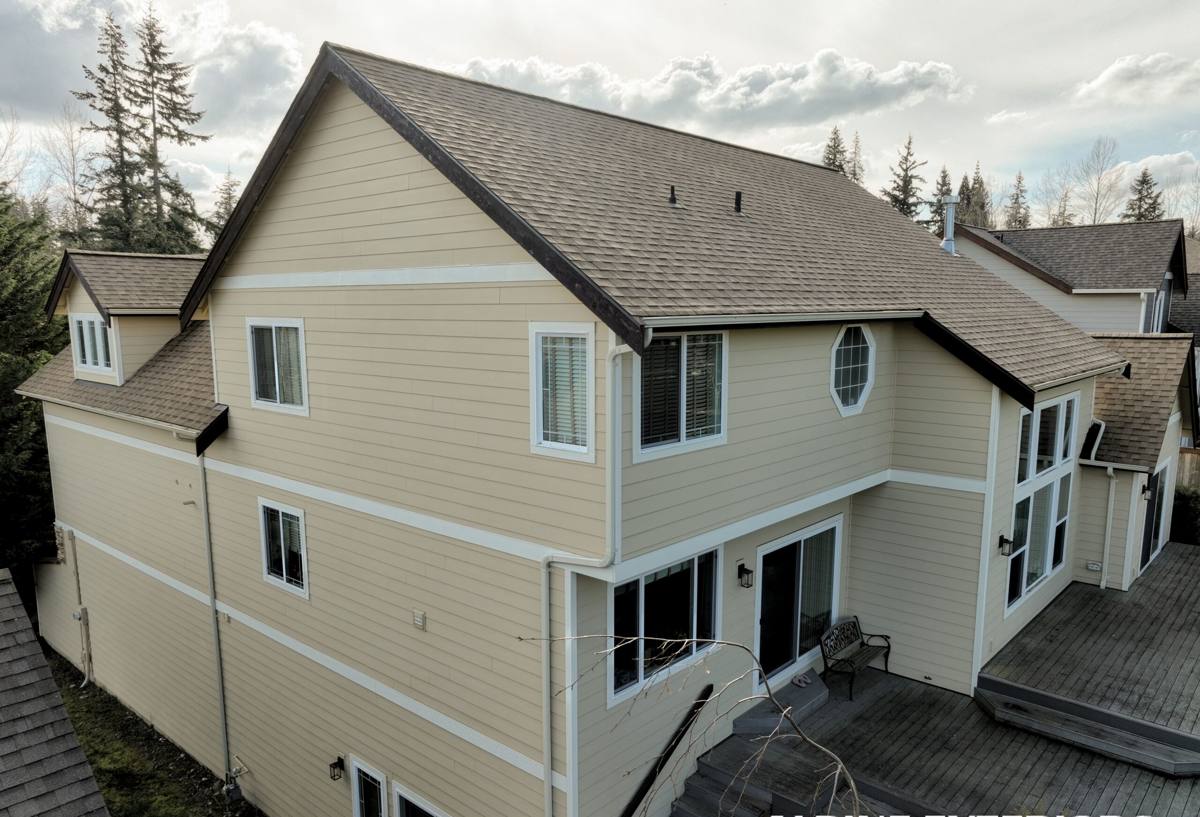
Bothell sits in one of the greener, shadier pockets of King County, and that's exactly what makes decks here vulnerable. Tall conifers and mature landscaping keep yards cool in summer, but they also keep decks damp for much of the year — shaded boards dry slower after every rain, and Bothell gets a lot of rain. Add the broader Puget Sound region's marine-influenced air, which carries more moisture and mineral content than a dry inland climate, and you have conditions that steadily work against wood, fasteners, and finishes.
None of this means a deck is doomed. It means a deck built or repaired without local conditions in mind will fail faster than the same deck built correctly. Most of the repair calls we run in Bothell trace back to a handful of predictable problems: moisture trapped where it shouldn't be, fasteners that were never rated for this kind of long-term wet exposure, and moss or algae holding water against the wood far longer than a dry climate ever would.
Signs Your Deck Needs Repair, Not Just Cleaning
A lot of homeowners pressure-wash a deck, see it come up green with moss, and figure that's the whole problem. Sometimes it is. Other times the moss and algae are just the visible symptom of a deck that's been holding moisture for years. Here's how to tell the difference before you call anyone.
- Soft, spongy, or springy spots when you walk across the decking — usually rot underneath, not just surface wear
- Boards that have cupped (edges higher than the center) or crowned, which signals repeated wet/dry cycling
- Rust streaks bleeding from screws or nails — a sign the fastener itself is corroding, not just staining the wood
- Gaps or movement where the deck ledger board meets the house — one of the most serious issues we check for
- Wobbly railings or posts that shift when pushed, which can be a structural connection issue, not just a loose screw
- Persistent black or green staining that comes back within weeks of cleaning
- Visible daylight or soft wood at post bases where they meet concrete footings or the ground
If you're only seeing surface graying or light moss with no soft spots, you may just need a proper clean and reseal. If you're seeing any of the structural signs above, that's a repair conversation, not a maintenance one.
What a Correct Deck Repair Actually Involves
A deck repair that holds up in this climate isn't just swapping a rotten board for a new one. It starts with figuring out why that board rotted in the first place, because if the cause isn't fixed, the replacement board will fail the same way.
Structural Framing First
Before touching decking boards, we check the framing underneath: joists, beams, and especially the ledger board where the deck attaches to the house. The ledger connection is the single most safety-critical part of most decks, and it's also the part most exposed to water running off the house. Flashing that's missing, cracked, or improperly lapped lets water sit against that connection year-round — that's how a small leak becomes a rotted ledger and a deck that's no longer safely attached to the house.
Fasteners and Hardware
Older decks around Bothell were often built with fasteners that weren't rated for today's pressure-treated lumber, which uses different chemical preservatives than it did a couple decades ago. That mismatch accelerates corrosion. Part of a correct repair is matching hardware — joist hangers, screws, structural connectors — to current code and to the lumber actually being used, not just replacing like-for-like with whatever's already there.
Decking and Surface Repair
Once the structure underneath is sound, decking boards, railings, and stair treads get addressed. This is also the point where we talk through material choice for any replaced sections — matching existing wood, or discussing composite for high-wear areas — so the repair doesn't stand out or age differently than the rest of the deck.
Common Problems We See on Bothell Decks
| Problem | Typical Cause | What's Involved in Fixing It |
|---|---|---|
| Rot at the ledger board | Missing or failed flashing where deck meets house | Remove affected decking, replace flashing, repair or sister damaged framing |
| Persistent moss and algae | Shade, poor drainage between boards, infrequent cleaning | Clean, improve gapping/drainage where possible, apply appropriate sealer |
| Cupped or crowned boards | Repeated wet/dry cycling, especially on flat-sawn lumber | Replace affected boards; consider decking orientation on replacement |
| Rust-streaked or failing fasteners | Fastener type not matched to treated lumber chemistry | Replace with code-rated, compatible fasteners throughout affected area |
| Loose or wobbly railings | Failed post-to-frame connection, often hidden under trim | Inspect connection, reinforce or rebuild to current structural standard |
| Soft post bases | Wood posts in direct or near-direct contact with concrete or soil | Replace post base, add proper standoff hardware to keep wood off wet surfaces |
Repair or Replace? How We Help You Decide
Not every deck problem calls for a full teardown, and we won't push a rebuild when a targeted repair will genuinely hold up. The honest answer usually comes down to how much of the structure — not just the decking surface — is affected.
If the framing and ledger connection are sound and the damage is isolated to a handful of boards, railings, or stair treads, a repair makes sense and costs a fraction of a rebuild. If rot has spread through multiple joists, the ledger connection is compromised, or the deck was undersized or under-fastened for its actual use from the start, patching individual boards just delays a bigger problem — and can create a false sense of safety on something people stand on. We'll walk the whole structure, not just the parts you can see from above, and give you a straight answer about which category your deck falls into.
Our Process for Bothell Deck Repairs
- On-site assessment. We inspect decking, framing, the ledger connection, railings, and post bases — not just the spot you called about, since related issues often hide nearby.
- Clear scope and estimate. You get a written explanation of what's actually wrong, what we recommend fixing, and what it costs — with repair and, if relevant, replacement options laid out honestly.
- Repair work. Framing and structural issues are addressed first, then decking, railings, and hardware, using fasteners and materials matched to what's already there and to current code.
- Final check. We walk the deck with you before calling the job done, so you can see and understand what was fixed.
Materials: Matching the Repair to the Rest of the Deck
When only part of a deck needs work, matching matters — both structurally and visually. For wood repairs, we use lumber and fastener combinations suited to the Pacific Northwest's wet climate, not just whatever's cheapest at the yard. For decks where composite decking is already in place, or where a homeowner wants to reduce future moss and moisture upkeep in a shaded Bothell yard, we'll discuss composite options honestly — including the real trade-offs, like higher upfront material cost versus lower long-term maintenance, and the fact that composite still needs a sound, dry structural frame underneath to perform well. We don't steer people toward one material over another without explaining why it fits their specific deck and site conditions.
Why Hire a Crew That Already Works in This Area
Deck problems in a shaded, rain-heavy King County yard aren't identical to deck problems in a drier climate, and a repair approach that doesn't account for that tends to come back within a few seasons. Working decks throughout Bothell and the surrounding areas means we regularly see how local shade patterns, drainage, and moss growth actually play out over time — not just how a deck looks on the day of the estimate. That translates into flashing details, fastener choices, and drainage recommendations that hold up to another Pacific Northwest winter, not just the dry season.
It also means straightforward scheduling and follow-up. If something needs a second look after the first hard rain of the season, you're calling a crew that already knows your deck and your property, not starting the explanation over with someone new.
Keeping a Repaired Deck in Good Shape
A correct repair buys you years, but a little seasonal attention buys you more. This is the same basic maintenance rhythm we'd recommend to any Bothell homeowner, repair or not.
- Sweep leaves and debris off the deck regularly in fall — trapped organic matter holds moisture against boards
- Clean moss and algae before it spreads, rather than waiting for a heavy buildup
- Check and clear gaps between boards so water can actually drain through, not pool on the surface
- Reseal or refinish wood decking on the schedule appropriate to the product used — don't wait until it's visibly failing
- Walk the deck once or twice a year and press-test any spots that feel different underfoot
- Keep an eye on the area where the deck meets the house after heavy rain for any signs of water intrusion
If your deck has soft spots, moss that keeps coming back, or you just want an honest read on its condition, we're glad to take a look. Fill out the form below for a free, no-pressure estimate on deck repair for your Bothell home.