 King County
 Fiber Cement Siding for Bothell Homes
Bothell sits inland along the Sammamish River in the northern part of King County, tucked between dense tree cover and the wet, mild weather pattern that defines the whole Puget Sound lowlands. That inland position doesn't mean the house sees any less moisture than a home closer to the water — if anything, the mature tree canopy that gives Bothell neighborhoods their shade also keeps walls and roof lines damp longer after a storm passes through. Add the marine-influenced air that moves in off Puget Sound and settles across the region, wind-driven rain that comes in sideways rather than straight down, and a moss season that can run most of the year on shaded siding, and you have a climate that's genuinely hard on the wrong exterior material.
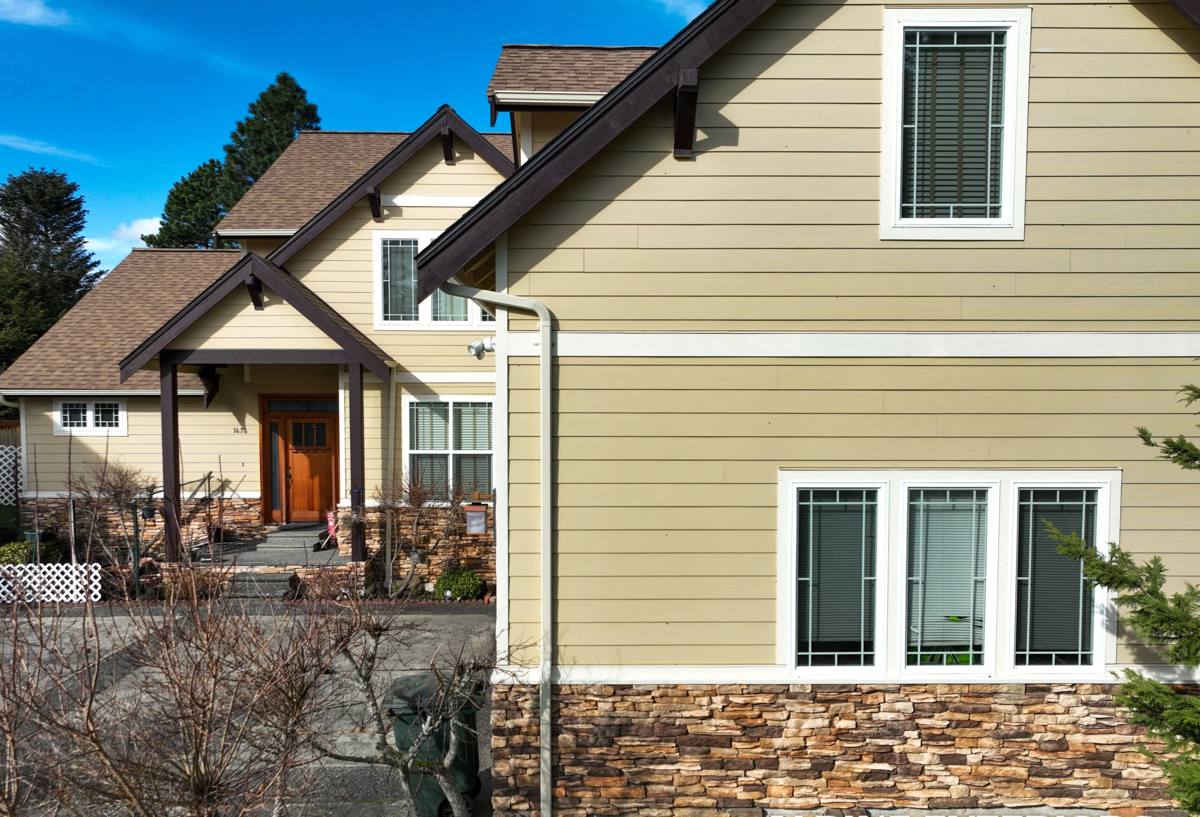
We install James Hardie fiber cement siding exclusively for Bothell homes. That's a professional standard, not a marketing line, and it comes from watching how different siding products actually perform — or don't — once they've sat through a few wet King County winters.
What Bothell's Climate Does to Siding
Marine Air and Sustained Moisture
Even set back from open water, Bothell gets a steady flow of damp, marine-influenced air moving through the region for most of the year. That moisture doesn't need to be dramatic to do damage — it's the constant, low-grade dampness that wears down weak finishes, swells wood-based products at the edges, and slowly corrodes exposed fasteners and trim over years rather than months.
Driving Rain and Wind
Rain here rarely falls straight down for long. Wind pushes it sideways into wall assemblies, window flashing, and lap joints, which puts more stress on a wall than the same rainfall total would in a calmer climate. That sideways-driven moisture is exactly the kind that finds any gap a rushed or careless installation leaves behind, whether that's an unsealed butt joint or flashing that wasn't lapped in the right direction.
A Long Moss Season Under Heavy Tree Cover
Bothell's tree canopy is part of what makes the area attractive, but it also means a lot of walls stay shaded and slow to dry through the fall, winter, and spring. Combine that shade with King County's mild, wet weather pattern and you get a moss and mildew season that can stretch across most of the year on north-facing or heavily shaded siding. Any material with even a little surface porosity becomes a growth surface over time, and once moss or mildew takes hold, it tends to hold moisture against the wall rather than let it dry.
Why We Only Install James Hardie Fiber Cement
We used to offer a broader range of siding products. We stopped, and the reason came from what we kept seeing on tear-offs and service calls across King County — not from a supplier relationship or a sales angle.
- Non-combustible core: Fiber cement doesn't feed a fire the way wood-based siding products can, which matters for both safety and, often, insurance considerations.
- Factory-applied ColorPlus finish: The color is baked on under controlled factory conditions instead of brushed on in the field, so it holds up longer against fading, chalking, and moisture exposure than a field-painted finish.
- Climate-engineered HZ product lines: Hardie's HZ5 formulation is engineered for regions with sustained moisture and freeze-thaw cycling, which is a fair description of the Puget Sound lowlands.
- Dimensional stability: Fiber cement doesn't swell, cup, or warp the way engineered wood products can after repeated wetting and drying cycles.
- Strong transferable warranty: Hardie backs the product with one of the stronger warranty structures in the industry, provided the installation follows their published spec.
We don't install LP SmartSide, vinyl siding, Cemplank, Allura, primed spruce, or cedar. Each of those has a place in the market, and plenty of contractors install them competently. We made a professional call to stand behind one system completely rather than offer a range of products with different maintenance burdens and moisture behaviors, some of which quietly shift risk onto the homeowner years down the line.
How Fiber Cement Compares
| Material | Moisture Behavior | Moss/Mildew Resistance | Maintenance in This Climate |
|---|---|---|---|
| James Hardie fiber cement | Dimensionally stable; doesn't swell or warp | Factory finish resists growth better than porous surfaces | Low; occasional wash, no repainting cycle |
| Engineered wood (e.g. LP SmartSide) | More sensitive at cut edges and fastener holes | Moderate; depends on edge sealing and upkeep | Moderate; edge maintenance matters |
| Vinyl | Can warp or gap with temperature swings; seams less rigid | Low growth on the surface, but traps moisture behind it if installed loose | Low visible upkeep, harder to catch hidden issues |
| Cedar | Absorbs moisture readily without regular sealing | Prone to growth without consistent maintenance | High; recurring sealing or repainting |
The table above reflects general behavior, not a claim that every installation of these materials fails. It's the pattern we've seen often enough, in this specific climate, to standardize on one system rather than offer several with very different long-term outcomes.
What a Correct Fiber Cement Installation Involves
Fiber cement only performs the way it's designed to when it goes on correctly. In a wet, tree-shaded climate like Bothell's, skipping any of the following is where premature problems usually start:
- House wrap or weather-resistive barrier installed and properly lapped before any siding goes up
- A rainscreen or drainage gap behind the siding so moisture that does get past the surface can drain and evaporate instead of sitting against the sheathing
- Corrosion-resistant fasteners placed at the manufacturer's specified spacing, not just enough to hold the board in place
- Flashing at windows, doors, and roof-to-wall transitions lapped to shed water downward and outward, not just caulked and hoped for
- Sealed butt joints and trim transitions, since open seams are where moisture finds its way behind the siding first
- Field-cut edges primed before installation, since the factory finish only protects the surfaces it was applied to
None of this is exotic — it's the manufacturer's own installation spec, followed consistently rather than shortcut on the details that are hardest to see once the job wraps up and the crew is gone.
Our Process for a Bothell Siding Project
Walkthrough and Assessment
We start by walking the property and looking at the specific walls involved — which ones take the most direct wind and rain, which stay shaded longest under tree cover, and whether there's any sign the existing siding or wall assembly already has moisture behind it. Installing new siding over a wall with hidden rot just buries the same problem under new material.
Tear-Off and Substrate Check
Once old siding comes off, we can actually see the sheathing and framing underneath. Any soft spots, water staining, or damaged substrate get repaired before new siding goes up, since fiber cement installed over a compromised wall won't perform the way it's supposed to no matter how well the visible work is done.
Installation to Manufacturer Spec
Every fastener, gap, and flashing lap follows James Hardie's published installation requirements for this climate zone. That's what keeps the manufacturer's warranty intact, and it's also what keeps the wall performing the way it's supposed to for decades rather than years.
Final Walkthrough
We walk the finished job with you, cover what little maintenance fiber cement actually needs, and make sure you know what to look for if you ever want to check the wall yourself down the road.
Cost Factors for Fiber Cement Siding in Bothell
| Factor | Why It Matters |
|---|---|
| Home size and wall complexity | More corners, dormers, and transitions mean more cuts and flashing details |
| Tear-off vs. overlay | Removing old siding lets us check and repair the substrate; overlay skips that step |
| Existing substrate condition | Rot or moisture damage found during tear-off needs repair before new siding goes up |
| Trim and window detailing | More openings mean more flashing and finish work around each one |
| Siding profile and color | Lap width, board style, and ColorPlus color selection affect material cost |
| Site access | Tree cover, tight lots, or limited access can add labor time |
These are general drivers, not a quote. Every Bothell property sits under a different amount of tree cover and faces the weather a little differently, so we walk the specific home before putting a real number on the work rather than pricing off square footage alone.
Signs a Bothell Home Needs Siding Attention
- Moss or dark staining that returns quickly after cleaning, especially on shaded or north-facing walls
- Soft or spongy siding, particularly low on the wall or around window trim
- Peeling paint or visible warping on walls that don't get much direct sun
- Rust staining around fasteners or trim
- Gaps or separation at butt joints and corner trim
- Visible cupping, swelling, or delamination on older wood-based or engineered wood siding
Why Hire a Crew That Already Works Bothell
A crew that installs siding across King County regularly sees how this specific mix of tree cover, driving rain, and marine air behaves on real houses over a full year, not just how a material performs on a spec sheet. That experience shapes decisions on install day: which walls need extra flashing attention because they stay wet longest, where a rainscreen gap earns its keep, and which fastener choices are worth the extra time so a homeowner isn't dealing with a callback after the next wet season. It also means familiarity with local permitting expectations and the kind of housing stock common to Bothell neighborhoods, so the crew isn't guessing at details it hasn't seen before.
If your Bothell home needs new siding or you're weighing whether to replace an existing system that's showing its age, we're glad to take a look and give you a straightforward, honest assessment. Reach out using the form below to schedule a free, no-pressure estimate.