 King County
 Roof Replacement in Bothell: Built for the Climate We Actually Have
Bothell sits in one of the wetter corners of King County, and the roof over your head knows it. Long stretches of drizzle, heavier driving rain events, and a moss season that can run eight or nine months a year all add up to conditions that punish a poorly installed or aging roof faster than homeowners expect. A roof replacement here isn't just about swapping old shingles for new ones — it's about choosing materials and installation details that hold up to sustained moisture, wind-driven rain, and the freeze-thaw swings that show up most winters.
We work on homes throughout Bothell and the surrounding King County area, and we see the same failure patterns over and over: moss holding moisture against shingles, undersized or clogged ventilation trapping heat and humidity in the attic, and flashing details that were fine for a dry climate but never should have been used here. A correct replacement addresses all of that, not just the shingles.
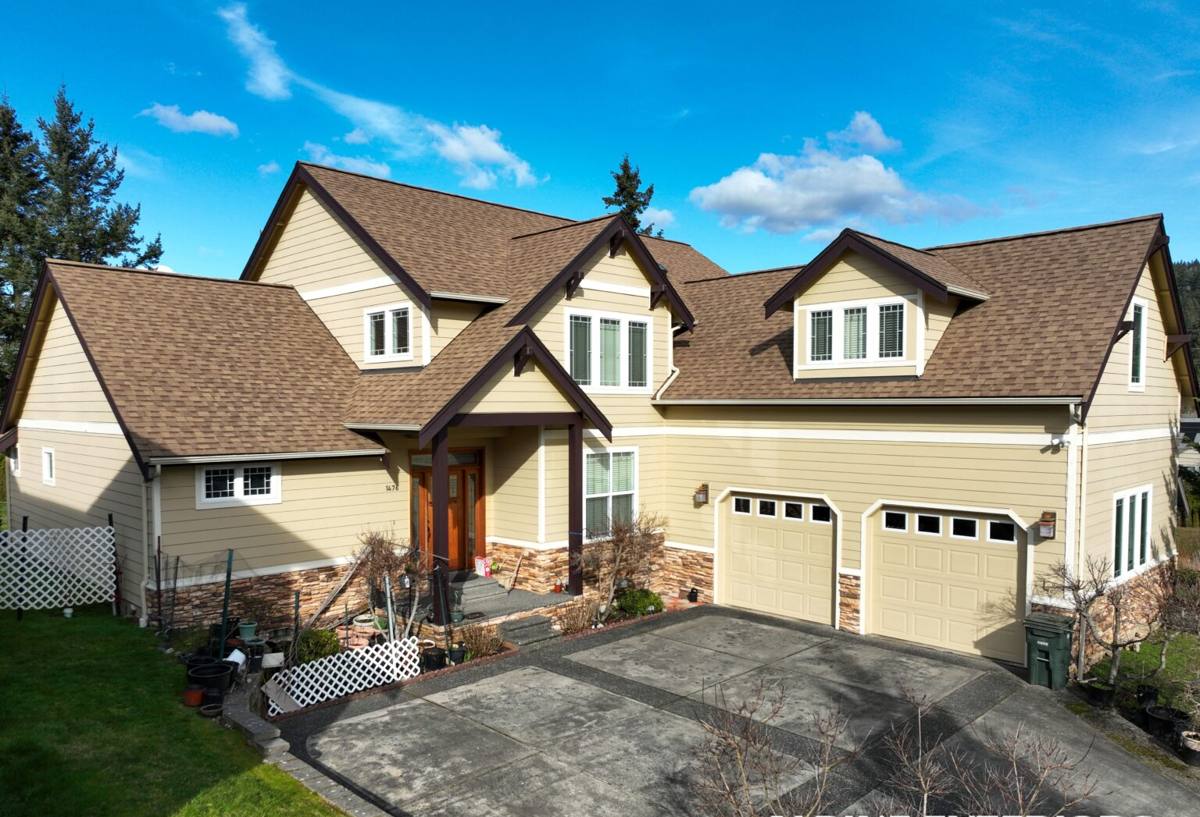
Signs Your Bothell Home Needs a Roof Replacement, Not Another Repair
Roofs rarely fail all at once. In our climate, the warning signs usually build slowly, and homeowners often patch the symptom without addressing the underlying problem. Some signs point clearly toward replacement rather than another round of spot repairs:
- Granule loss heavy enough that you're finding grit in gutters or downspouts every season
- Shingles that are cupping, curling, or cracking, especially on south- and west-facing slopes
- Moss or algae streaking that keeps coming back within a year of cleaning
- Soft spots in the decking you can feel when walking the roof, or sagging visible from the ground
- Interior staining on ceilings or in the attic that shows up after heavy rain
- A roof approaching or past 20-25 years old, which is a realistic service life for standard asphalt shingles in this climate
- Multiple past repairs in different areas rather than one isolated problem
If you're only seeing one or two isolated issues on an otherwise sound, newer roof, a targeted repair is usually the honest answer. We'll tell you that directly rather than push a full replacement you don't need yet.
What Moss, Rain, and Salt Air Actually Do to a Roof
King County's marine climate creates a specific set of stresses that inland or drier-climate roofing systems aren't necessarily built to handle.
Moss
Moss doesn't just sit on top of a roof — its root structures lift shingle edges and hold moisture directly against the roofing material and underlayment. Once that starts, the shingle beneath degrades faster than the surrounding field, even if the rest of the roof looks fine. Shaded, north-facing slopes and areas under overhanging trees are usually the first to show it.
Driving rain
Wind-driven rain doesn't just fall straight down — it pushes sideways and upward under shingle tabs, around vents, and along flashing edges. This is where installation quality matters more than material choice. Proper shingle nailing patterns, correctly lapped underlayment, and well-sealed flashing at every penetration are what keep water out during a real Pacific Northwest storm, not just a light rain.
Salt air and humidity
Proximity to Puget Sound means many King County homes deal with a steady low level of airborne moisture and salt content, which accelerates corrosion on exposed metal fasteners, flashing, and vents. We use fasteners and flashing rated for coastal-adjacent exposure rather than the cheapest standard hardware, because the cost difference is small and the service-life difference is not.
What a Correct Roof Replacement Includes
A roof replacement done right is a system, not just a layer of shingles. Skipping any of these steps is where most premature failures start.
Tear-off and deck inspection
We remove the old roofing down to the deck rather than installing over existing layers. This lets us actually inspect the sheathing for soft spots, rot, or delamination caused by long-term moisture intrusion — problems that are invisible from above and get sealed in (and worse) if you roof over them.
Underlayment
In a climate with this much sustained rainfall, underlayment is a real line of defense, not a formality. We install synthetic underlayment across the field and self-adhered ice-and-water membrane at eaves, valleys, and other vulnerable transitions where wind-driven rain and ice damming are most likely to find a way in.
Flashing
Chimneys, skylights, sidewalls, and roof-to-wall transitions are where the majority of leaks originate — far more often than the open field of shingles. We replace flashing rather than reuse old pieces whenever a full replacement is underway, since flashing has a shorter realistic service life than the shingles around it.
Ventilation
Balanced intake and exhaust ventilation keeps attic humidity and temperature in check, which matters both for shingle life and for moisture control in a climate where the attic side of the equation is just as wet as the outside. Undersized or blocked ventilation is one of the most common issues we find on older Bothell homes, and it quietly shortens the life of an otherwise good roof.
Fastening and finish details
Correct nailing patterns, proper shingle exposure, and attention to starter courses and ridge caps all affect wind resistance and water shedding. This is the part of the job that's invisible once it's done, and it's exactly where corner-cutting shows up five or ten years later.
Material Options and How They Perform Locally
Most homes in this area are well served by architectural asphalt shingles, but the right choice depends on your roof's exposure, your home's style, and how long you plan to stay in the house.
| Material | Typical Lifespan Here | How It Handles Our Climate | Considerations |
|---|---|---|---|
| Architectural asphalt shingles | 25-30 years | Good moisture and wind resistance when installed with proper underlayment and ventilation | Most cost-effective; wide style and color range |
| Standing seam metal | 40-50+ years | Excellent at shedding heavy rain and resisting moss growth on steeper pitches | Higher upfront cost; installation quality is critical |
| Synthetic/composite shingles | 30-40 years | Resists moisture absorption better than wood alternatives | Higher material cost than asphalt; fewer local installers |
| Cedar shake | 20-25 years realistic | Traditional look but higher maintenance burden in sustained wet climates | Requires more frequent moss treatment and inspection; we're upfront about the maintenance commitment before recommending it |
We don't push one material for every home. A steep-pitched roof under heavy tree cover has different needs than an open, low-pitch roof with full sun exposure, and we'll walk through the honest tradeoffs for your specific situation during the estimate.
Our Process for Bothell Roof Replacements
- On-site assessment — We inspect the current roof, decking condition where accessible, ventilation, and flashing details, and take measurements for an accurate estimate.
- Written estimate and material selection — You get a clear scope of work and pricing before anything is scheduled, with material options explained in plain terms.
- Scheduling around weather — Given how much of the year sees active rain in this region, we plan tear-off and dry-in carefully so your home isn't left exposed longer than necessary.
- Tear-off and deck inspection — Old roofing comes off, decking is inspected, and any damaged sheathing is addressed before anything new goes down.
- Underlayment, flashing, and shingle installation — Installed in the sequence and with the details described above.
- Ventilation check — We confirm intake and exhaust are balanced for your attic's size and layout.
- Final walkthrough and cleanup — We review the finished roof with you and make sure the property is cleared of debris and nails.
Cost Factors for a Bothell Roof Replacement
Every roof is different, so we don't quote blind — but a few factors consistently drive cost up or down:
| Factor | Effect on Cost |
|---|---|
| Roof size and number of facets/planes | More cuts and seams mean more labor and material waste |
| Pitch and accessibility | Steep or hard-to-access roofs require more safety equipment and time |
| Layers of existing roofing | Multiple old layers add tear-off labor and disposal cost |
| Deck condition | Rotted or delaminated sheathing found during tear-off adds repair cost |
| Material choice | Asphalt vs. metal vs. synthetic spans a wide cost range |
| Number of penetrations | Chimneys, skylights, and vents each require flashing work |
We give firm, written estimates after an actual on-site look — not a phone-quote guess — because the factors above can shift the number significantly from one house to the next.
Why a Local Crew Matters for This Job
A roof replacement is a big investment, and the value of hiring a crew that already works throughout King County shows up in details that are easy to overlook from a sales pitch. We know which neighborhoods deal with heavier tree cover and moss pressure, which areas see more wind exposure, and what permitting and inspection expectations look like locally. We're also here after the job is done — for questions, for warranty follow-up, for a maintenance conversation a few years down the road — not a crew that worked its way through the area once and moved on.
When you're vetting any contractor for a job this size, ask for proof of licensing and insurance, a written warranty covering both materials and workmanship, and references from actual local work. A contractor who's confident in their work won't hesitate to provide any of that.
Ready to Talk About Your Roof?
If your Bothell roof is showing its age or you just want an honest read on where it stands, we're happy to take a look. Request a free, no-pressure estimate using the form below and we'll walk the roof, answer your questions, and give you a straight assessment — replacement, repair, or just a maintenance recommendation, whichever actually fits your roof.