 King County
 Why Capitol Hill Homes Need a Different Approach to Windows
Capitol Hill is one of Seattle's older, denser neighborhoods, which means its housing stock is a mix of early-1900s craftsman and foursquare homes, mid-century apartments and duplexes, and newer infill construction squeezed onto narrow lots. That variety matters when it comes to windows. A window that's a perfect fit for a 2015 townhome — standard nailing-fin, standard rough opening — often has no business going into a 1912 craftsman with balloon framing, original trim profiles, and a window opening that was never quite square to begin with. Custom windows aren't a luxury upsell here; for a lot of Capitol Hill housing, they're the only way to get a window that actually seals, operates correctly, and doesn't look wrong on the house.
We work on both ends of that spectrum — matching historic proportions on older homes and doing straightforward high-performance replacements on newer ones — and the starting point is always the same: measure what's actually there, not what a catalog assumes is there.
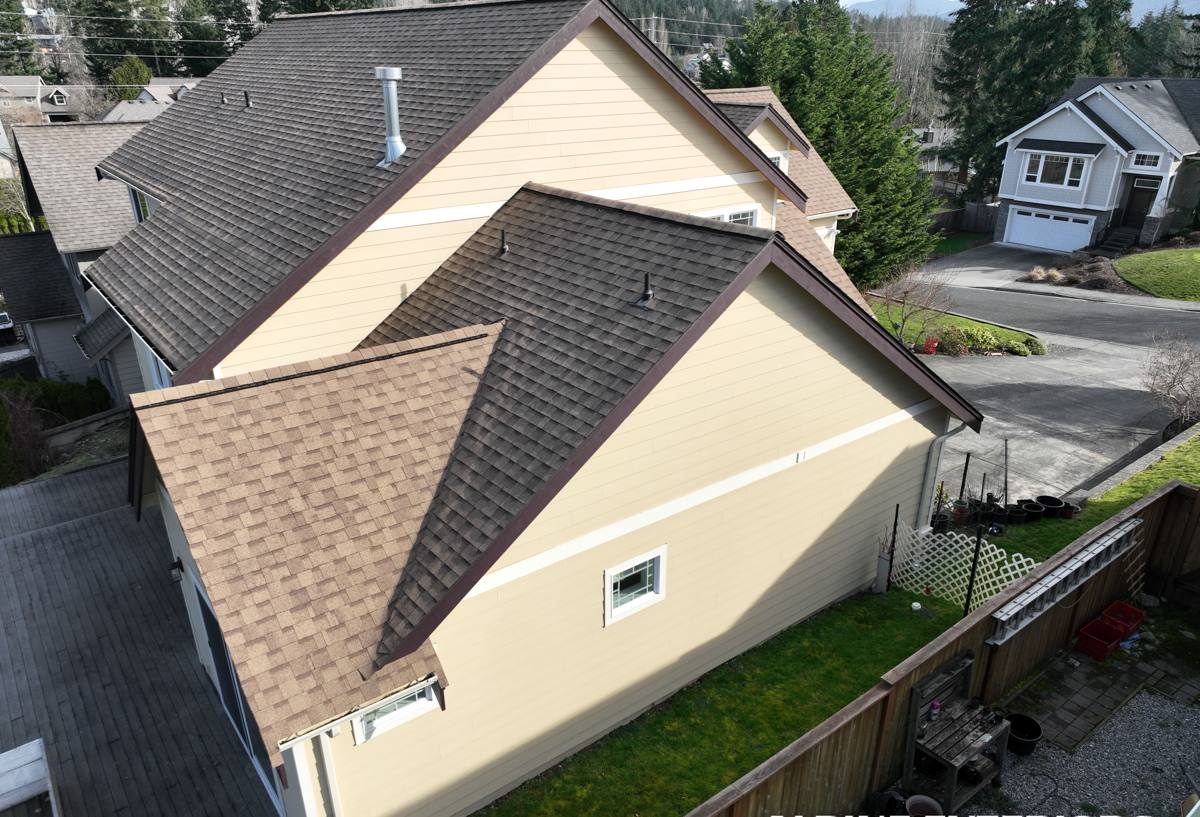
What Seattle's Climate Does to Windows Over Time
King County's climate is mild compared to a lot of the country, but "mild" doesn't mean easy on building materials. The combination of near-constant moisture, wind-driven rain off the Sound, and long stretches without direct sun creates a specific set of failure patterns we see over and over on Capitol Hill homes.
Driving Rain and Wind-Driven Moisture
Seattle rain isn't usually heavy, but it's frequent and often comes sideways during fall and winter storms. That matters more for windows than a downpour would, because wind-driven rain gets pushed into gaps and seams that gravity alone would never reach. Old or poorly flashed windows on Capitol Hill homes tend to show it as water staining below the sill, soft spots in the surrounding trim, or fogging between panes on older dual-pane units where the seal has failed.
Moss and Organic Growth
The long, damp shoulder seasons here are ideal for moss, algae, and mildew, and window trim is one of the first places it shows up — especially on north-facing walls or windows shaded by mature trees, which are common in Capitol Hill's older, tree-lined blocks. Beyond the cosmetic issue, moss and organic growth hold moisture against wood trim and sills far longer than bare material would, which accelerates rot underneath paint that still looks fine from a distance.
Marine Air and Material Fatigue
Homes across the greater Seattle and Puget Sound area deal with a marine-influenced climate — consistently damp air that's harder on exposed metal hardware, seals, and finishes than a dry inland climate would be. Over years, that shows up as pitted or sticky hardware, degraded weatherstripping, and caulk lines that crack and open sooner than the manufacturer's spec sheet suggests.
What "Custom" Actually Means on a Capitol Hill Project
Older Home Types Around the Neighborhood
Craftsman and foursquare homes from the early 1900s often have double-hung windows with unusual sash proportions, interior trim that was milled to match the house, and openings that have shifted slightly with a century of settling. Mid-century multifamily buildings frequently used aluminum-frame sliders or awnings that are no longer produced in matching sightlines. In both cases, a standard off-the-shelf window either won't physically fit the opening or will fit but look visibly out of proportion once it's in.
Matching Openings vs. Forcing a Standard Size
There are two honest ways to handle a non-standard opening: build or special-order a window sized to match it exactly, or resize the opening to fit a stock window. Both are legitimate depending on the house, the budget, and whether the exterior trim and siding around the window are also being touched. What's not acceptable is jamming an undersized replacement into an oversized opening and packing the gap with trim and caulk — it looks wrong immediately and it's a moisture problem waiting to happen. We'll tell you honestly which approach fits your situation and why, before any order gets placed.
Choosing a Frame Material for This Climate
Every frame material has real trade-offs. None of them is universally "best" — the right choice depends on the home's style, your maintenance appetite, and budget. Here's how the common options actually perform in King County's damp, mild climate:
| Frame Material | Moisture Behavior | Maintenance | Best Fit |
|---|---|---|---|
| Vinyl | Won't rot; seams can be a weak point if installed poorly | Low — occasional cleaning | Budget-conscious replacements on newer or mid-century homes |
| Fiberglass | Very stable in wet/dry cycling, minimal expansion or contraction | Low | Homes wanting durability without wood upkeep |
| Wood-clad | Interior wood warmth with an exterior weather shell; cladding must be detailed correctly at the seams | Moderate — depends on cladding quality | Craftsman and historic-style homes where interior wood trim matters |
| Aluminum | Prone to condensation and cold transfer unless thermally broken | Moderate — hardware needs periodic attention | Specific mid-century replacement matches; otherwise not our first recommendation for this climate |
We don't push a single brand or material on every job. If a homeowner wants aluminum to match an existing mid-century building, we'll do it correctly with a thermally broken frame rather than talk them out of the look — but we'll also explain the condensation trade-off up front so there are no surprises in January.
What a Correct Custom Window Installation Actually Involves
The window unit itself is maybe half the job. The other half — the part that determines whether it performs for the next 20 years or fails in five — is how it's integrated into the wall.
- Removing the old unit without tearing out more siding or trim than necessary
- Inspecting the exposed rough opening for rot, soft framing, or prior water damage before anything new goes in
- Installing proper flashing — sill pan, side flashing, and head flashing — so any water that gets past the exterior finish is directed back out, not into the wall cavity
- Sealing and insulating the gap between the frame and rough opening correctly, not just stuffing it with fiberglass and calling it done
- Setting the unit level, plumb, and square so sashes operate smoothly and weatherstripping seals evenly
- Finishing the exterior trim and caulk lines to shed water rather than trap it against the wall
Skipping the flashing and sealing steps is the single most common cause of window-related water damage we get called out to fix — and it's invisible from the outside until the damage is already inside the wall.
Our Process From Estimate to Final Walkthrough
- On-site assessment — we look at every opening individually, not just the ones you're worried about, since one leaking window is often a sign others are close behind
- Honest scope and material recommendation — we'll tell you if a full replacement is needed or if repair/re-flashing solves the problem
- Written estimate — line-itemed so you can see what's frame cost, what's labor, and what's trim/flashing work
- Ordering and scheduling — custom sizes and special orders get built into the timeline up front, not discovered mid-project
- Installation — with the rough opening inspected and corrected before the new unit goes in
- Final walkthrough — checking operation, seal, and finish work with you before we call it done
Why Local Experience in Capitol Hill Matters
Capitol Hill's mix of pre-war housing stock, dense infill lots, and King County's permitting expectations means a crew that mostly works new suburban construction is going to be guessing on half the details that come up here — historic trim profiles, tight lot-line access for equipment, and openings that were never built to modern tolerances. A crew that regularly works this specific neighborhood already knows what to check before opening a wall, which shortens the surprises and the change orders.
Signs It's Time to Have Your Windows Looked At
- Visible fogging or moisture trapped between panes
- Drafts you can feel near the frame, even with the window closed and locked
- Soft, discolored, or moss-covered trim around the frame
- Windows that are difficult to open, close, or lock
- Visible gaps between the frame and siding or trim
- Paint that's peeling or bubbling specifically around window openings, not the whole wall
Any one of these on its own might be minor. Two or three together, especially on the same window, usually means water has already found a way in.
Maintenance That Actually Extends the Life of New Windows
A correctly installed custom window still needs basic upkeep in this climate. Rinse pollen and organic debris off tracks and sills a couple times a year, check caulk lines annually for cracking, and keep gutters and nearby foliage from dumping extra water directly onto trim. None of this takes long, and it's far cheaper than re-flashing a window that's been sitting in standing moisture for a season.
If you're dealing with drafty, foggy, or aging windows on a Capitol Hill home — or planning ahead for a full replacement — we're happy to take a look and give you a straightforward, no-pressure estimate. Use the form below to get started.