 King County
 Window Installation in Capitol Hill: What This Neighborhood Actually Needs
Capitol Hill is one of Seattle's older, denser neighborhoods, and that combination shapes nearly every window installation job we take on up here. A lot of the housing stock predates modern window sizing standards by decades — Craftsman and Victorian-era single-family homes, converted apartment buildings, and rowhouses built close together on narrow city lots. Every one of those properties sits inside the same King County marine climate as the rest of the region: salt-tinged air moving in off Puget Sound, driving rain that comes in sideways during winter storms, and a moss and mildew season that can run most of the year on shaded, tightly-spaced walls. Window installation here isn't just about picking a good product. It's about getting the opening, the flashing, and the fit right on a building that's already had decades to settle and shift.
We handle siding, roofing, window, and deck work throughout Seattle and King County, and on window jobs specifically we treat the installation detail — not just the unit itself — as the part that determines whether it holds up. A well-built window installed carelessly will leak in this climate eventually. A modest window installed correctly, with flashing that actually integrates into the surrounding wall, will usually outlast it.
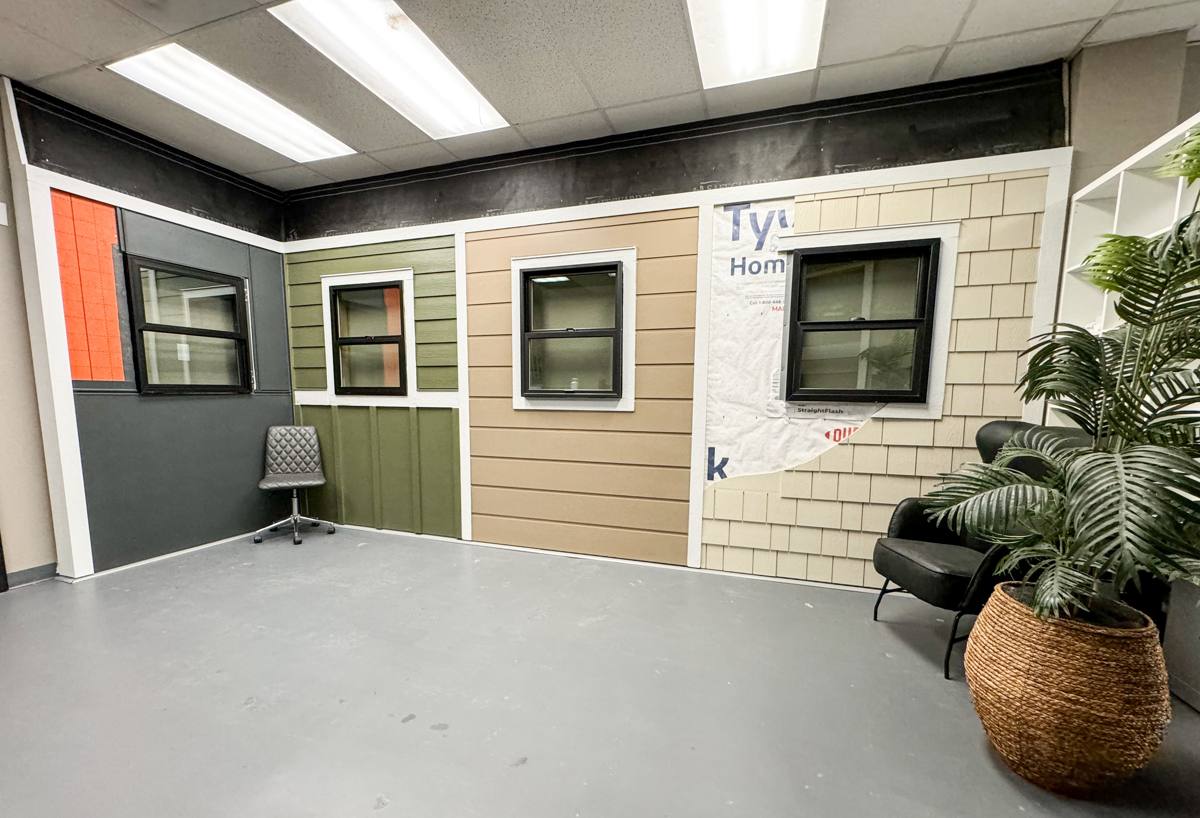
What King County's Climate Does to a New Window Installation
Every window installation has to account for how this region's weather behaves, not just how it looks on a spec sheet. Four things drive most of the installation decisions we make on Capitol Hill jobs.
Wind-Driven Rain
Seattle storms rarely fall straight down. Wind pushes rain sideways into wall assemblies, which means it reaches gaps and seams around a window opening that would stay dry in a calmer climate. That's why the flashing sequence around a new installation matters as much as the window unit itself — it's what keeps wind-driven rain from working its way behind the trim and into the framing over time.
Marine Air and Hardware Corrosion
Capitol Hill sits above the water, not directly on it, but King County homes across the county still get enough marine-influenced air to speed up corrosion on lower-grade hardware, fasteners, and frame components. Hardware that would hold up fine in a dry inland climate tends to show pitting, stiffness, or seal failure noticeably sooner here.
Moss, Mildew, and Shaded Exposures
Capitol Hill's tree cover and tightly-spaced lots mean a lot of walls and window openings sit in shade for much of the day, which slows drying time after every storm. Sills, trim, and the wood framing around a new installation are usually the first places moss and mildew take hold, especially on north- and east-facing walls that stay damp longest.
Condensation From Temperature Swings
The gap between heated interiors and cold, wet exteriors during a Seattle winter puts real condensation pressure on glass and frames. A correctly installed, properly glazed window handles that pressure without fogging or pooling water on the sill — an incorrectly installed one, or one with a failed seal, usually can't.
What Makes a Capitol Hill Installation Different From a Standard Job
A few things about this neighborhood specifically change how a window installation gets planned and executed. Older homes throughout Capitol Hill were framed before today's standard window dimensions existed, so rough openings often run an inch or two off from what a stock unit expects — close enough to tempt a shortcut, far enough off that forcing a standard size into it without adjusting the opening leads to gaps, drafts, or a frame that's never quite square. Narrow lots and homes built close to their neighbors also affect access — scaffolding, staging, and material handling all take more planning on a tight urban lot than they would on a suburban property with open yard space on every side. And because Capitol Hill includes some properties within Seattle's landmark and historic district protections, exterior work on those homes can involve an added design-review step before installation even begins, which is worth checking early rather than after a window has already been ordered.
Full-Frame vs. Insert Installation
One of the first decisions on any window job is which installation method fits the situation: full-frame replacement, which removes the old window down to the rough opening and exposes the framing underneath, or insert (sometimes called pocket) replacement, which fits a new window into the existing frame without removing it. Both are legitimate methods — the right call depends on the condition of what's already there.
| Factor | Full-Frame Installation | Insert (Pocket) Installation |
|---|---|---|
| Best suited for | Rotted or damaged framing, or a change in window size or style | Sound existing frame with no rot or structural issues |
| Access to framing | Full access to inspect and repair sheathing and framing | No access — existing frame stays in place |
| Labor and disruption | More labor, more disruption to interior and exterior trim | Faster, less disruptive to surrounding siding and trim |
| Long-term outcome | Addresses hidden damage directly, generally the more durable fix | Good option when the existing frame is genuinely sound |
| Typical cost | Higher, due to added labor and materials | Lower, when the existing frame qualifies |
We don't default to one method to save time. On an older Capitol Hill home, we open up at least one representative window during the estimate process when there's any doubt about frame condition, because an insert installed over hidden rot just traps the problem behind a new window instead of solving it.
What a Correct Window Installation Involves
Regardless of which method fits a given opening, a correct installation follows the same sequence:
- Removing the old window or opening the wall carefully, and inspecting the framing and sheathing underneath for rot, old water damage, or pest issues before anything new goes in
- Taking precise measurements of the actual opening, not the nominal size of the unit being replaced, since older Capitol Hill homes rarely measure exactly to modern standards
- Repairing or replacing any damaged framing, sheathing, or old flashing found during removal — never installing a new window over a known problem
- Installing new flashing in the correct sequence — sill pan first, then side flashing, then head flashing — so each layer laps over the one below it and water sheds outward at every point
- Setting and shimming the new unit square, level, and plumb, since an out-of-square opening on an older home rarely lines up perfectly without adjustment
- Sealing and insulating the gap between the frame and rough opening with materials suited to the application, not just spray foam and caulk treated as the only line of defense
- Reinstalling or replacing interior and exterior trim so the finished opening sheds water correctly and matches the surrounding wall
Choosing Windows for a Marine Climate
We install vinyl and fiberglass window systems suited to the Pacific Northwest's wet, mild conditions, and we walk homeowners through the real trade-offs rather than pushing one brand as the only right answer. What matters most for a Capitol Hill property is a tight, well-engineered frame, a glazing package that performs for both energy efficiency and condensation resistance, and hardware rated to hold up under sustained marine air exposure.
- Frame material: Vinyl and fiberglass both resist rot in a way uncladded wood frames don't, which matters given how much moisture this region carries through the year. Fiberglass tends to hold its shape better through temperature swings and can be painted; vinyl is generally the more budget-friendly option.
- Glazing package: Double or triple-pane options with low-E coatings help both energy performance and interior condensation control during cold, damp stretches — a common complaint in older Capitol Hill homes with single-pane or early double-pane windows still in place.
- Hardware grade: Corrosion-resistant hardware holds up longer against King County's marine-influenced air than standard-grade hardware does.
- Warranty structure: A manufacturer warranty is only as good as the installation behind it. We stand behind our installation work separately from the product warranty, because most window failures we see trace back to installation detail, not the unit itself.
Flashing and How a Window Ties Into the Rest of the Exterior
A window installation doesn't succeed or fail on its own. It succeeds or fails based on how well it integrates with the siding, trim, and drainage plane around it. A new window installed without attention to that surrounding assembly can look fine for a season or two and still leak, because water that gets past a poorly integrated opening travels into the wall instead of showing up where anyone can see it right away. We treat window installation as connected to siding and roofing work rather than a standalone job, which is part of why we handle all four exterior trades — the person handling the flashing on a window understands exactly how it needs to tie into the siding and drainage details around it, because they're often doing that work too.
A Checklist Before Hiring for Window Installation on Capitol Hill
- Ask specifically how they sequence flashing — sill pan, sides, then head — not just which window brand they sell
- Confirm current Washington contractor licensing and active liability insurance
- Ask which installation method they recommend for your specific windows, and why, rather than accepting a blanket answer
- Get a written scope that separates the manufacturer's product warranty from the installer's workmanship warranty
- If your property is in a designated historic district, confirm the contractor has handled design-review requirements before
- Ask about lead times — custom or non-standard sizes common in older homes can take several weeks to arrive before installation begins
Why a Local Crew Matters
A contractor who works Capitol Hill and the rest of Seattle regularly already knows how wind-driven rain and marine air behave here compared to a drier, more sheltered climate, and how older, tightly-spaced urban lots change access and staging compared to a suburban job. That shows up in the small decisions — how much lap a flashing detail gets, whether a full-frame or insert method actually fits the opening, which hardware grade gets specified for a shaded, damp exposure — and those decisions are what determine whether an installation holds up for one wet winter or several decades. It also means fewer surprises around permitting, historic-district requirements, and realistic scheduling around King County's wetter months.
Our Process
We start with an on-site look at each window opening — checking existing frame and sheathing condition where accessible, confirming actual measurements, and identifying whether full-frame or insert installation makes more sense for that specific window. From there we give a straightforward read on what the job actually involves, along with a written scope before any work begins. Flashing and drainage detailing are handled as standard practice on every job we do, not offered as an optional upgrade.
If you're planning window installation for a Capitol Hill home — whether it's a handful of aging windows or a full-house project — we're happy to take a look and give you an honest, no-pressure read. Reach out below for a free estimate.