 King County
 Redmond's Climate Is Hard on Decks — Here's Why
Redmond sits in a part of King County where tree cover is heavy, lots stay shaded for long stretches of the day, and the wet season runs long. That combination is rough on outdoor structures. A deck tucked under a canopy of firs or maples doesn't dry out the way a deck in an open, sunny yard does. Moisture sits on the surface and in the gaps between boards for days after a storm, and in the darker months it barely dries out between rain events at all.
Add in the broader marine influence that shapes weather across the greater Puget Sound region — driving rain that comes in sideways during windstorms, humid air, and mild temperatures that never quite freeze things dry — and you get ideal conditions for moss, algae, and mildew to take hold on any surface that holds moisture. Traditional wood decking loses this fight slowly: boards cup, fasteners work loose, and finish that looked good in July is peeling by the following spring. Composite decking was built specifically to handle this kind of environment, which is why it's become the default choice for a lot of Redmond homeowners replacing tired wood decks.
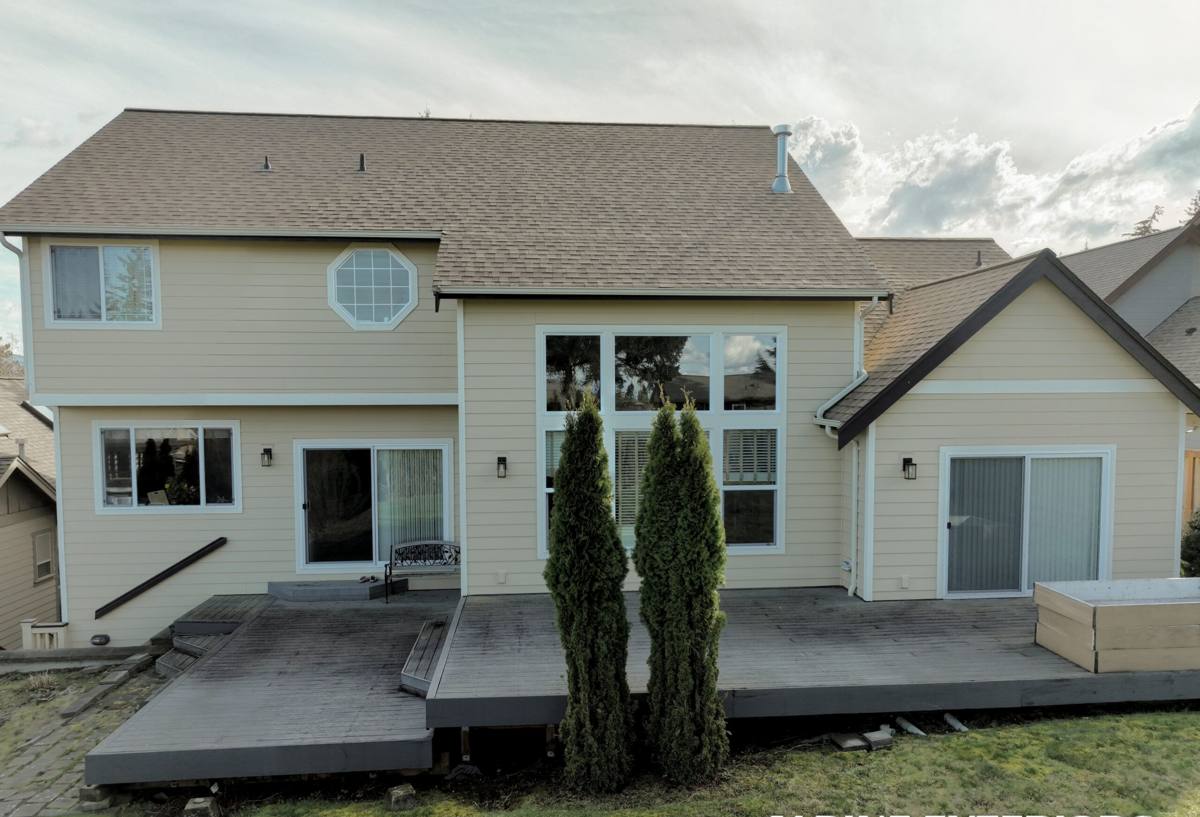
Why Composite Makes Sense for a Shaded, Rainy Lot
Composite boards are made from a blend of wood fiber and plastic, and most modern products add a polymer cap layer on top. That cap is the part that matters most here — it keeps moisture from soaking into the board the way it does with raw wood, which is the main reason wood decks in shaded yards grow moss and soft spots so much faster than the same deck would in full sun.
Composite doesn't need annual staining or sealing, which matters a lot when your deck only gets a handful of fully dry days in a row to work with. It won't splinter, and it resists the surface mildew and green staining that wood picks up quickly under tree cover. It's not maintenance-free — nothing that sits outside in this climate is — but the maintenance is lighter and less time-sensitive than keeping up with a wood deck's finish schedule.
What Composite Doesn't Fix
Composite decking is only as good as the structure underneath it. A capped composite board over a poorly built frame with no drainage plan will still trap moisture, grow mildew in shaded spots, and develop problems — just in the substructure instead of on the surface. The board material solves the surface-wear problem; it doesn't solve moisture management on its own. That's a build-quality issue, not a product issue.
What a Correct Composite Deck Build Involves
Framing and Structure
Composite boards are heavier and behave differently under load than wood, so joist spacing needs to match the manufacturer's specs for that specific product — this is one of the most common places we see other decks built wrong, where a frame spaced for lumber leaves composite boards with too much unsupported span. Footings need to sit on solid, undisturbed soil and go below frost depth, and any framing lumber should be rated for ground contact or pressure-treated appropriately, since it's the one part of the deck still vulnerable to rot.
Flashing and Moisture Management
Where the deck attaches to the house — the ledger board — is the single most important place to get flashing right. A poorly flashed ledger is the number one cause of hidden water damage behind a deck, composite surface or not. We flash that connection properly, slope the frame slightly away from the house, and leave gaps for airflow underneath so trapped moisture has somewhere to go instead of sitting against the rim joist.
Fastening and Board Layout
Hidden fastener systems keep the surface clean and reduce the small gaps around exposed screw heads where debris and moisture like to collect. Board gapping matters too — too tight and boards can't expand and contract with temperature swings; too loose and organic debris packs into the gaps, holds moisture, and becomes a moss starter kit.
Choosing the Right Composite Board for This Kind of Yard
Not all composite decking performs the same in a shaded, wet environment. The table below is a general comparison of the categories you'll run into — actual performance varies by manufacturer and product line, so we walk through real samples with every estimate rather than relying on marketing claims.
| Decking Type | Moisture Tolerance | Maintenance | Typical Lifespan |
|---|---|---|---|
| Capped composite | Very good — polymer cap sheds water and resists staining | Occasional wash-down | 25–30+ years |
| Uncapped composite | Fair — exposed wood fiber can absorb moisture over time | Periodic cleaning, closer inspection | 15–20 years |
| PVC / cellular decking | Excellent — no wood fiber content | Low | 25–30+ years |
| Pressure-treated wood | Poor to fair in heavy shade | Annual cleaning, periodic staining/sealing | 10–15 years in shaded, wet conditions |
We steer most Redmond clients away from uncapped composite for heavily shaded lots — not because it's a bad product everywhere, but because the exposed wood fiber content behaves a lot like wood in a spot that never fully dries out. It's a fair trade-off for sunnier, drier lots at a lower price point; it's just not the right match here. Fully capped composite or PVC boards handle this specific climate better, and we'll say so plainly during the estimate rather than upselling you on something your yard doesn't need.
Our Process, Start to Finish
- Site visit: we look at sun exposure, drainage patterns, existing structure (if replacing a deck), and how the space is actually used.
- Material walkthrough: we bring samples and talk through board options honestly, including what performs best given the shade and moisture on your specific lot.
- Permitting: we handle the permit application and inspections required for the scope of work.
- Build: demolition (if applicable), framing, flashing, board installation, and railing/stair work.
- Final walkthrough: we go over the finished deck together before calling the job done.
Permits and Local Code
Deck projects in King County jurisdictions generally require a building permit once you're above a certain height off grade or attaching a structure to the house, and guardrail, stair, and footing requirements are governed by code rather than preference. Exact thresholds and requirements depend on your specific project and jurisdiction, so we confirm what applies to your job during the estimate rather than guessing. We handle the permit process as part of the job — it's not an extra homeowners have to chase down separately.
Maintaining a Composite Deck in a Mossy, Wet Climate
Composite is lower-maintenance than wood, not maintenance-free. In a yard with heavy tree cover, a little seasonal attention goes a long way toward keeping the deck looking and draining the way it should.
- Sweep off leaves, needles, and other debris regularly — especially in fall, when they pile up fastest and hold moisture against the boards
- Rinse the deck surface a few times a year with plain water and a soft brush; avoid pressure washers on composite, which can damage the cap layer
- Check that gaps between boards and around the deck perimeter aren't packed with compacted debris blocking drainage
- Keep gutters and downspouts near the deck clear so runoff isn't dumping directly onto or under the structure
- Trim back overhanging branches where practical to get a little more light and airflow onto the surface
- Inspect railings, stairs, and ledger flashing once a year for anything that looks loose or deteriorated
Why a Crew That Already Works in Redmond Matters
A lot of what makes a composite deck perform well here isn't the board — it's the decisions made underneath it: how the frame handles drainage on a sloped, shaded lot, how the ledger is flashed against a house built for this rain pattern, and how the whole structure is sited relative to trees and moisture. A crew that regularly works in Redmond and the surrounding King County area has already seen how these lots behave through a full wet season, not just on the sunny day of the estimate. That local pattern recognition is what separates a deck that still looks and drains right in year eight from one that's already showing moss and soft spots.
If you're weighing a new composite deck or replacing a wood deck that's not holding up to Redmond's shade and rain, we're happy to take a look and talk through honest options for your yard specifically. Use the form below to request a free, no-pressure estimate.