 King County
 Window Installation Built for Bothell's Climate
Bothell sits in a part of King County that gets the full Pacific Northwest treatment — long stretches of driving rain in the fall and winter, heavy tree canopy that keeps siding and window frames shaded and damp for days at a time, and a moss and mildew season that can run from October well into spring. Homes here also see real humidity swings between the wet months and the dry summer stretch, which puts stress on window seals, frames, and the flashing details around them. A window that's installed correctly for this climate behaves very differently over ten or fifteen years than one that was rushed or flashed wrong on day one.
Window installation isn't just picking a product and setting it in the opening. In King County's climate, the installation details — how the opening is prepped, how water is directed away from the frame, how the unit is sealed and insulated — matter as much as the window itself. A premium window installed poorly will leak and fail early. A mid-grade window installed correctly will often outperform it.
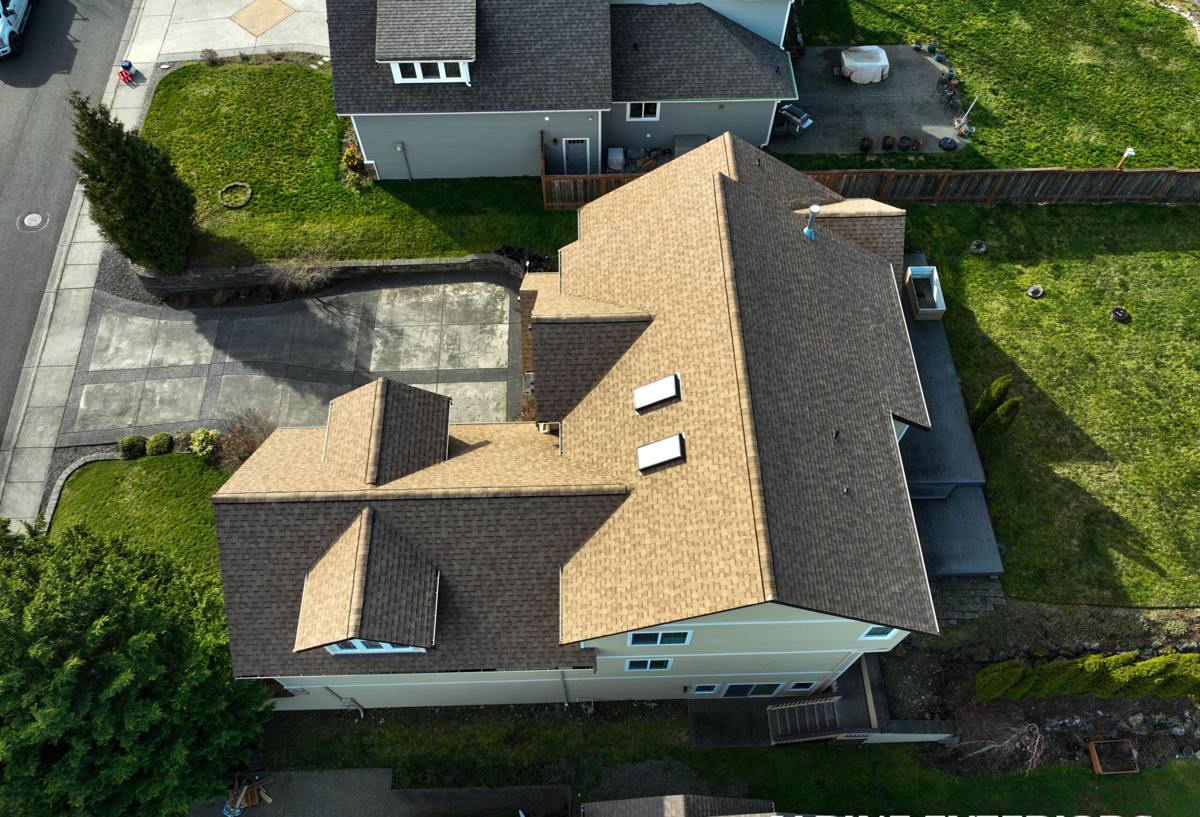
Signs a Bothell Home Needs New or Reinstalled Windows
Most homeowners don't think about their windows until something goes wrong. In our experience working around King County, these are the most common signs that a window needs attention:
- Fogging or a hazy film between the panes — a sign the seal has failed and the insulating gas has escaped
- Soft or discolored wood on the interior sill or exterior trim, often from slow water intrusion rather than a sudden leak
- Visible gaps, drafts, or a cold feeling near the window even when it's shut and locked
- Difficulty opening, closing, or locking — frames can swell, warp, or settle out of square over time
- Moss or dark streaking building up on the exterior trim, especially on north- and west-facing walls that stay shaded and wet longer
- Rising heating bills without a clear other cause, which can point to failing insulation around older window units
None of these on their own mean a window has to be replaced immediately, but they're worth a professional look before they turn into rot repair on top of the window work.
What a Correct Window Installation Actually Involves
Prepping the Opening
Before a new window ever goes in, the rough opening needs to be checked for square, level, and soundness. Any soft or water-damaged framing found at this stage gets addressed first — installing a new window into a compromised opening just hides the problem behind new trim.
Flashing and Water Management
This is the step that matters most in our climate. A sill pan at the base of the opening, properly lapped house wrap, and flashing tape integrated in the correct order (so water is always shed downward and outward, never trapped behind the siding) are what keep driving rain from working its way into the wall cavity over years of wet winters. Skipping or shortcutting this step is the single biggest cause of hidden rot behind window trim in this region.
Setting, Shimming, and Insulating
The window unit gets shimmed square and plumb, fastened per the manufacturer's schedule, and the gap between the frame and the rough opening is filled with a low-expansion foam or backer rod and sealant — never packed solid, which can bow the frame and cause operational problems.
Sealing and Trim
Exterior sealant beads, interior air sealing, and trim work finish the job. This is also where a lot of installations get shorted; the sealant type and bead placement affect how long the seal actually holds up against our rain and temperature swings.
Choosing the Right Window for a Bothell Home
There's no single "best" window for every house — it depends on exposure, budget, and how the home is used. Here's how the common frame materials compare for this climate:
| Frame Material | Moisture Performance | Maintenance | Typical Fit |
|---|---|---|---|
| Vinyl | Good — won't rot, handles moisture well | Low | Most Bothell homes; strong value and energy performance |
| Fiberglass | Very good — dimensionally stable in temperature swings | Low | Homes wanting a longer-term, higher-end option |
| Wood-clad | Depends heavily on cladding and installation quality | Higher — exposed wood needs upkeep | Homes prioritizing a traditional interior wood look |
| Aluminum | Prone to condensation without thermal breaks | Low | Less common in residential retrofits here |
We generally steer Bothell homeowners toward vinyl or fiberglass for most replacement projects. Both hold up well against sustained damp weather without the ongoing maintenance that exposed wood requires, and both are widely available with strong energy ratings suited to our climate. That's a judgment based on moisture behavior and upkeep, not a knock on wood-clad windows — they can be a good fit for the right home when properly maintained.
Glass and Energy Performance
Double-pane, low-E glass with argon fill is the practical standard for our climate — it cuts heat loss in winter and reduces solar gain in summer without the added cost of triple-pane, which is rarely necessary outside of homes with unusual noise or extreme exposure concerns. Look for windows rated for the Northern climate zone on their energy performance label.
Our Installation Process
- On-site assessment — we look at every window opening individually, not just from a brochure. Sun exposure, tree cover, and existing water damage all factor into the plan.
- Measurement and product selection — accurate measurements and a frame/glass package that fits the home and budget.
- Opening prep and any needed repair — addressing rot or framing issues before the new window goes in, not after.
- Flashing and installation — sill pan, house wrap integration, and correct flashing sequence before the window is set.
- Sealing, insulating, and trim — interior and exterior finish work to complete the weatherproofing.
- Walkthrough — operation check on every window (open, close, lock) and a final look at sealant lines before we call the job done.
What Window Installation Costs Depend On
Every home is different, but the main factors that move the price on a Bothell window installation project are fairly consistent:
| Factor | Why It Matters |
|---|---|
| Number of openings | More windows means more labor and material, but per-unit cost usually drops on larger jobs |
| Frame material and glass package | Vinyl, fiberglass, and wood-clad carry different material costs; upgraded glass adds cost |
| Condition of existing framing | Hidden rot or water damage found during removal adds repair time before installation can proceed |
| Window size and type | Standard double-hung units cost less to install than large picture windows, bays, or custom shapes |
| Access and height | Second-story or hard-to-reach openings take more time and equipment |
We give straightforward, itemized estimates so homeowners can see exactly what's driving the cost — no vague lump sums.
Why Hiring a Crew That Already Works in Bothell Matters
Window installation done wrong doesn't usually fail in week one — it fails two or three wet seasons later, when water that was never properly diverted finally finds its way into the wall. A crew that regularly works King County homes has already seen how the local rain patterns, tree cover, and older housing stock in and around Bothell behave over time, and builds the installation around that instead of a generic checklist. That includes knowing which framing conditions are common in the area's older homes, how much shade and moss exposure a given wall typically sees, and how to sequence flashing so it actually sheds water instead of just looking finished.
It also matters for accountability. A local crew is easy to reach if a question comes up after the work is done, and stands behind the installation the way a company that isn't based in the area often can't.
Keeping New Windows Performing Long-Term
A correct installation is most of the battle, but a little homeowner upkeep extends the life of the work:
- Rinse pollen, dust, and moss spores off exterior frames a couple times a year, especially on shaded sides of the house
- Check exterior sealant beads annually for cracking or separation, particularly after a hard winter
- Keep gutters and downspouts clear so overflow isn't running down onto window trim
- Trim back tree limbs and shrubs that keep a window's exterior constantly damp and shaded
- Operate each window a few times a season so hardware doesn't seize up from disuse
Permits and Local Code Considerations
Window replacement projects in King County can require a permit depending on the scope of work, especially if the rough opening size is being changed or the work is part of a larger renovation. Egress requirements also apply to bedroom windows, so a like-for-like swap is usually straightforward, but resizing or changing a window's function can trigger additional code requirements. We handle the permitting conversation as part of planning the job so there are no surprises mid-project.
If you're weighing window replacement or want a second opinion on windows that seem to be underperforming, we're happy to take a look and put together a straightforward, no-pressure estimate — just fill out the form below.