 King County
 Composite Decking Built for How Sammamish Actually Weathers
Sammamish sits in one of the greener, more tree-covered pockets of King County, and that's a mixed blessing for anything built outdoors. The tree canopy and lake-effect humidity around Sammamish and Pine Lake keep decks shaded and damp for long stretches of the year, which is exactly the environment moss, algae, and soft-wood rot thrive in. Add the long stretch of driving rain that defines a Puget Sound fall and winter, and a deck here needs to shed water and resist organic growth far better than a deck in a drier inland climate. Composite decking, installed correctly, is one of the more reliable ways to get ahead of that.
This page is specifically about composite decking for homes in and around Sammamish — not a generic decking overview. The material choice matters, but so does the framing underneath it, the drainage plan, the fastener hardware, and the crew's familiarity with how local moisture and shade patterns actually behave on a real roofline and yard, not just on paper.
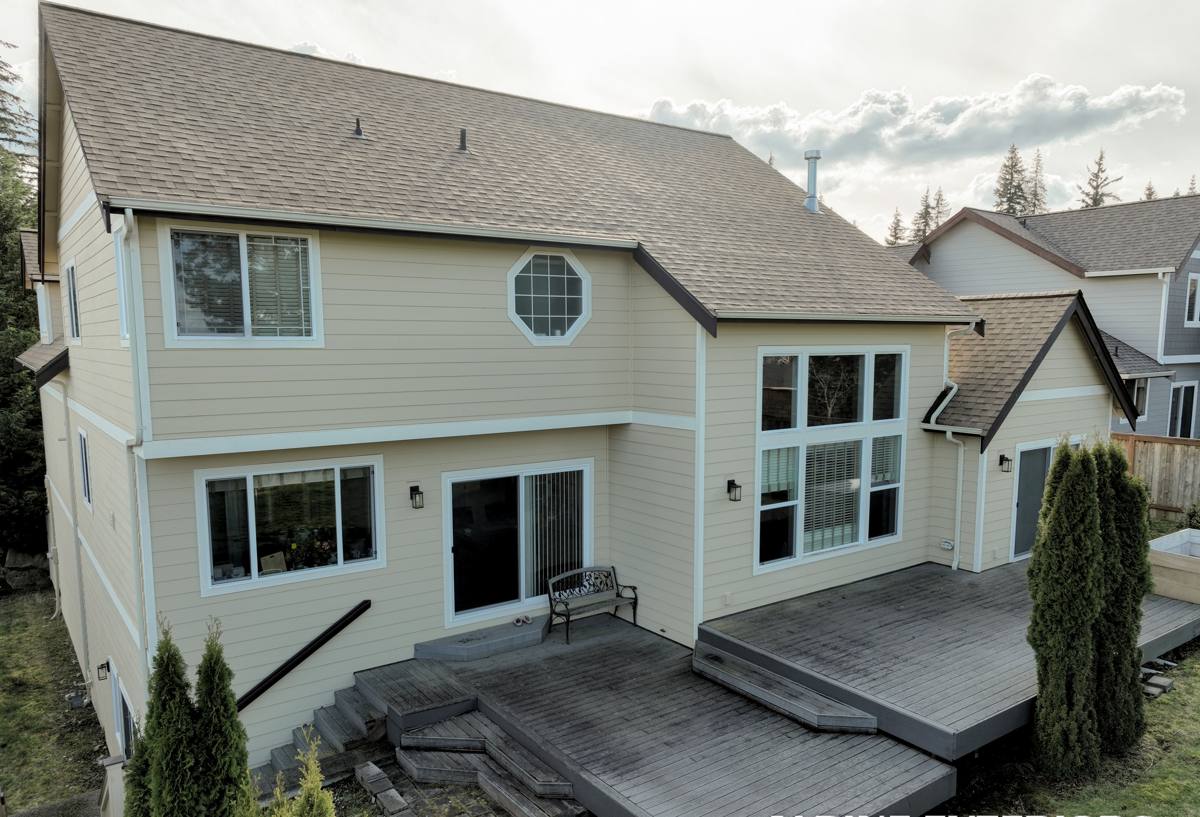
What Sammamish's Climate Does to a Deck Over Time
A few local realities shape how we design and build composite decks in this area:
- Shade and moisture linger. Mature trees common in Sammamish neighborhoods block sun and airflow, so decks dry out slower after rain than an open, sunny lot would. That extended dampness is what feeds moss and mildew on any decking surface, composite included.
- Driving rain finds gaps. Wind-driven rain off the lake and the wetter winter storm pattern push water sideways into board seams, fastener holes, and ledger connections — not just straight down. Flashing and drainage details matter as much as the decking material itself.
- Freeze-thaw cycling, though mild, still happens. Sammamish gets enough cold snaps each winter that trapped moisture in joists or under boards can freeze, expand, and slowly work fasteners loose or split undersized framing over several seasons.
- Regional moisture is hard on hardware. Across the greater Puget Sound area, the combination of humidity and occasional salt-laden air near the water accelerates corrosion on lower-grade screws, brackets, and joist hangers. It's a reason we don't cut corners on fastener spec, even on inland lots.
None of this makes composite decking a bad fit for Sammamish — quite the opposite. But it does mean the installation details underneath the boards carry more weight here than they would in a drier climate.
Why Composite Over Wood for This Area
We install both wood and composite decking, and we're upfront with homeowners about the trade-offs rather than pushing one product line. For a shaded, rain-heavy property, composite generally holds up with less ongoing effort. Here's the honest comparison:
| Factor | Composite Decking | Pressure-Treated Wood |
|---|---|---|
| Moss & algae resistance | Higher — capped boards resist surface staining, though shaded areas still need periodic cleaning | Lower — porous surface holds moisture and organic growth, especially under tree cover |
| Annual maintenance | Occasional wash-down; no staining or sealing required | Sealing or staining every 1–2 years to hold up in wet climates |
| Upfront cost | Higher material cost | Lower material cost |
| Long-term cost | Lower over 15–20 years once maintenance labor is factored in | Can be lower or higher depending on how consistently it's maintained |
| Warranty structure | Typically 25–50 year limited product warranties from manufacturers | No comparable manufacturer warranty on the wood itself |
| Feel & appearance over time | Consistent color and texture; some fading is normal | Natural look but grays, splinters, and cups without upkeep |
Composite isn't maintenance-free — nothing outdoors in this climate is — but it removes the sanding, staining, and re-sealing cycle that wood demands to keep moisture out.
What a Correct Composite Deck Installation Actually Involves
Framing and Joist Spacing
Composite boards flex differently than wood, and most manufacturers require tighter joist spacing than a traditional lumber deck — often 16 inches on center, sometimes closer for angled or picture-frame layouts. Building to wood-spacing standards under composite decking is a common shortcut that leads to bounce and premature board stress. We frame to the specific product's published spec, not a generic standard.
Ventilation and Drainage Underneath
Trapped moisture under a deck is the real long-term enemy in a climate like this. We plan for airflow beneath the deck surface and make sure water has a clear path off the site rather than pooling against the house foundation or ledger board — a detail that matters more on shaded, slower-drying lots.
Ledger Board and Flashing
Where the deck attaches to the house is the single most common failure point on any deck, composite or wood. Proper flashing keeps wind-driven rain from working its way behind the ledger and into the rim joist or sheathing. This is a spot we don't shortcut, regardless of what decking material sits on top.
Fasteners and Hardware
We use corrosion-resistant, code-rated fasteners and hidden fastening systems suited to the specific composite product — mismatched or budget-grade hardware is one of the more common causes of staining, squeaking, or loosening boards over time in wetter climates.
Board Layout and Expansion Gaps
Composite boards expand and contract with temperature more than wood does. Gaps at butt joints, borders, and around fixed obstacles (posts, house walls) need to be set correctly at install so boards aren't fighting themselves a year or two later.
Our Process for a Sammamish Composite Deck Project
- On-site assessment: we walk the property, check sun/shade exposure, drainage slope, and the condition of any existing structure being replaced.
- Design and product selection: we go over composite board options, color, and railing systems based on your home and budget — including honest pros and cons of each line.
- Permitting: most new or significantly rebuilt decks in King County require a permit; we handle that process so it's not on you to navigate.
- Demo and framing: old decking is removed if applicable, and framing is built or reinforced to the composite manufacturer's spacing and structural requirements.
- Installation: decking, fascia, and railing go in with attention to drainage, flashing, and fastener spec as described above.
- Final walkthrough: we go over the finished deck with you, including what maintenance to expect given your specific yard's sun and shade pattern.
Maintenance Sammamish Homeowners Should Actually Expect
Composite decking is lower-maintenance than wood, not zero-maintenance — especially on a shaded lot. A realistic annual routine looks like this:
- Sweep debris (leaves, needles, seed pods) off the deck regularly — trapped organic matter is what feeds moss and staining, not the composite itself.
- Wash the surface once or twice a year with mild soap and water, more often in consistently shaded areas.
- Check railing posts and stair connections annually for any looseness.
- Keep gutters and downspouts near the deck clear so runoff isn't dumping extra water onto or under the deck surface.
- Trim back overhanging branches where practical to improve airflow and sun exposure on shaded sections.
- Inspect under-deck ventilation gaps to make sure they haven't been blocked by landscaping or storage over time.
Cost Factors for a Composite Deck in This Area
Every project is different, but the main variables that move the price on a Sammamish composite deck project are consistent:
| Factor | Why It Matters |
|---|---|
| Deck size and shape | Square footage plus complexity — angles, curves, and multi-level designs add labor and material waste |
| Composite product tier | Entry-level capped composite vs. premium lines with deeper warranties and more color/texture options |
| Existing structure condition | Full tear-out and reframing costs more than resurfacing sound existing framing that meets composite spacing requirements |
| Railing system | Composite, cable, or metal railing systems vary widely in cost |
| Site access and slope | Sloped lots or limited equipment access common in some Sammamish neighborhoods can add labor time |
| Permitting requirements | Structural changes or height/setback factors can affect permit scope and timeline |
Why Hiring a Crew That Already Works in Sammamish Matters
A deck built to a generic spec sheet can still fail early in a climate it wasn't really designed for. Crews who regularly work King County's wetter, shadier neighborhoods build in the drainage, ventilation, and hardware margin that this specific climate calls for — not because a manual demands it, but because they've seen what happens when it's skipped. That local pattern recognition, on top of correct framing and manufacturer-spec installation, is what separates a composite deck that looks good for a season from one that holds up through a decade of King County winters.
If you're weighing a new composite deck or a replacement for a tired wood deck, we're happy to walk the property with you and give you a straight assessment — no pressure, no upsell script. Use the form below to request a free estimate.