 King County
 Why Asphalt Shingles Still Make Sense in Seattle
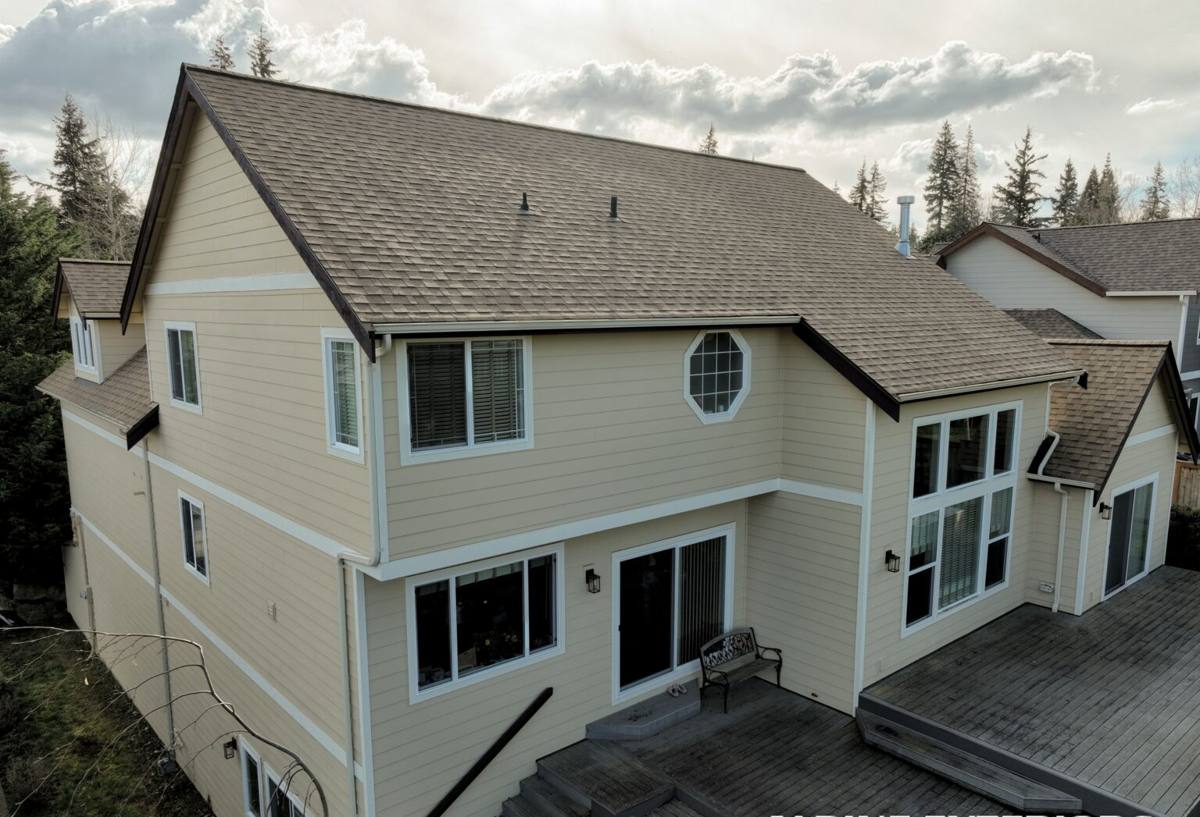
Asphalt shingles remain the most common roofing material in Seattle for good reason. They handle sustained rain well when installed correctly, they're compatible with steep and moderate pitches alike, and they give homeowners a wide range of looks without the cost jump of metal or slate-style products. In a market where most homes were built across several different decades and roof styles, asphalt shingles are also the easiest material to match, repair in sections, or blend with neighboring rooflines.
The catch is that "correctly installed" carries more weight here than it does in drier parts of the country. Seattle's weather doesn't destroy roofs quickly — it wears down anything that was installed with shortcuts, one wet season at a time. A roof that's fine in Phoenix or Denver can fail early here if the underlayment, flashing, and ventilation details weren't built for near-daily moisture exposure.
What King County's Climate Actually Does to a Roof
King County doesn't get extreme heat or hard freezes very often, but it makes up for that with volume and duration. The combination that matters most for asphalt shingle roofs:
- Driving rain: Wind-driven rain off the Sound pushes water sideways under shingle edges and around penetrations, which is why lap technique and underlayment matter more here than in calmer climates.
- Extended moss season: Shade, moisture, and mild temperatures give moss and algae a long window to establish on north-facing slopes and anywhere debris collects.
- Salt-influenced air near the water: Homes closer to Puget Sound deal with airborne salt that accelerates corrosion on exposed metal fasteners, flashing, and vents if those components aren't rated for it.
- Freeze-thaw cycling: Not constant, but frequent enough in winter that trapped moisture in a shingle or underlayment can expand, contract, and speed up granule loss over years.
None of these factors alone is dramatic. Together, over ten or fifteen years, they're the reason a roof installed with generic techniques ages faster here than the same product would in a drier climate.
Moss: The Problem Homeowners See First
Moss is usually the first visible sign that a roof needs attention, but it's a symptom, not the root cause. Moss needs organic debris and consistent moisture to take hold, so it shows up fastest on shaded slopes, valleys, and roofs that don't get much direct sun or wind to dry them out. Left alone, moss holds water against the shingle surface, lifts shingle edges as it grows, and can work its way under laps — which is when a cosmetic issue turns into a leak. Keeping moss under control is part maintenance, part roofing design (ventilation, slope, and material choice all play a role in how fast it comes back).
What a Correctly Installed Asphalt Shingle Roof Includes
A roof that's built for this climate isn't just shingles nailed to plywood. Every layer underneath the shingles is doing work, and skipping or shortcutting any of them is where premature leaks and early replacements come from.
| Component | Why It Matters in Seattle |
|---|---|
| Ice and water shield at eaves & valleys | Backs up standard underlayment where water pools or backs up under wind-driven rain |
| Synthetic underlayment (full deck) | Provides a secondary water barrier during the install window and for the life of the roof |
| Proper nailing pattern & fastener count | Wind resistance for gusts off the Sound and winter storms |
| Step and counter-flashing at walls/chimneys | The most common leak point on older Seattle roofs when done wrong or reused |
| Balanced intake & exhaust ventilation | Controls attic moisture buildup, which drives premature shingle aging from underneath |
| Drip edge at eaves and rakes | Directs water away from fascia and sheathing edges instead of behind them |
When any one of these is missing, the shingles on top can look fine for a few years while the real problems build underneath. That's why we evaluate the whole system during a roof estimate, not just the shingle layer.
Choosing a Shingle for Local Conditions
Not every asphalt shingle product is built the same, and the differences matter more here than in mild, dry climates. We generally steer homeowners toward algae-resistant (AR) shingles that include copper or zinc granules, since standard shingles without that treatment tend to show streaking and moss growth faster under King County's shade and moisture patterns. We also pay attention to wind ratings — a shingle rated for typical Midwest wind exposure isn't necessarily the right spec for an exposed hillside lot or a home near open water.
Architectural vs. 3-Tab Shingles
Most of our Seattle roofing work now uses architectural (laminated) shingles rather than older 3-tab styles. Architectural shingles are thicker, generally carry stronger wind warranties, and their layered profile sheds water more effectively on lower-slope sections — a real advantage in a climate with this much annual rainfall. 3-tab shingles are lighter, less expensive, and still a reasonable option on some budgets or secondary structures, but we're upfront that they don't hold up to moss and moisture cycling quite as well over time.
Repair, Partial Replacement, or Full Tear-Off?
Not every roof problem means a full replacement, and we don't default to recommending one. The right call depends on the roof's age, how localized the damage is, and what we find once we're actually up there.
- Repair makes sense for isolated issues — a damaged flashing detail, a section lifted in a windstorm, or a small area of moss-related deterioration on an otherwise sound roof.
- Partial replacement can work when one slope or section is failing (often the north-facing, shaded side) while the rest of the roof still has useful life left, though matching shingle color and age is a real limitation worth discussing upfront.
- Full tear-off and replacement is the right move when the underlayment has failed, when there's widespread granule loss, when multiple layers of old roofing are already on the deck, or when the roof is old enough that repair costs stop making financial sense.
We'll tell you honestly which category your roof falls into rather than defaulting to the most expensive option.
Our Process, Start to Finish
- On-site inspection: We walk the roof (not just look from the ground) to check the shingle field, flashing, ventilation, and deck condition.
- Written estimate: A clear scope of work and price, including which components are being replaced versus reused, so there's no ambiguity later.
- Material selection: We walk through shingle options, colors, and any upgrades (algae resistance, upgraded underlayment) relevant to your roof's exposure.
- Tear-off and deck check: Old material comes off down to the deck, and we inspect the sheathing for soft spots or rot before anything new goes down.
- Underlayment and flashing: Ice and water shield, synthetic underlayment, and new flashing are installed to current standards, not just whatever was there before.
- Shingle installation: Installed to manufacturer nailing and exposure specs, which is what keeps wind and product warranties valid.
- Cleanup and final walkthrough: Site cleared of debris and nails (magnetic sweep), and we walk the finished job with you.
Maintenance That Actually Extends Roof Life Here
A well-installed asphalt shingle roof in King County can go a long time between major work if it gets basic seasonal attention:
- Keep gutters and valleys clear of needles and leaves, especially under overhanging trees
- Have moss treated (not power-washed — that damages granules) before it spreads across a slope
- Check attic ventilation isn't blocked by insulation, which traps moisture against the roof deck
- Have flashing around chimneys, skylights, and vents checked every few years, since these are the most common leak origin points
- Address small leaks or lifted shingles promptly rather than waiting — wind-driven rain finds small gaps quickly
Why Local Roofing Experience Matters
A lot of roofing problems we get called out for aren't installation failures in a general sense — they're installation choices that would've been fine somewhere drier and just weren't built for this much sustained moisture. Underlayment that's technically to code but minimal, flashing details that skip a step because "it usually works," or shingle products chosen without accounting for shade and moss exposure. A crew that works Seattle and King County roofs regularly builds habits around this climate specifically: where water actually goes on a low-slope valley in a heavy rain event, which north-facing slopes need extra attention, and which flashing details hold up over years near the water versus a few seasons inland. That local pattern recognition is hard to substitute with a generic spec sheet.
Get a Straightforward Roofing Estimate
If your roof is showing moss, granule loss, curling edges, or you just want an honest read on how many years it has left, we're happy to take a look. The estimate is free, there's no pressure to sign anything on the spot, and we'll tell you plainly whether you need a repair, a partial fix, or a full replacement. Use the form below to get started.