 King County
 Why Kirkland Decks Take a Beating
A deck in Kirkland lives a different life than one in a drier climate. Sitting close to Lake Washington and within the broader Puget Sound marine air pattern, King County homes deal with long stretches of damp weather, heavy fall and winter rain, and shoulder seasons where a deck surface can stay wet for days at a time. Add tree cover from mature evergreens and the moss and algae growth that comes with shade and moisture, and you have a recipe for slow, often hidden deck damage.
Most deck problems we see in Kirkland aren't dramatic. They're gradual: a joist that's been quietly absorbing moisture for a few seasons, fasteners that have started to corrode, a ledger board connection that was never flashed correctly to begin with. By the time a homeowner notices a soft spot underfoot or a railing that wiggles more than it should, the damage has usually been building for a while.
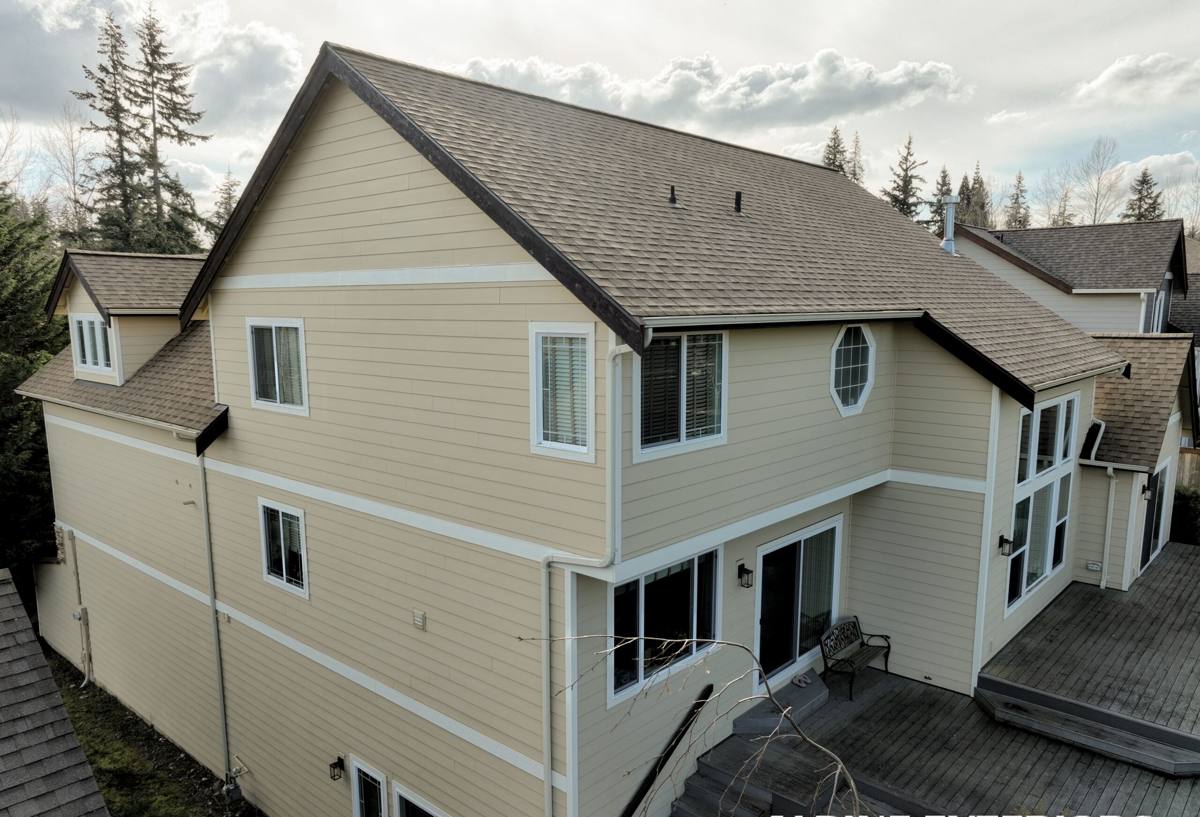
What Kirkland's Climate Actually Does to a Deck
Moss and Algae
King County's long moss season isn't just cosmetic. Moss holds moisture directly against decking boards, and that trapped dampness accelerates wood decay and can work its way into fastener holes and board seams. On shaded decks, especially those under tree canopy or on the north side of a house, moss can regrow within months of a cleaning if the underlying moisture problem isn't addressed.
Driving Rain and Standing Water
Rain that comes in at an angle, which is common with the wind patterns off the lake and the Sound, can drive water under railings, around post bases, and into any gap where flashing or caulking has failed. Flat or poorly sloped deck surfaces compound this by holding water instead of shedding it, which is one of the most common causes of premature board and framing failure we find on repair calls.
Marine Air and Metal Fasteners
Homes closer to the lakefront and within the broader marine air influence of the region tend to see faster corrosion on lower-grade fasteners and hardware. Once a nail or screw starts to rust, it loses holding strength and can also stain the wood around it, which is often the first visible clue that something underneath needs a closer look.
Signs a Kirkland Deck Needs Repair, Not Just Cleaning
- Soft, spongy, or bouncy spots when you walk across the deck
- Boards that stay damp or dark long after the rest of the deck has dried
- Railings or posts that flex, wobble, or feel less rigid than they used to
- Visible gaps, cracking, or splintering concentrated in one area rather than spread evenly
- Rust streaks running down from screws or nail heads
- Moss or algae that returns quickly after cleaning, especially in the same spots each year
- Stairs that feel uneven or treads that have started to separate from stringers
- Gaps or discoloration where the deck meets the house, near the ledger board
Any one of these on its own might be minor. Several together, or anything near the ledger board connection to the house, is worth having looked at before the next wet season.
What a Correct Deck Repair Actually Involves
A lot of deck "repair" in this region is really just surface patching, and it tends to fail again within a season or two because it doesn't address the moisture source. Our approach starts with figuring out why a section failed, not just replacing what's visibly damaged.
Inspection First
Before any boards come off, we check the framing underneath, the ledger board flashing where the deck attaches to the house, post bases, and any areas where water has clearly been pooling or draining incorrectly. In a climate like Kirkland's, the framing is usually a better indicator of deck health than the decking surface itself.
Matching the Fix to the Cause
If moss and standing water are the issue, that usually points to a slope or drainage problem, not just a cleaning schedule. If corroded fasteners are showing up, that's a sign the original hardware wasn't rated for long-term exposure to this climate. We repair to correct the underlying cause, using fasteners and flashing details suited to a wet marine climate, so the same failure doesn't reappear in the same spot.
Structural vs. Cosmetic Repairs
We're upfront about the difference between a repair that restores structural safety (joists, ledger connections, post bases, railings) and one that's primarily cosmetic (board replacement, refinishing, moss removal). Both matter, but they're not interchangeable, and a homeowner deserves to know which one they're paying for.
Common Deck Repairs We Handle in Kirkland
| Repair Type | What Causes It Here | Typical Approach |
|---|---|---|
| Rotted or soft decking boards | Prolonged moisture from rain and shade-driven moss growth | Remove and replace affected boards, check framing underneath before closing back up |
| Ledger board separation or rot | Missing or failed flashing where deck meets house | Re-flash the connection correctly, replace rotted framing, reattach per code |
| Loose or wobbly railings | Corroded fasteners, moisture-weakened posts | Replace hardware with corrosion-resistant fasteners, reinforce or replace posts as needed |
| Corroded fasteners and hardware stains | Marine air exposure, lower-grade original hardware | Replace with hot-dip galvanized or stainless fasteners rated for coastal/marine exposure |
| Recurring moss and slippery surfaces | Shade, poor drainage, low airflow | Correct slope/drainage issues, clean properly, address root moisture cause |
| Uneven or failing stairs | Settling posts, moisture damage to stringers | Reset or replace stringers and posts, re-level treads |
Repair vs. Replacement: How We Help You Decide
Not every damaged deck needs to be torn out. A lot of Kirkland decks are structurally sound but have isolated problem areas, usually where water collects or where the original build had a detail that doesn't hold up long-term in this climate. We look at three things when advising a homeowner:
- Extent of the damage — isolated boards and hardware are usually a repair; widespread framing rot or a failed ledger connection across the whole span often points toward replacement
- Age and material — older pressure-treated framing that's been exposed to this climate for 15-20+ years has less remaining life than a deck built in the last decade
- Cost over time — a repair that only addresses symptoms and not the underlying moisture problem often costs more over five years than doing the job right once
We'll tell you honestly if a repair makes sense, and just as honestly if it doesn't. There's no benefit to us patching something that's going to fail again next winter.
Our Process for Kirkland Deck Repair Projects
- On-site inspection — we look at the whole deck system, not just the visible complaint area, including framing, ledger board, posts, and drainage
- Honest assessment — you get a clear explanation of what's failing, why, and what it will take to fix it correctly
- Written scope and estimate — no vague verbal quotes; you know what's being replaced and why
- Repair work — done with fasteners and materials suited to King County's wet, marine-influenced climate
- Final check — we confirm the repair addresses the root cause, not just the symptom, before we call the job done
Why a Crew That Works Kirkland Regularly Matters
Deck repair advice that works in a dry climate doesn't always hold up here. A crew that regularly works King County homes knows which fastener grades actually last near the lake, which slope and drainage details prevent moss from coming right back, and how to properly flash a ledger board so it doesn't quietly rot behind the siding for years unnoticed. That local, repeated experience is the difference between a repair that lasts one season and one that lasts a decade.
We also know that Kirkland's mix of older established homes and newer builds means every deck has a different history. Some were built to code standards that have since improved; others had corners cut by a previous owner's contractor. Coming in with local knowledge means fewer surprises and a repair plan that fits the deck in front of us, not a generic template.
Maintaining Your Deck Between Repairs
- Clean moss and debris out of board gaps at least once a year, ideally before the wet season sets in
- Keep gutters and downspouts clear so water isn't being dumped directly onto or near the deck
- Trim back overhanging branches to reduce shade and improve airflow, which slows moss regrowth
- Check railings and stair treads for movement each spring as a quick safety habit
- Reseal or refinish per the manufacturer's recommended schedule for your decking material
- Address small soft spots or discoloration early, before the surrounding framing is affected
If your Kirkland deck has soft spots, recurring moss, wobbly railings, or a ledger connection you're not sure about, we're happy to take a look. Fill out the form below for a free, no-pressure estimate and an honest read on what your deck actually needs.