 King County
 Why Renton Decks Wear Differently Than Decks Inland
Renton sits at the south end of Lake Washington, close enough to Puget Sound's marine air that homes here deal with a combination most inland King County properties don't: salt-laced humidity, long stretches of driving rain off the Sound, and a moss season that can run from October through May in a wet year. None of these alone is unusual for Western Washington. Together, on a deck, they add up to faster fastener corrosion, more persistent moisture in ledger boards and joists, and organic growth that holds water against wood far longer than a dry surface ever would.
A deck built the same way in Spokane or Yakima would age on a completely different timeline. In Renton, the wood never really gets a long dry stretch to fully release the moisture it absorbs each winter. That's the root cause behind most of the repair calls we see: not bad lumber, but wood and hardware that never got a fair chance to dry out between soakings.
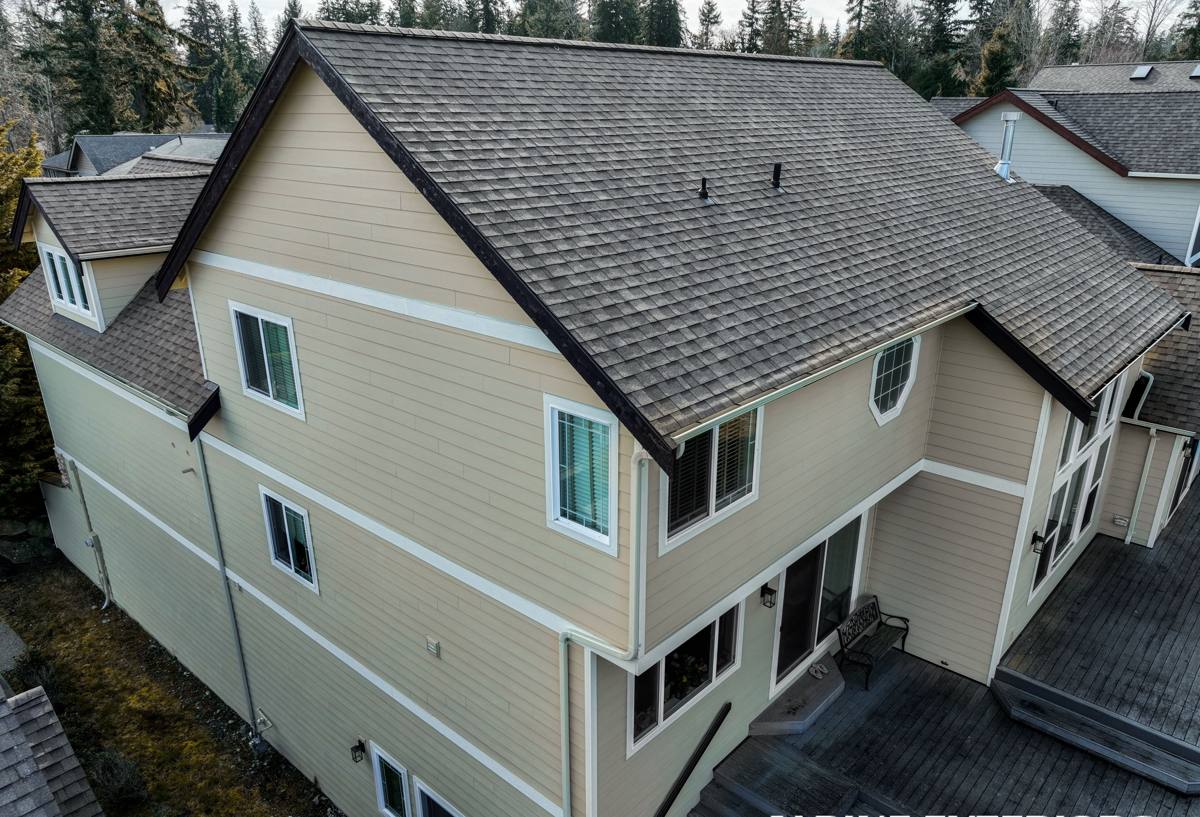
What Salt Air, Rain, and Moss Actually Do to a Deck
Salt Air and Fastener Corrosion
Even a few miles from the water, airborne salt accelerates corrosion on screws, joist hangers, and structural bolts. Galvanized hardware that would last decades in a drier inland climate can start showing rust streaks and pitting well before the wood itself shows real damage. Once a fastener starts corroding, it loses holding strength quietly — you often don't see the problem until a board starts to move underfoot.
Driving Rain and Water Intrusion
Wind-driven rain off the Sound doesn't just fall straight down — it gets pushed sideways into ledger connections, under flashing, and into any gap where a board meets the house. That's where the most serious structural rot tends to start, because it's hidden from view and gets wet repeatedly without ever fully drying.
Moss and Prolonged Moisture Contact
Moss doesn't just look bad. It holds moisture directly against the deck surface for weeks at a time, which softens wood fibers, breaks down surface sealers faster, and creates a slick, slippery surface that's a real fall hazard on stairs and ramps. On composite decking, heavy moss and algae buildup can also work into board grooves and fastener channels in ways that are hard to fully clean out.
Signs Your Renton Deck Needs Repair
- Soft, spongy, or spring-feeling spots underfoot, especially near the house or at stair landings
- Rust staining running down from screw heads or bolt connections
- Gaps opening up where the deck meets the house siding or foundation
- Visible green or black growth that returns quickly after cleaning
- Loose or wobbly railings, especially posts near the ground or at outside corners
- Boards that have cupped, split, or pulled away from their fasteners
- A musty smell coming from underneath the deck
- Visible daylight or gaps at the ledger board where the deck attaches to the house
Any one of these can be minor on its own. Several at once, or anything involving the ledger connection or main support posts, is worth a professional look before you plan another season of use on the deck.
Repair or Replace? How We Make That Call
Not every deck problem means starting over, and we don't push replacement when a targeted repair will genuinely hold up. The honest answer usually comes down to where the damage is and how much of the structure it's touching.
| Situation | Usually a Repair | Usually a Replacement |
|---|---|---|
| Surface boards | A handful of boards showing rot, splitting, or moss damage | Widespread board failure across most of the deck surface |
| Ledger board | Localized rot caught early, flashing resealed | Extensive rot along the ledger or evidence of long-term water intrusion into the house rim joist |
| Substructure | One or two damaged joists or a loose beam connection | Widespread joist rot or an undersized frame that was never built to current load standards |
| Railings and posts | Loose railing sections, isolated post rot | Railing system that doesn't meet current code height or baluster spacing |
| Age and history | Deck is under 15-20 years old with isolated issues | Deck is original to an older home and already had prior patch repairs |
We'll always tell you plainly which category your deck falls into, and why, before we talk about cost.
What a Correct Deck Repair Actually Involves
Structural Inspection First
Before any board comes off, we check the parts you can't see from the surface: the ledger board connection to the house, the condition of the joists and beams, post footings, and the hardware holding it all together. In this climate, hidden rot at the ledger is the single most important thing to catch, because it's a structural connection, not a cosmetic one.
Fixing the Cause, Not Just the Symptom
Replacing a rotted board without addressing why it rotted just buys you a few more seasons before the same spot fails again. If a board failed because flashing was missing or damaged, we fix the flashing. If it failed because of standing water from poor drainage or grade, we address that too. A repair that ignores the underlying moisture path isn't a real repair.
Hardware Matched to the Environment
Given the salt exposure in this part of King County, we use corrosion-resistant fasteners and connectors rated for coastal or treated-lumber exposure rather than standard interior-grade hardware. It costs a little more up front and saves you from redoing the same repair in five years because the screws rusted out before the wood did.
Proper Drying Time and Sealing
Wood needs to be reasonably dry before it's sealed or stained — sealing over damp lumber traps moisture in rather than keeping it out. We plan repair timing around actual weather windows, not just the calendar, which matters more in Renton than in drier parts of the state.
Ledger Boards and Framing: Where We Look Closest
The ledger board — the piece that attaches the deck directly to your house — carries a disproportionate share of a deck's structural load, and it's also the part most exposed to water running off the house wall above it. Original construction sometimes skipped proper flashing at this connection, which is one of the more common issues we find on older Renton decks regardless of who built them originally.
When we open up a ledger area for repair, we're checking for continuous flashing that directs water away from the connection, proper lag bolts or through-bolts (not just deck screws) securing the ledger to the house rim joist, and no signs of rot in the rim joist itself. If the rim joist is compromised, that's a repair that involves the house structure, not just the deck, and we'll explain exactly what that means before moving forward.
Joists, Beams, and Posts
Below the visible decking, joists and beams take on moisture from both above (through gaps between boards) and below (from ground moisture and poor airflow under low decks). We look for soft spots, checking (splitting along the grain), and any place where a joist hanger has started to pull away or corrode. Posts get checked at the base, where they meet the footing, since that's typically the wettest point in the entire structure.
Composite, Wood, and Combination Decks
Repair approaches differ depending on what your deck is built from.
- Pressure-treated wood decks are repairable board-by-board, but the treated lumber only resists rot at the surface it was treated to — cut ends and drilled holes need to be re-sealed or they become entry points for moisture.
- Composite decking resists rot in the boards themselves, but the substructure underneath is almost always still wood, and that framing needs the same inspection as a traditional deck. Composite boards can also trap moisture against framing if ventilation underneath is inadequate.
- Cedar and other natural wood decks age gracefully in appearance but still need the same attention to fasteners, flashing, and sealing as any other wood structure in this climate.
We match the repair materials to what's already there rather than pushing a different product just because it's what we prefer to install. If your deck is composite, we repair with composite; if it's cedar, we don't patch it with pressure-treated fir that will weather a different color.
Cost Factors Homeowners Should Understand
| Factor | Why It Matters |
|---|---|
| Extent of hidden damage | A repair that looks small on the surface can grow once we open up the area and find how far rot has traveled along a joist or ledger |
| Accessibility | Decks with skirting, low clearance, or hard-to-reach undersides take more labor time to properly inspect and repair |
| Material match | Matching existing composite or a specific wood species can cost more than using standard treated lumber |
| Code compliance | Older railings or stair systems sometimes need updates to meet current height and spacing requirements once work begins |
| Season and drying time | Repairs scheduled around drier weather windows are more straightforward than emergency mid-winter fixes |
We give you a written scope and price before starting, and we flag anything that changes once we're able to see inside a structural area, rather than surprising you afterward.
Our Deck Repair Process
- On-site inspection — we walk the full deck, check the ledger, probe suspect boards and framing, and look underneath where accessible.
- Written findings and options — we explain what we found, what's structural versus cosmetic, and whether repair or replacement makes sense.
- Scoped repair plan — a clear list of what gets replaced, what hardware is used, and how flashing or drainage issues get addressed.
- The repair work — removal of damaged material, correction of the underlying moisture cause, and installation using corrosion-resistant hardware.
- Sealing and finish — appropriate drying time followed by sealant or stain matched to your existing deck, where applicable.
- Walkthrough — we show you what was done and talk through maintenance to keep the fix lasting.
Keeping a Repaired Deck in Good Shape
A good repair should buy you years, but Renton's climate means a deck needs some seasonal attention regardless of how well it was built or fixed.
- Clear moss and debris from board gaps before fall rains set in, not after
- Keep gutters and downspouts near the deck clear so runoff isn't draining directly onto or under it
- Reseal or restain wood decking on the manufacturer's recommended cycle rather than waiting until it visibly fails
- Check under the deck once a year for standing water or poor drainage at post footings
- Address small issues — a loose baluster, a single soft board — while they're still small
Why a Renton-Familiar Crew Matters Here
A lot of deck problems in this area trace back to construction that didn't account for how much water this climate actually puts on a structure over a winter. A crew that works Renton and the surrounding King County area regularly knows which failure points show up again and again in this specific weather pattern — the ledger flashing gaps, the corroded hardware, the moss buildup on north-facing stairs that never get direct sun. That familiarity means less time spent diagnosing and more time spent fixing the actual problem correctly the first time.
If your deck has soft spots, rust staining, persistent moss, or you're just not sure whether it needs a repair or a rebuild, we're happy to take a look and give you a straight answer. Reach out for a free, no-pressure estimate using the form below.