 King County
 Why Issaquah Decks Wear Out the Way They Do
Issaquah sits where the Sound region's wet weather meets the tree cover and shade of the Cascade foothills, and that combination is hard on outdoor structures. Decks here deal with driving rain for months at a stretch, damp marine air that never fully dries between storms, and heavy tree canopy that keeps moisture sitting on boards long after the rain has stopped. Add in the moss and algae that thrive in shaded, low-sun corners of King County yards, and you get a slow, steady breakdown of wood fiber, fasteners, and framing connections that isn't always obvious from the surface.
A deck that looks fine from the yard can be hiding soft joists, rusted-through hardware, or a ledger board connection that's been quietly failing for years. That's the pattern we see most often on replacement calls in this area: cosmetic wear is the easy part to notice, but the structural damage underneath is what actually decides whether a deck needs replacing rather than patching.
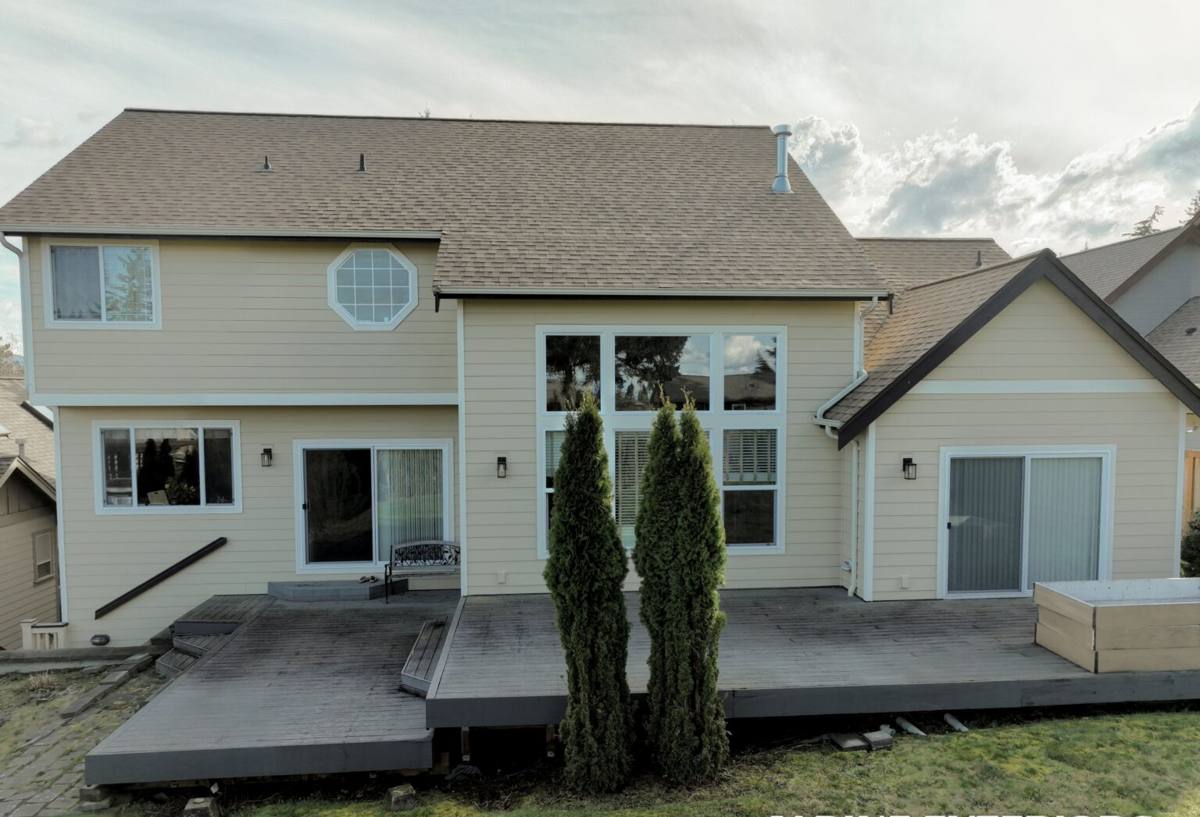
Repair or Replace? Reading the Real Signs
Not every tired-looking deck needs a full teardown. But there are signs that reliably point to replacement rather than spot repair, and it's worth knowing the difference before you spend money on the wrong fix.
- Soft or spongy spots when you walk across the decking, especially near the house or in shaded corners
- Visible gaps, cracking, or splintering along more than a few boards, not just one or two
- Rust streaks around fasteners or metal connectors, which usually means moisture has been sitting in the wood
- A ledger board (where the deck attaches to the house) that shows dark staining, swelling, or separation from the siding
- Wobble or movement in the railing posts, which often signals rot at the post base or a weak footing
- A deck that's more than 20-25 years old and has never had the substructure inspected
If you're seeing two or more of these, it's usually more cost-effective in the long run to replace than to keep patching boards on top of a frame that's already compromised.
What a Correct Deck Replacement Actually Involves
A deck is only as good as what you can't see. The decking boards get all the attention, but the framing underneath is what determines whether the structure lasts 10 years or 30.
Footings and Posts
Every post needs to bear on a footing that's sized and set to local frost depth and soil conditions, not just a paver dropped in the dirt. In King County's wet clay-heavy soils, undersized or shallow footings are one of the most common causes of a deck settling or shifting over time.
Ledger Attachment and Flashing
The ledger board — where the deck ties into the house — is the single most important connection on the entire structure, and it's also the most common point of moisture failure. Correct flashing keeps water from tracking behind the siding and into the house framing, not just off the deck itself. This detail alone is worth getting right by someone who does it regularly.
Joists and Framing
Joist spacing, hardware, and hanger selection all depend on the decking material and span you're working with. Composite decking, for example, generally wants tighter joist spacing than solid wood. Using the wrong spec is a shortcut that shows up as bounce or sag within a few years.
Decking and Railings
This is the visible layer — the material choice, fastening pattern, and railing system that determine how the deck looks and feels day to day, and how much upkeep it demands going forward.
Choosing a Decking Material for This Climate
There's no single "best" decking material — there's a best fit for how much maintenance you want to do and how the deck sits relative to sun, shade, and tree cover. Here's how the common options compare for a shaded, wet climate like Issaquah's.
| Material | Moisture Behavior | Maintenance | Typical Lifespan |
|---|---|---|---|
| Pressure-treated wood | Resists rot with proper sealing, but end grain and fastener points stay vulnerable | Annual cleaning and re-sealing recommended, especially in shaded areas | 15-20 years with upkeep |
| Cedar | Naturally moisture and insect resistant, but softer and prone to graying/checking without care | Periodic oiling or staining to preserve color and prevent surface cracking | 15-25 years with upkeep |
| Composite | Doesn't absorb moisture or rot, but can trap moss and mildew film on the surface in constant shade | Periodic washing to prevent surface algae buildup; no sealing or staining | 25-30+ years, varies by product warranty |
We'll walk through these trade-offs honestly based on how much sun your specific deck location actually gets — a south-facing deck and a deck tucked under fir trees are two different maintenance conversations, even on the same street.
What Drives the Cost of a Deck Replacement
Every deck is priced on its own specifics, but the same handful of factors move the number up or down on almost every job we quote in this area.
| Factor | Why It Matters |
|---|---|
| Deck size and shape | Square footage is the baseline, but multi-level decks, curves, and built-in features add labor |
| Height off the ground | Taller decks need more substantial framing, footings, and often guardrail engineering |
| Access to the site | Tight side yards, slopes, or limited equipment access add time on tear-off and material staging |
| Existing damage | Rot found in the ledger, posts, or framing during demo can extend scope past the original plan |
| Material selection | Pressure-treated, cedar, and composite carry different material costs per square foot |
| Railing and stair complexity | Custom railing systems and multiple stair runs add both material and labor |
We'd rather walk your deck in person and give you real numbers than throw out a broad range that doesn't mean much until we've seen the actual structure.
Permits and Code in King County
Deck replacement in King County jurisdictions generally requires a permit once you're rebuilding the structure rather than just replacing surface boards, and inspections typically check footing depth, ledger attachment, guardrail height, and stair geometry. Guardrails are required above a certain deck height, and baluster spacing has to meet fall-protection code — details that are easy to get wrong if you're not building to code regularly. We handle the permit and inspection process as part of the job, so you're not the one tracking down requirements or scheduling inspections.
Our Process, Start to Finish
- On-site assessment: We walk the existing deck, check the substructure where we can access it, and talk through what you actually want the space to do.
- Written estimate: A clear scope and price based on what we found, not a generic per-square-foot guess.
- Permit and material ordering: We pull the permit where required and order materials once the plan is set.
- Demo and disposal: Full removal of the old deck, including any hidden rot we find once we open things up.
- Framing and inspection: Footings, posts, ledger flashing, and joists are built to code and signed off before decking goes down.
- Decking, railing, and finish work: The visible layer goes on last, once the structure underneath is confirmed solid.
- Final walk-through: We go over the finished deck with you and answer any maintenance questions before we call the job done.
After the Build: Keeping a New Deck Ahead of the Weather
A well-built deck still needs a little seasonal attention in this climate to get its full lifespan out of it.
- Sweep leaves and debris out of corners and against the house before wet weather sets in each fall
- Rinse off moss and algae film before it has a chance to establish, especially on shaded boards
- Check that gutters and downspouts near the deck are directing water away, not onto the structure
- Reseal or restain wood decking on the schedule appropriate to the product — don't wait until it's visibly gray
- Look under the deck once a year for standing water, soft framing, or new rust on hardware
Why a Local King County Crew Makes a Difference
A deck built by a crew that works Issaquah and the surrounding King County area regularly already knows how the local soils behave, what the county inspectors look for, and how much shade and tree cover a given lot actually gets through the year. That's not something you get from a crew passing through the area for a single job. It shows up in details like footing depth, flashing choices, and material recommendations that are matched to how this specific climate treats a deck over time — not a generic spec sheet.
If your deck is showing its age or you're just ready to plan a replacement, we're glad to come take a look and give you a straight, no-pressure estimate. There's a form below to get that started.