 King County
 Why Kent Decks Wear Out Faster Than the Warranty Says
Most decking and framing materials sold today carry warranties written for a national average climate. Kent doesn't have an average climate. Between the wet season that runs roughly October through May, the driving rain that comes sideways off Puget Sound storm systems, and the shaded, damp yards common in Kent's older neighborhoods, a deck here takes on more moisture cycles per year than the same deck would in Spokane or Boise. That difference shows up early — soft spots at the ledger board, black streaking under railings, and a slick green film on stair treads by January.
We replace decks across King County, and Kent jobs have a consistent pattern. The original deck was usually built to code at the time, but "built to code" and "built for 20+ years of Pacific Northwest weather" are not the same standard. Replacement isn't just swapping old boards for new ones — it's a chance to correct the drainage, flashing, and ventilation gaps that let water sit against wood in the first place.
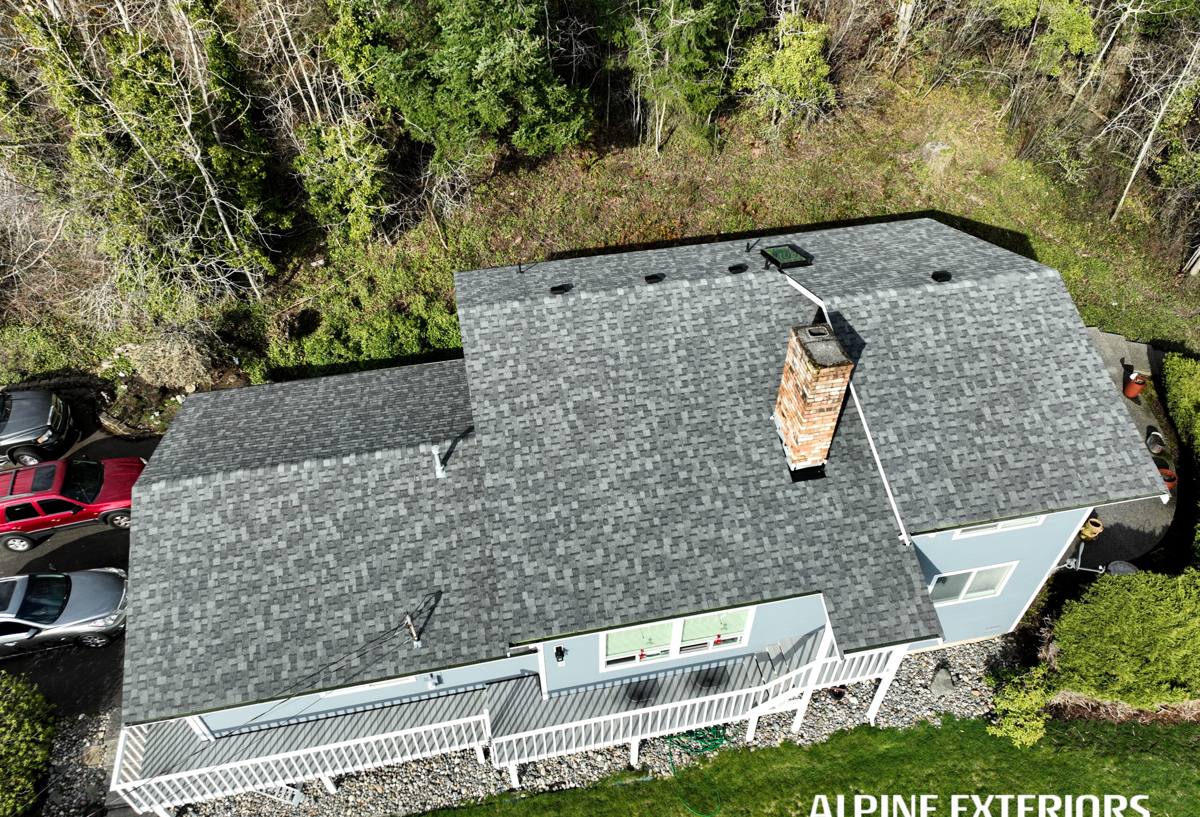
What Kent's Climate Actually Does to a Deck
Moss and Algae
Moss needs shade, moisture, and time — Kent's tree cover and long wet stretch supply all three. On horizontal surfaces like deck boards and stair treads, moss holds water against the wood far longer than open air would, which accelerates rot underneath even when the surface looks fine. It also turns treads and ramps genuinely slick, which is a fall hazard most homeowners don't think about until someone slips.
Driving Rain and Wind-Driven Moisture
Storms coming off the Sound don't just fall straight down — wind pushes rain sideways into ledger connections, under railings, and into any gap where flashing was skipped or installed loosely. This is the single biggest cause of hidden structural rot we find at ledger boards during tear-off: water got behind the house band board years ago and nobody knew until the deck started to feel spongy near the door.
Freeze-Thaw at the Margins
King County doesn't get deep hard freezes most winters, but Kent does get enough freeze-thaw cycling to matter. Water that's already soaked into end grain or a fastener hole expands when it freezes, which widens the crack it's sitting in. Over several winters, that's how a small moisture path becomes a real structural weakness.
What a Correct Deck Replacement Involves
A deck replacement done right in this climate isn't just decking boards. Here's what we actually address on a Kent job:
- Ledger flashing: proper metal flashing and a water-resistive barrier where the deck ties into the house — this is the most common failure point we find on tear-offs
- Joist and beam sizing: confirmed against current span tables and your local permit requirements, not just matched to what was there before
- Fasteners and hardware: corrosion-resistant, rated for ground contact and treated lumber contact, sized for the actual loads
- Drainage and slope: decking run with a slight pitch away from the house so water sheds instead of pooling
- Ventilation underneath: enough clearance and airflow below the frame so joists can dry out between storms instead of staying damp all winter
- Railing and stair connections: rebuilt to current code, not just cosmetically matched to the old design
- Footings: inspected and, where undersized or heaved, corrected — this is where a lot of older Kent decks were originally shortcut
Skipping any one of these gets you a deck that looks new for a season or two and then develops the exact same problems the old one had, just on a faster timeline because the new lumber hasn't had years to season.
Decking Material Options for a Kent Yard
There's no single "best" decking material — the right call depends on your budget, how much shade your yard gets, and how much maintenance you actually want to do. Here's how the common options compare for our climate specifically:
| Material | Moss/Moisture Behavior | Maintenance | Typical Lifespan Here |
|---|---|---|---|
| Pressure-treated wood | Absorbs water, needs sealing to resist moss and staining | Annual cleaning, periodic sealing/staining | 10–15 years |
| Cedar | Naturally rot-resistant but still absorbs moisture; grays and can stain in shade | Regular cleaning, sealing every 2–3 years | 15–20 years |
| Composite (capped) | Sheds water at the surface, resists staining and moss much better than wood | Occasional washing, no sealing/staining | 25–30+ years |
| Composite (uncapped) | Can absorb moisture at cut edges and fade faster in wet shade | More cleaning than capped composite | 15–20 years |
In shaded, wet Kent lots, capped composite consistently gives homeowners the least moss buildup and the least ongoing maintenance. We still install wood decking when that's what a homeowner wants — it's a legitimate choice — but we'll walk you through the sealing schedule it actually needs to hold up here, not the schedule on the product label.
A Note on Product Choices We Steer Away From
We're selective about which composite and wood-composite hybrid products we install, and it comes down to how a product handles moisture at the cut edge and around fasteners over time, plus how clear the manufacturer's warranty terms are for a marine-influenced climate like ours. If a product has a maintenance burden or moisture sensitivity that doesn't match what Kent weather demands, we'll tell you that directly and recommend an alternative rather than install something we don't think will perform.
Our Deck Replacement Process
- On-site assessment: we check the ledger connection, framing, footings, and current decking condition — not just the surface
- Honest scope conversation: full replacement, or in some cases a hybrid where framing is sound but decking and railings need replacement
- Permit handling: we pull the required King County or City of Kent permits so the work is inspected and legal, which also matters for resale and insurance
- Tear-off and disposal: old decking removed, framing inspected once boards are off (this is when hidden rot at the ledger usually shows up)
- Framing correction: any undersized joists, damaged beams, or failing footings addressed before new decking goes down
- Flashing and waterproofing: proper ledger flashing and house-side waterproofing installed — this step is non-negotiable on every job we do
- Decking, railing, and stair installation: built to current code with attention to slope and drainage
- Final walkthrough: we go over care and maintenance specific to whatever material you chose
Permits and Code in King County
Deck replacement projects above certain size and height thresholds require a permit in King County and within Kent city limits, and that permit triggers an inspection of the framing and ledger connection before decking goes on. Some homeowners are tempted to skip this on a like-for-like replacement, but an unpermitted deck can complicate a home sale down the road and, more importantly, the inspection is a real check that the structure was built correctly — not just paperwork. We handle the permit process as part of the job so you don't have to navigate King County or City of Kent requirements yourself.
Signs Your Kent Deck Needs Replacement, Not Repair
Not every deck problem means a full rebuild. Here's a quick way to think about it:
- Soft or spongy spots at the ledger board or near stair stringers — usually structural, usually means replacement
- Persistent moss regrowth within weeks of cleaning, even in the same spots each year — points to a drainage or shade issue built into the design, not just surface grime
- Visible gaps or rust at the ledger flashing — a moisture entry point that will keep causing damage until it's rebuilt correctly
- Railings that flex or feel loose under load — a safety issue, not a cosmetic one
- Boards that are cracking, cupping, or delaminating across large sections rather than in a few isolated spots
If the framing and footings are solid and it's mainly surface-level decking wear, a re-decking project can be the more cost-effective route. We'll tell you honestly which category your deck falls into — we don't sell full replacements to homeowners who only need a partial fix.
Why Hire a Crew That Already Works Kent
A deck built for a dry-climate spec sheet is a deck built to underperform here. Crews who work Kent regularly already know which ledger details actually keep water out through a full Puget Sound winter, which footing depths hold up in Kent's soil conditions, and which decking materials genuinely resist moss in a shaded, damp yard versus which ones just claim to on the packaging. That local pattern recognition is the difference between a deck that needs attention again in five years and one that holds up for two decades.
We also know the permitting process for King County and the City of Kent, which keeps the project moving instead of stalling on paperwork you didn't know you needed.
Get a Free, No-Pressure Estimate
If your deck is showing moss buildup, soft spots, or just age, we'll take a look and give you a straight answer about whether it needs full replacement or a smaller fix — no pressure either way. Use the form below to request a free estimate for your Kent property.