 King County
 Why Kirkland Windows Wear Out Differently Than Windows Inland
Kirkland sits right on Lake Washington, inside a broader King County climate that stays damp for most of the year. That combination matters more than most homeowners realize when it comes to windows. It isn't one dramatic storm that ruins a window — it's the slow, repeated cycle of moisture, temperature swings, and shade that this part of the Puget Sound region deals with for six or seven months straight every year.
Driving rain off the lake and the broader Sound pushes water sideways into window assemblies, not just straight down onto the sill. Add a long moss season — often stretching from early fall through spring — and you get organic growth that holds moisture against wood trim, sashes, and sills far longer than a dry climate ever would. Even homes a few blocks from the water pick up enough marine-influenced humidity in the air that condensation and slow seal failure show up years before they would in a drier part of the state. None of this is exotic or rare; it's just the baseline that every window installed in King County has to be built and installed to handle.
Energy efficiency and moisture management aren't separate problems here — they're the same problem. A window that leaks air usually isn't sealing water out correctly either, and a window that's fogging between the panes is already telling you its seal has failed. That's the lens we use on every Kirkland job: does this window keep conditioned air in, and does it keep this climate's water out, at the same time.
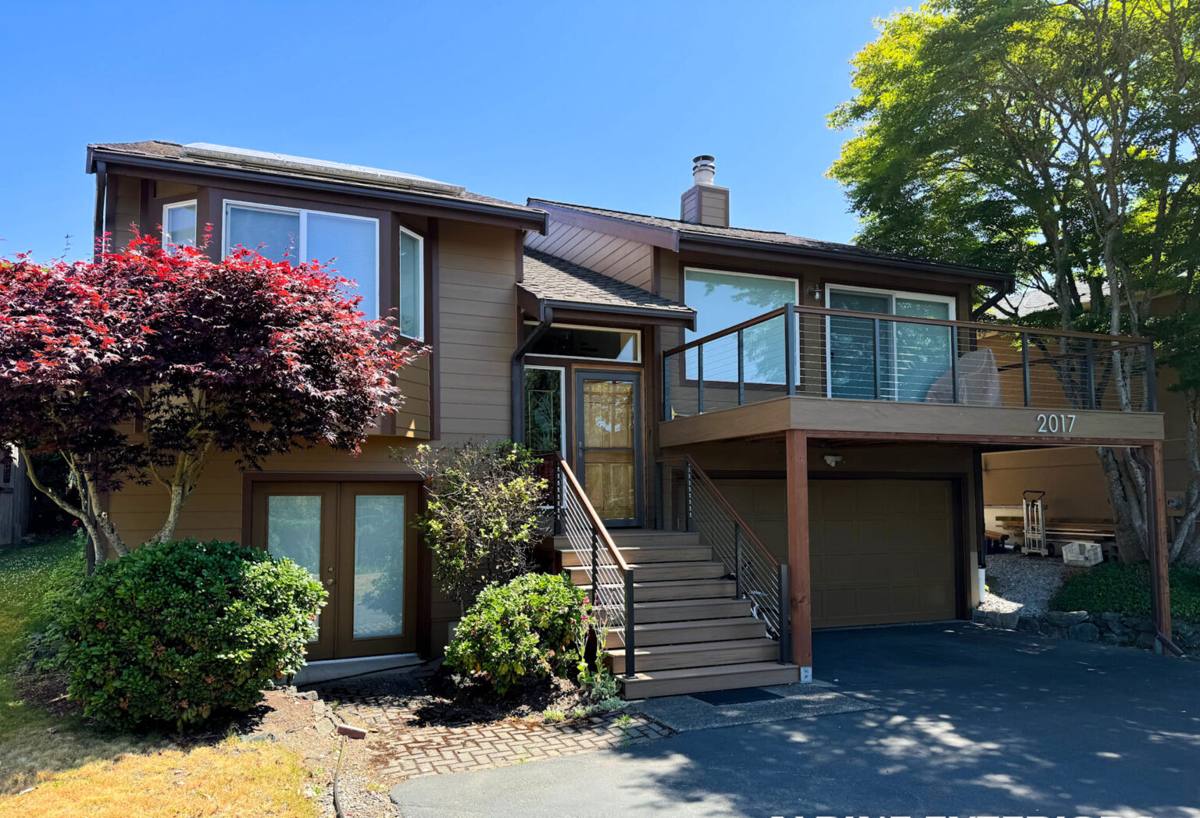
What "Energy-Efficient" Actually Means Here
"Energy-efficient" gets used loosely in window marketing. For a Kirkland home, it comes down to three measurable properties, not a sticker on the glass.
U-Factor
U-factor measures how much heat moves through the window — lower is better. In a climate like ours, where heating season runs long and mild but persistent, U-factor is usually the single biggest driver of your winter energy bill among the window's specs. Older aluminum-frame single-pane windows common in older King County housing stock can have U-factors two to three times worse than a correctly specified modern replacement.
Solar Heat Gain Coefficient (SHGC)
SHGC measures how much solar heat passes through the glass. Because King County doesn't get the intense, sustained direct sun that drives cooling-focused window choices in other parts of the country, SHGC selection here is more about balance — enough solar gain to help with mild winter days, without turning a south- or west-facing room uncomfortable during the handful of hot weeks we do get each summer.
Low-E Coatings and Gas Fills
Low-emissivity coatings are a microscopically thin metallic layer that reflects heat while still letting light through. Combined with an inert gas fill (typically argon) between panes, a correctly built double- or triple-pane unit performs dramatically better than the coating or gas fill alone would suggest. This is also where cheap replacement windows cut corners — gas fill percentage and coating quality aren't visible once the window is installed, so they're exactly where corner-cutting shows up years later as a fogged or underperforming unit.
Signs Your Current Windows Are Losing the Battle
Most homeowners don't replace windows because of one obvious failure — they replace them because of an accumulation of small, annoying signs. Here's what we look for during a Kirkland assessment, and what you can check yourself first:
- Visible fog, haze, or moisture trapped between panes (the seal has already failed — this can't be cleaned)
- Cold drafts near the frame even when the window is fully latched
- Condensation forming on the inside of the glass regularly, especially in bathrooms and bedrooms
- Soft, discolored, or spongy wood on the sill, jamb, or exterior trim
- Visible moss or dark streaking around the frame that keeps coming back after cleaning
- Windows that are difficult to open, close, or lock — a sign the frame has shifted or swollen
- A noticeable temperature difference standing near the window versus the middle of the room
- Rising heating bills without a clear explanation elsewhere in the house
Any one of these on its own might not mean full replacement is necessary. Several of them together, especially combined with visible wood damage, usually means the window assembly is past the point where repair or re-caulking will hold.
Frame Material: What Actually Holds Up in This Climate
Frame material choice matters as much as the glass package in a climate that stays wet for most of the year. There's no single "best" material for every home — it depends on your home's style, budget, and how much upkeep you want to take on.
| Frame Material | How It Handles King County's Climate | Maintenance | Typical Lifespan |
|---|---|---|---|
| Vinyl | Won't rot, doesn't need painting, handles moisture well; can flex slightly in temperature swings | Low — occasional cleaning | 20–30+ years |
| Fiberglass | Very stable in wet/dry cycles, strong resistance to warping and moisture intrusion | Low | 30–40+ years |
| Wood-clad | Attractive interior wood look with an exterior shell; exposed wood is vulnerable if the cladding is ever breached | Moderate — watch cladding seams and interior finish | 20–30 years with upkeep |
| Aluminum | Durable but conducts heat and cold readily; prone to condensation without a thermal break | Low | 20–30 years |
Solid, unclad wood frames still have a place in historic or character homes, but we're upfront with clients about the trade-off: exposed exterior wood in a climate with this much sustained moisture requires real, ongoing maintenance — repainting, caulking, and moss removal — to avoid the rot issues that drive most window replacement calls in the first place. That's not a knock on wood as a material; it's just what the local weather demands of it.
Correct Installation: Where Most Window Problems Actually Start
The window unit itself is only part of the job. In our experience, most premature window failures in this region trace back to installation details, not product defects. Given how much driving rain King County homes take, the flashing and sealing work around the opening matters as much as the window itself.
Flashing and Weatherproofing
Every opening needs a properly layered weather-resistive barrier and flashing system so that any water that does get behind the siding drains back out, rather than pooling against the framing. This is invisible once the job is finished, which is exactly why it's the step that gets skipped by crews trying to move fast.
Sealing and Insulation
The gap between the window frame and the rough opening needs to be insulated and air-sealed correctly — not just stuffed with fiberglass, which does little to stop air movement, and not over-filled with expanding foam, which can bow the frame and affect how the window operates. Exterior caulking needs to be a compatible, flexible sealant rated for sustained wet exposure, applied at the right joints and left open where it needs to drain.
Squaring and Operation
A window that isn't shimmed and squared correctly will bind, won't latch fully, and will develop drafts within a year or two — regardless of how good the window itself is. Every unit should open, close, and lock smoothly before the crew leaves.
A quick checklist worth keeping if you're evaluating any contractor's finished work:
- Exterior trim and caulking lines are clean, continuous, and fully sealed — no gaps
- The window opens, closes, and locks without resistance
- No visible gaps between the frame and siding/trim from outside
- Interior sill and jamb are square, with no visible shimming or foam
- Old window materials, packaging, and debris are hauled away, not left on site
Our Process, Start to Finish
We keep the process straightforward because homeowners deserve to know what's actually happening in their house, and when.
- On-site assessment — we look at each window opening individually, not just the house as a whole. Condition, orientation, framing, and existing damage all factor into the recommendation.
- Measurement and product selection — exact measurements are taken for each opening, and we talk through frame material, glazing package, and grille or style options based on your home and budget.
- Scheduling — we work around weather windows where possible, since opening up exterior walls in the middle of a heavy rain event isn't good practice for anyone.
- Removal and installation — old units are removed, the opening is inspected for hidden moisture or framing damage before the new window goes in, and flashing/sealing is done to spec, not shortcut.
- Final check and cleanup — every window is operated, checked for square and seal, and the work area is cleaned before we consider the job done.
If we find rot or hidden water damage once an old window is out — which does happen more often in this climate than homeowners expect — we'll stop, show you what we're seeing, and talk through the options before proceeding. No surprise change orders after the fact.
Permits and Energy Code in King County
Washington's state energy code sets minimum performance requirements for replacement windows, and King County jurisdictions administer permitting locally. Requirements can vary depending on the scope of the project — a straight like-for-like window swap is often treated differently than work that changes the opening size or is bundled with other structural work. Because permit thresholds and code cycles do change, we handle the specifics on a per-project basis rather than quoting general rules that may be out of date by the time you read them. If permits are needed, we account for that in the process rather than leaving it for you to sort out.
Why a Local Kirkland Crew Makes a Real Difference
Window installation quality is mostly about details you can't see once the job is finished — flashing, sealant choice, how the opening was prepped. A crew that works King County regularly has already seen how those details play out over years, not just at the walkthrough. We've seen which sealants actually hold up through a full wet season, which frame materials our clients regret in this specific climate, and where corner-cutting on a rushed job tends to show up two winters later.
There's also the practical side: a local crew is accountable locally. If something needs a warranty follow-up, we're not driving in from out of the area or handing you off to a call center. That matters more here than in a milder, drier climate, where a mediocre install might not get exposed for a decade. In Kirkland, the weather finds problems fast.
Getting Started
If your windows are drafty, fogged, hard to operate, or just older than the rest of your home's exterior work, it's worth getting a straightforward, no-pressure look. We'll walk your windows with you, tell you honestly which ones need replacing and which don't, and give you real numbers to work from — no upsell script. Use the form below to request a free estimate for your Kirkland home.