 King County
 Capitol Hill's Siding Problem Isn't Rain — It's Everything Rain Brings With It
Capitol Hill sits close enough to Puget Sound and Lake Washington that homes here deal with a steady drift of salt-tinged air on top of King County's normal rainfall. On its own, that moisture is manageable. Combined with the neighborhood's mature tree canopy, tightly spaced lots, and long shoulder seasons where surfaces barely dry out between storms, it becomes a much harder environment for exterior siding than most homeowners expect.
The result is a predictable pattern we see on older Capitol Hill homes: siding that looks fine from the sidewalk but is quietly failing at the seams, the bottom courses, and anywhere water can sit against wood or lower-grade composite products for weeks at a time.
What Salt Air and Driving Rain Do Over Time
Salt-laden moisture accelerates corrosion on fasteners and trim, and it works its way into any gap in a siding system faster than plain rainwater does. Driving rain — the kind that comes in sideways during a Pacific storm system — pushes water up under laps and into joints that a product was never designed to shed water from that angle. Over a decade or two, that combination is what turns a small installation flaw into a rot problem.
Why Moss Season Matters More Here Than People Think
Moss doesn't just grow on roofs. On shaded, north-facing walls — common on the Hill's narrower lots — moss and algae colonize siding surfaces that stay damp for extended stretches. Beyond the cosmetic issue, moss holds moisture directly against the siding face, which is exactly the kind of prolonged wet contact that wood-based and lower-tier composite sidings are least equipped to handle. Fiber cement doesn't stop moss from landing on a wall, but it doesn't feed or absorb the way organic and wood-fiber products can, and a factory-cured finish gives it a harder surface for moss to grip.
Why Fiber Cement Fits Capitol Hill's Housing Stock
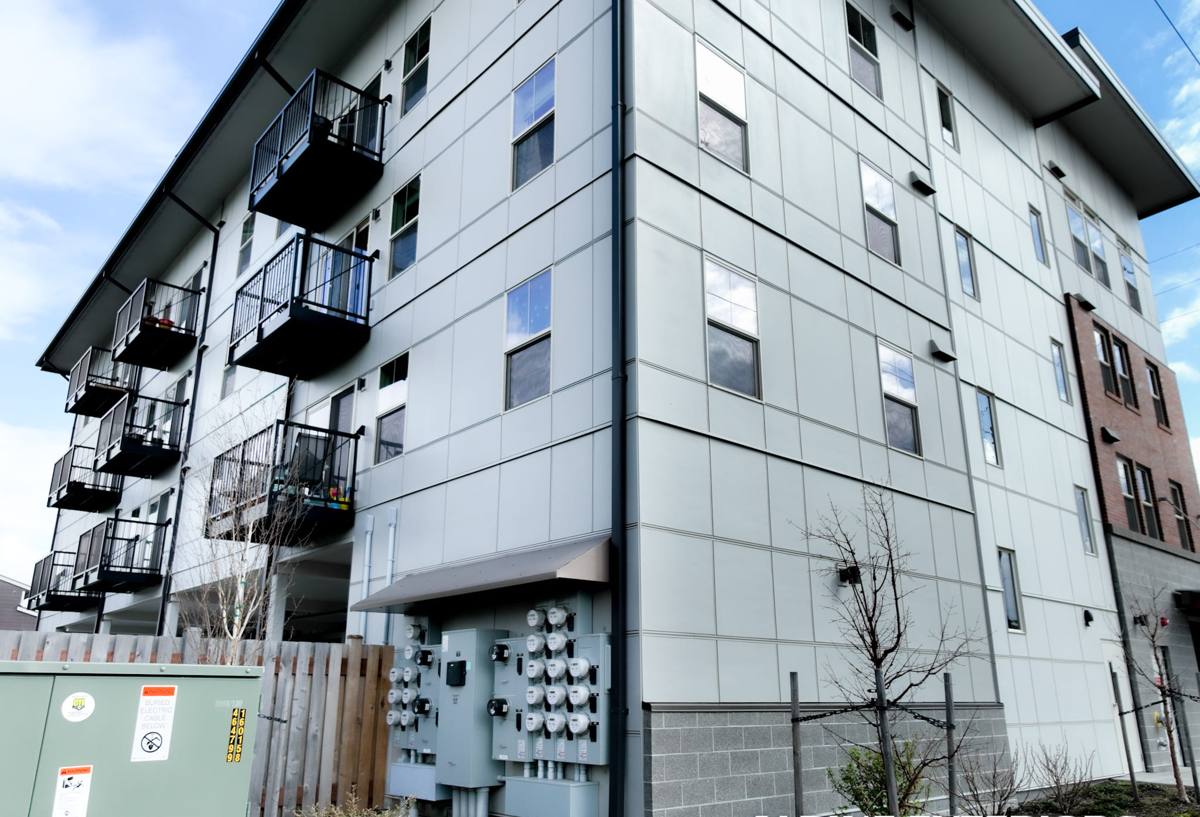
Capitol Hill's housing mix runs from early-1900s Craftsman and Victorian-era homes to closely spaced multi-family buildings and infill construction. That mix creates two separate reasons fiber cement makes sense here.
First, many of the older homes were originally sided in wood, and homeowners replacing that siding today are choosing between products that need to perform for decades in the same damp, shaded conditions that wore out the original siding. Second, the density of the neighborhood — homes close together, shared property lines, narrow setbacks — makes non-combustible siding a meaningful safety consideration, not just a marketing point.
Non-Combustible Matters More on Tightly Spaced Lots
Fiber cement is non-combustible. On a neighborhood where houses sit closer together than in most suburban King County developments, that's a real difference in how a structure performs in an exposure fire from a neighboring property, a vehicle, or yard debris — not a theoretical one.
What a Correct Fiber Cement Installation Actually Involves
Fiber cement siding is only as good as the installation behind it. The product itself is durable, but water management is what actually determines whether a Capitol Hill home stays dry through the wet months. A correct install includes:
- Weather-resistive barrier installed and lapped correctly before any siding goes up
- Flashing at every window, door, and roof-to-wall intersection — not caulk used as a substitute for flashing
- Proper starter strips and consistent minimum clearance from grade, decks, and roof lines
- Correct fastener type, spacing, and penetration depth per the manufacturer's installation instructions
- Factory-cut and factory-primed edges kept intact; field cuts sealed per spec
- Rain-screen gap or drainage plane where the wall assembly calls for one
- Caulking limited to its intended joints — not used to mask a flashing or clearance shortcut
Skipping any one of these doesn't show up on day one. It shows up in year eight or ten, usually at a corner or a window head, which is exactly where we find problems on older Capitol Hill homes that were re-sided without following manufacturer specs.
Fastening and Clearance Are Where Corners Get Cut
The two most common shortcuts we see on prior installations are under-driven or over-driven fasteners and siding installed too close to grade, decks, or roof surfaces. Both are invisible until they aren't — usually until a homeowner notices bubbling paint, a soft spot, or staining at a specific board.
Why We Install Only James Hardie
We install James Hardie fiber cement exclusively. We don't install LP SmartSide, vinyl, Cemplank, Allura, primed spruce, or cedar. That's a deliberate standard, not a supply preference, and it comes down to three things: the factory finish, the climate engineering, and the warranty that backs both.
ColorPlus Factory Finish
Hardie's ColorPlus finish is baked on at the factory under controlled conditions, rather than field-applied paint over a raw board. That matters directly in a climate like King County's, where field-applied finishes have less time to cure properly between rain events and are more prone to early fading or peeling at the edges.
HZ Product Engineering for the Pacific Northwest
Hardie engineers its products by climate zone (HZ5 and HZ10), which changes the formulation for moisture and freeze-thaw exposure specific to a region. For a wet, mild-winter climate like King County's, that engineering is aimed squarely at the conditions Capitol Hill homes actually face — not a one-size-fits-all product sold nationally.
A Warranty Backed by a Real Manufacturer
Hardie's product warranty is transferable and has a long track record behind it. That matters to Capitol Hill homeowners in particular, since the neighborhood sees a fair amount of home turnover — a transferable warranty is a real asset at resale, not just paperwork.
| Product Line | Typical Use | Why It Fits This Area |
|---|---|---|
| HardiePlank Lap Siding | Most common wall application, Craftsman and traditional homes | Classic profile matches the Hill's older housing stock |
| HardieShingle | Accent gables, Craftsman-style shingle sections | Rot-resistant alternative to cedar shingle detailing |
| HardiePanel | Vertical accents, modern infill construction | Common on newer Capitol Hill builds and additions |
| HardieTrim | Corners, window and door trim, fascia | Matches siding durability at the joints most exposed to driving rain |
What Choosing Something Else Actually Costs Long-Term
We're not going to tell a homeowner that vinyl or LP SmartSide is a bad product — plenty of it is installed correctly and performs fine in the right conditions. But we've made a professional decision not to install it, because the trade-offs don't hold up as well in this specific climate over a 20-30 year horizon.
| Factor | Vinyl / Engineered Wood | James Hardie Fiber Cement |
|---|---|---|
| Moisture behavior over time | Can warp, swell, or absorb water at cut edges | Doesn't absorb moisture the way wood-based products do |
| Finish durability | Field-painted or molded color can fade unevenly | Factory-cured ColorPlus finish, consistent coverage |
| Fire performance | Combustible (vinyl melts/deforms; wood-based burns) | Non-combustible |
| Warranty structure | Varies widely by manufacturer and product tier | Long-term, transferable warranty on the product itself |
Our Process, Start to Finish
Every Capitol Hill project starts with an in-person look at the specific conditions on that lot — sun exposure, tree cover, existing moisture damage, and access, since narrow lots and street parking on the Hill can affect staging and dumpster placement.
- On-site assessment of the existing siding, sheathing, and any moisture damage
- Written estimate covering product line, color, and scope — no pressure, no gimmicks
- Removal of old siding and inspection of the wall assembly underneath
- Repair of any rot or damaged sheathing found once the old siding is off
- Weather-resistive barrier and flashing installed to manufacturer spec
- Hardie siding installed with correct fastening, clearances, and joint treatment
- Final walkthrough with the homeowner before we consider the job done
Living With Fiber Cement Siding on Capitol Hill
Fiber cement is low-maintenance, not no-maintenance. A short annual routine keeps it performing the way it's designed to in this climate:
- Rinse siding once or twice a year, especially on shaded, moss-prone sides of the house
- Keep gutters clear so overflow doesn't run down the wall face
- Trim back vegetation and tree limbs that keep a wall surface shaded and damp
- Check caulking at trim joints every couple of years and recaulk as needed
- Address any paint chip or impact damage promptly rather than letting it sit through a wet season
Why a Crew That Already Works Capitol Hill Matters
Capitol Hill has its own practical realities that a crew unfamiliar with the neighborhood will trip over: narrow lots with limited staging space, permit and setback rules specific to Seattle and King County, and in some pockets, historic district guidelines that affect what exterior changes are allowed. A crew that already works this neighborhood knows how to plan access and staging on a tight urban lot, what King County and Seattle permitting actually requires for a re-side, and how to work around mature landscaping without turning a siding job into a two-week ordeal.
That local familiarity isn't a soft selling point — it's the difference between a job that stays on schedule and one that stalls out over access or permitting surprises halfway through.
If you're weighing a siding replacement on Capitol Hill, we're happy to take a look and give you a straight answer on what your home actually needs. There's no cost and no pressure — use the form below to request a free estimate.