 King County
 Why Fremont Roofs Wear Differently
A roof in Fremont doesn't age the same way a roof does forty miles inland. Sitting close to Puget Sound means the air itself carries salt, and that salt settles on shingles, flashing, and fasteners year-round. Add King County's long stretch of driving rain each winter and the extended moss season that follows, and you've got a roofing environment that punishes shortcuts. A roof that's merely "good enough" somewhere drier will show its age fast here.
This isn't a scare story — it's just what the climate does. Salt air accelerates corrosion on exposed metal. Sustained rain finds every weak seam, nail pop, and undersized flashing detail. And moss doesn't just look bad; given enough time it lifts shingle edges, holds moisture against the roof deck, and shortens the life of materials that would otherwise last decades. Replacing a roof correctly in this part of King County means designing for all three of those pressures at once, not just swapping old shingles for new ones.
Signs a Fremont Roof Needs Replacing, Not Just Patching
Not every roofing problem calls for a full replacement, and we won't tell you it does. But there's a point where repeated patch jobs stop making financial sense and start masking a bigger issue underneath.
Warning signs worth taking seriously
- Granule loss heavy enough that you're finding grit in gutters or downspouts every season
- Shingles that are curling, cupping, or cracking across multiple sections of the roof, not just one localized spot
- Soft or spongy decking felt underfoot in the attic, or daylight visible through the roof boards
- Moss that keeps returning within a season or two of cleaning, especially on north-facing slopes
- Flashing around chimneys, vents, or valleys that's rusted, lifted, or was never properly step-flashed to begin with
- Interior staining on ceilings or in the attic that shows up after heavy rain
If a roof is showing two or more of these at once, patching usually just delays the same conversation by a year or two — often at a higher cost once decking damage is involved.
What a Correct Roof Replacement Actually Involves
A roof replacement is only as good as what happens underneath the shingles. In a climate like this one, the details that don't show from the street are the ones that determine whether the roof lasts fifteen years or thirty-five.
Tear-off and deck inspection
We remove the old roofing down to the deck rather than layering over it. That's the only way to actually see the wood underneath — soft spots, rot around old flashing, or damage from a slow leak that never made it inside the house. Any compromised decking gets replaced before anything new goes down. Roofing over a bad deck just hides the problem for another owner to find later.
Underlayment and water protection
Given how much rain King County sees in a typical winter, underlayment is not a place to cut corners. We use synthetic underlayment across the field of the roof and ice-and-water shield style membrane at vulnerable points — eaves, valleys, and around penetrations — where wind-driven rain is most likely to find a way in.
Ventilation
A roof deck that can't breathe traps moisture, which speeds up rot and helps moss and algae take hold from underneath as well as above. Proper intake and exhaust ventilation keeps the attic space closer to outdoor temperature and humidity, which protects both the new roof and the insulation below it.
Flashing and detail work
Most roof leaks don't start in the open field of shingles — they start at a transition: a chimney, a skylight, a wall intersection, a valley. Flashing has to be formed and layered correctly, not just caulked and hoped for. This is where corrosion-resistant materials matter most, given the salt content in the air near the Sound.
Choosing Materials for a Salt Air, Heavy Rain Climate
There's no single "best" roofing material for every home — it depends on the roof's pitch, the home's structure, and what the homeowner wants to maintain over time. What we won't do is recommend a system that looks good on day one but creates a maintenance burden or moisture problem five years in. Here's how the common options compare for a Fremont-area home.
| Material | Typical Lifespan | How It Handles This Climate | Considerations |
|---|---|---|---|
| Architectural (dimensional) asphalt shingle | 25–30 years | Good performance when paired with proper underlayment and ventilation; algae-resistant granule options help slow moss and streaking | Most common, cost-effective, wide color range |
| Standard 3-tab asphalt shingle | 15–20 years | More prone to wind lift and faster granule loss under sustained rain exposure | Lower upfront cost, shorter service life |
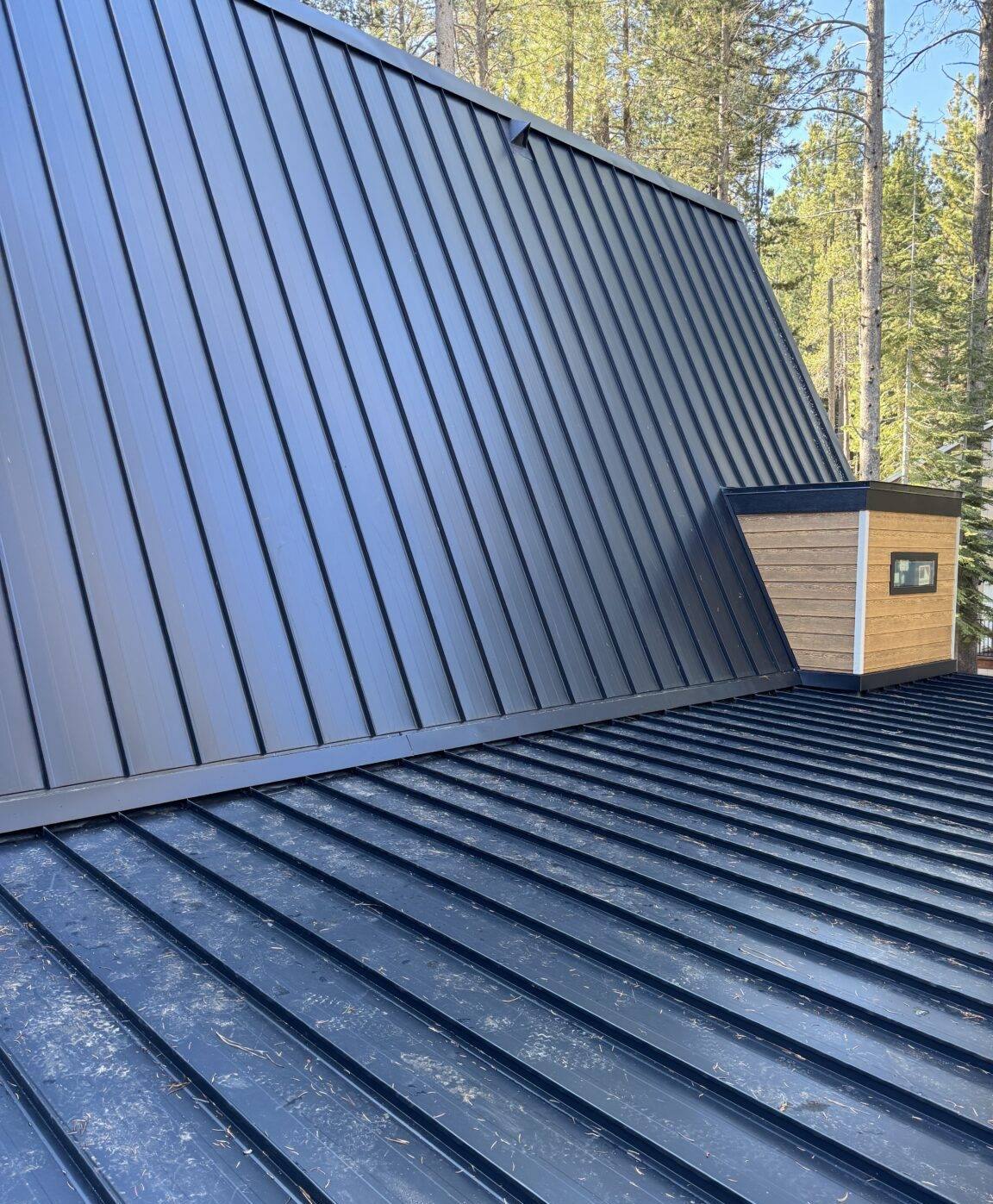
| Metal (standing seam or panel) | 40–50+ years | Sheds moss and moisture well due to smooth surface; needs corrosion-resistant fasteners and coatings near the Sound | Higher upfront cost, quieter and more durable than most homeowners expect |
| Cedar shake | 20–30 years with upkeep | Attractive but requires consistent maintenance to manage moisture retention and moss in a wet climate | We'll discuss trade-offs honestly if a homeowner wants this look |
For most Fremont homes, we lean toward architectural asphalt shingle with algae-resistant granules or metal roofing, depending on budget and roof design. Both hold up well against the combination of salt exposure and sustained moisture that defines this area's roofing conditions.
Moss, Algae, and What Happens After Installation
Moss doesn't respect a new roof. Spores are already in the air and will land on a fresh roof the same as an old one — the difference is how well the roof is set up to resist it. Proper granule selection, adequate slope where the roof design allows it, and keeping trees trimmed back from the roofline all reduce how fast moss and algae take hold. Zinc or copper strips near the ridge are another option we can discuss for roofs with a history of heavy moss growth, since trace metal runoff during rain inhibits regrowth over time.
None of this makes a roof maintenance-free. We're upfront about that. A roof in this part of King County still benefits from periodic inspection and gentle cleaning, especially after a wet winter. A correctly installed roof just makes that upkeep far less frequent and far less urgent.
How Our Process Works, Start to Finish
- Inspection and estimate. We walk the roof, check the attic where accessible, and give you a straight assessment — replacement, repair, or somewhere in between.
- Material selection. We go over the options that fit your home, your budget, and how much upkeep you want to take on long-term.
- Scheduling around the weather. Roofing in King County means working around rain windows. We plan tear-off and dry-in carefully so your home isn't left exposed longer than necessary.
- Tear-off, deck repair, and installation. Old roofing comes off, the deck gets inspected and repaired as needed, and the new system goes on with proper underlayment, flashing, and ventilation.
- Cleanup and final walkthrough. We clear debris, check gutters for stray fasteners or granules, and walk the finished roof with you before calling the job done.
Why Local Experience in Fremont and King County Matters
Roofing techniques that work fine in a dry climate can fail quietly here. A crew that hasn't dealt with sustained Pacific Northwest rain, salt-influenced air near the Sound, and a moss season that runs longer than most regions ever see will make different assumptions about underlayment, flashing, and ventilation — assumptions that don't hold up over a King County winter. Working this region regularly means knowing which details actually matter here, not just following a generic installation checklist.
It also means understanding the practical side: permitting expectations in King County, coordinating around the rainy season so your home isn't sitting open longer than it should, and having a realistic sense of how a given roof design will perform once moss season sets in again.
Questions Worth Asking Before You Hire
Whoever you choose to replace your roof, a few questions separate a careful contractor from one who's just trying to close the sale.
- Will you tear off the existing roof completely, or is a layover being proposed?
- What underlayment and ice-and-water membrane are included, and where specifically will they be used?
- How will ventilation be handled — is intake and exhaust airflow part of the plan?
- What flashing materials are you using, and are they suited to salt-air exposure?
- Is there a written warranty covering both materials and workmanship, and what does each actually cover?
- Are you licensed and insured to work in Washington, and can you provide proof?
A contractor who answers these clearly, without hedging, is one worth trusting with the job.
If your Fremont home's roof is showing its age, or you just want an honest opinion on how much life it has left, we're happy to take a look. Fill out the form below for a free, no-pressure estimate — we'll tell you what we actually see, not just what's easiest to sell.