 King County
 Siding Repair in Fremont: What Local Homes Are Up Against
Fremont sees the same weather pattern that wears down siding across King County, just delivered on repeat, month after month: salt-tinged air moving in off the water, driving rain that hits walls sideways during winter storms, and long stretches of gray, damp weather that never quite dry out. Add tree cover from mature street trees and close-set lots that keep some wall sections shaded most of the day, and you get conditions that are excellent for moss and algae and hard on siding that wasn't built, finished, or installed to handle sustained moisture exposure.
Siding repair in a neighborhood like this isn't just about patching whatever looks bad. It's about understanding why that section failed in the first place, so the repair actually holds instead of becoming the same problem again in two years.
Why Fremont's Climate Is Hard on Siding
Salt air and driving rain
Salt-laden moisture in the air accelerates corrosion on fasteners, trim flashing, and any metal components tied into the siding system. It also slowly breaks down paint films and lower-grade composite materials that weren't engineered for coastal exposure. Combine that with wind-driven rain, which pushes water horizontally into seams, laps, and butt joints rather than letting it run straight down, and you get moisture intrusion points that dry siding in other parts of the country rarely has to deal with.
A long moss season
King County's moss season isn't a few weeks — it's most of the year for shaded or north-facing walls. Moss and algae hold moisture against the siding surface long after a storm has passed, which is exactly the condition that causes paint to fail, wood to soften, and lower-quality composite panels to swell or delaminate at the edges. On older homes especially, we regularly find moss growth as the first visible clue pointing to a deeper moisture problem underneath.
Signs Your Fremont Home Needs Siding Repair
Some damage is obvious. Some isn't — and the damage you can't see is usually the kind that costs the most if it's ignored. Walk your exterior and look for:
- Soft or spongy spots when you press on siding, especially near the bottom courses or under windows
- Visible cracking, splitting, or buckling panels
- Paint that's peeling, bubbling, or chalking heavily in one area but not others
- Persistent moss or dark streaking that keeps coming back after cleaning
- Gaps opening up at seams, corners, or where siding meets trim, windows, or doors
- Nail heads backing out or rust streaks running down from fasteners
- Interior clues — a musty smell, discoloration on interior walls, or a soft spot on the sheathing you can see from an attic or crawlspace
- Warping or wave patterns visible when you sight down a wall at a low angle
Any one of these on its own might be minor. Several together, especially clustered in one section, usually means water has been getting behind the siding for a while.
What a Correct Repair Actually Involves
Diagnosing the cause, not just the symptom
Replacing a cracked or rotted board without figuring out why it failed is a short-term fix. Before we touch anything, we look at what's behind the visible damage: is water getting in through a failed caulk joint, a flashing detail that was never installed correctly, a grade or gutter issue directing water at the wall, or simple material fatigue from years of sun and rain cycling? A repair that doesn't address the entry point will fail again — often faster than the original damage took to show up.
Matching materials and finish
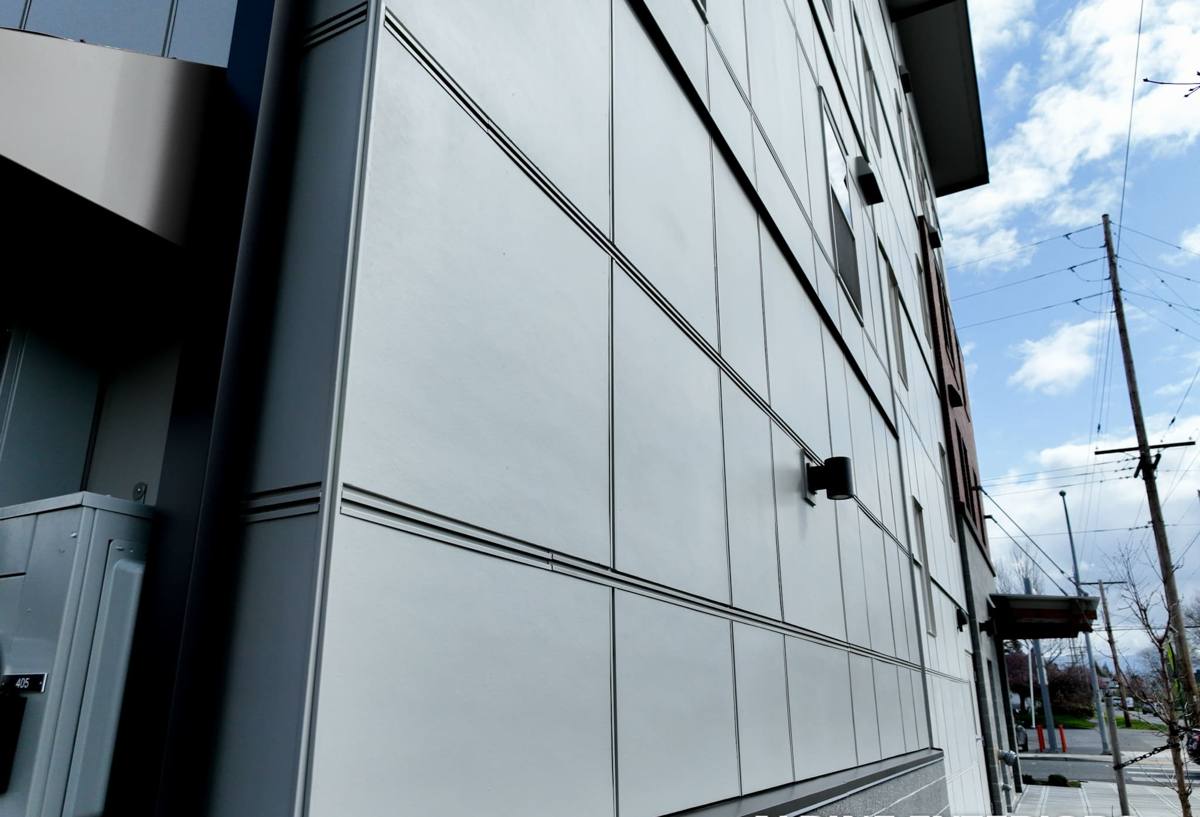
Once we know what's causing the problem, the repair itself has to match the existing wall — in profile, reveal, and finish — or it sticks out and creates its own weak point at the transition. This matters most with factory-finished fiber cement, where color and texture need to line up cleanly with what's already on the house. It also means checking that whatever underlayment, house wrap, and flashing details are exposed during the repair get put back correctly, not just covered up.
Repair vs. Replace: How We Help You Decide
Not every damaged section needs a full re-side, and not every problem is fixable with a patch. The honest answer usually comes down to how widespread the damage is and what's causing it.
| Situation | Repair usually makes sense | Replacement usually makes sense |
|---|---|---|
| Damage location | Isolated to one or two sections or a single wall | Spread across multiple walls or elevations |
| Underlying cause | A specific, fixable issue (flashing, caulk, one impact point) | Systemic moisture intrusion behind large sections |
| Siding age and material | Newer, sound material with isolated failure | Original material at or past its service life |
| Sheathing condition | Sheathing underneath is dry and solid | Sheathing shows rot, softness, or mold once opened up |
| Cost over time | Targeted fix is cost-effective now | Repeated repairs are starting to add up to more than a re-side |
We'll open up a damaged section, check the sheathing and framing behind it, and give you a straight answer about which category your home actually falls into — not the answer that happens to be more profitable for us.
Why We Repair and Install Only James Hardie Fiber Cement
When a repair calls for new material — whether it's a few boards or a full wall section — we use James Hardie fiber cement, and we don't install vinyl, LP SmartSide, primed spruce, cedar, or other composite panel products. This isn't a marketing preference; it's a standard we hold because of what we see in the field.
Vinyl siding can crack in cold snaps and warp under direct heat, and its seams are a common path for water to get behind the wall in wind-driven rain. Wood siding needs consistent, ongoing maintenance to keep ahead of moisture and rot in a climate this damp, and once it's behind on that maintenance, deterioration moves fast. Engineered wood products like LP SmartSide perform reasonably well when installed and maintained exactly to spec, but they're wood-based at the core, which means edge swelling and moisture sensitivity remain real risks if a seal ever fails — and repairs on these products can be difficult to blend invisibly into aged material.
James Hardie fiber cement is non-combustible, dimensionally stable in wet-dry cycling, and holds its factory-applied ColorPlus finish far longer than field-applied paint on wood or composite. It doesn't feed moss or rot the way wood-based siding can, which matters directly in a neighborhood dealing with a long moss season. When we repair a Hardie wall, we can usually match the existing ColorPlus finish closely enough that the repair blends in rather than becoming a visible patch — something that's much harder to pull off with older or discontinued vinyl and composite products.
Our Process for Fremont Siding Repair Jobs
- Inspection. We walk the full exterior, not just the section you called about, since related damage often shows up nearby.
- Diagnosis. We open up affected areas enough to see the sheathing and framing condition, and identify the actual moisture path.
- Honest recommendation. You get a clear repair-vs-replace answer with our reasoning, in plain terms.
- Scope and estimate. We outline exactly what's being fixed, what material is used, and what the work involves before anything starts.
- Repair work. Damaged material comes out, underlying issues get corrected, and new Hardie material goes in matched to your existing siding.
- Final check. We confirm flashing, sealant, and fastening details are correct and the finished repair is weathertight.
Why Hiring a Crew That Already Works in Fremont Matters
A repair crew that's worked on homes throughout this part of King County has already seen how the local building stock — older lots with mature landscaping, tighter setbacks, a mix of early-1900s homes and more recent construction — tends to fail under this specific climate. That means faster, more accurate diagnosis, fewer surprises once a wall is opened up, and repair recommendations based on what actually happens to siding here, not generic guidance written for a drier region. It also means we're not guessing at how James Hardie material performs locally — we install and repair it in this exact climate on a regular basis.
Let's Take a Look at Your Siding
If you're seeing moss that keeps coming back, soft spots, cracked boards, or paint that won't hold, it's worth getting an honest look before the damage spreads. We offer free, no-pressure estimates for siding repair in Fremont — request one using the form below and we'll walk you through exactly what we find and what it would take to fix it right.