 King County
 Windows Built for Fremont's Weather, Not Just Fremont's Style
Fremont has one of the more eclectic housing stocks in King County — Craftsman bungalows, early 1900s cottages, mid-century remodels, and newer infill homes all sitting within blocks of each other. What they share isn't architecture, it's exposure. Fremont sits close to the water, and homes here take on the same marine climate that affects most of the Seattle basin: long stretches of driving rain, salt-tinged air moving in off Puget Sound, and short, low-sun winters that keep north- and west-facing walls damp for months. That combination is hard on windows in ways that don't show up right away. A window can look fine for years while its flashing, sill, and frame seals are quietly failing underneath.
Window installation done right in this climate isn't just about picking a good window — it's about how that window gets tied into the wall so water has nowhere to go but back outside. We've installed and replaced windows across King County's older neighborhoods long enough to know the failure points that are specific to homes like Fremont's, and we build every installation around avoiding them.
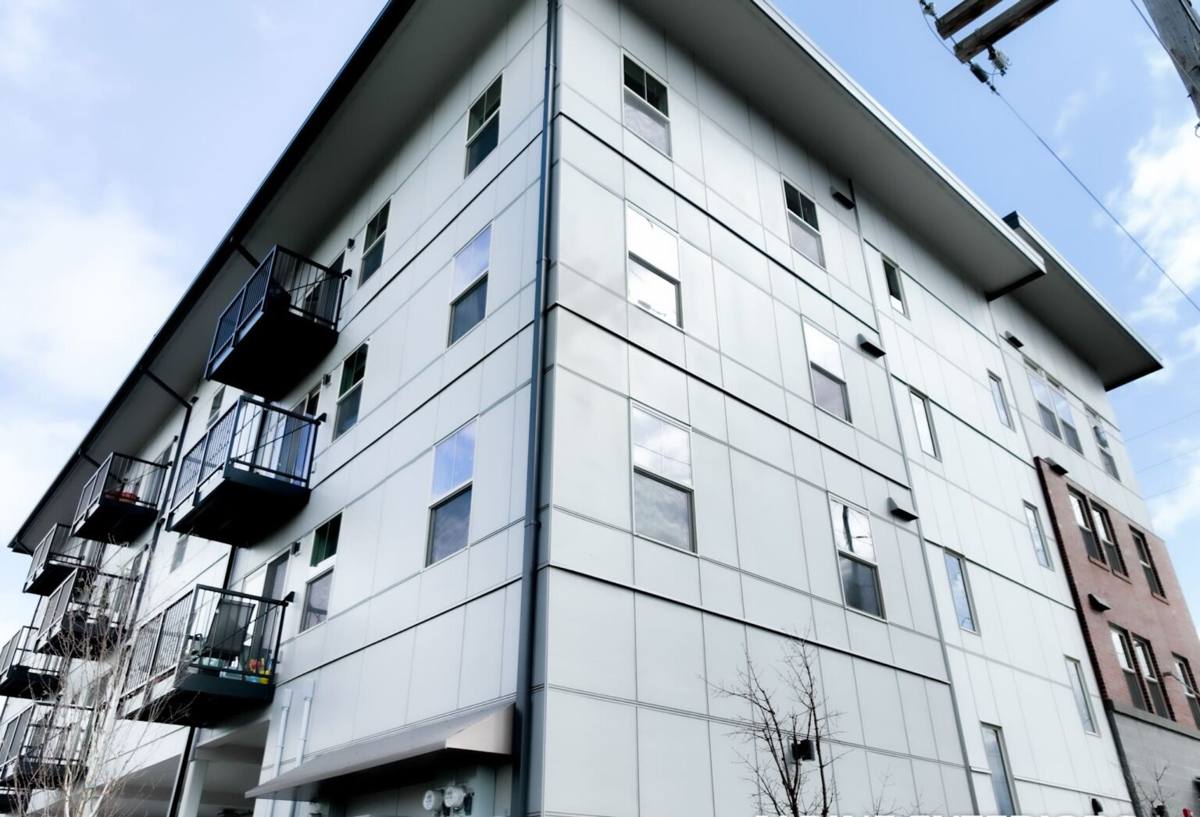
What Fremont's Climate Actually Does to Windows
A few regional factors combine here in ways homeowners in drier climates never have to think about:
- Driving rain: Wind-driven rain doesn't just fall on a window, it pushes against it, forcing water into any gap in the flashing or trim that a calmer climate would never expose.
- Salt air: Airborne salt accelerates corrosion on hardware, screws, and metal flashing, and it degrades some sealants faster than the manufacturer's rated lifespan assumes.
- Moss season: Moss doesn't just grow on roofs. It colonizes damp trim, sills, and the top edges of window casings that stay shaded and wet for months, holding moisture against wood and paint long after the rain stops.
- Low winter sun: Shorter, weaker sun means less drying time between rain events, so any water that does get behind a window has more time to do damage before conditions dry it out.
None of this means Fremont homes need exotic products. It means the installation details — flashing sequence, sill pan drainage, sealant selection, and gap treatment — matter more here than they would in a dry inland climate, and cutting corners on any one of them shows up as a callback within a few wet seasons.
Signs a Window Isn't Doing Its Job Anymore
Most window problems in this climate are quiet at first. Look for these before they turn into rot repair:
- Fogging or a visible haze between panes — the seal on the insulated glass unit has failed
- Soft or discolored wood on the interior sill or exterior trim
- A draft you can feel with your hand along the frame edge, especially during wind-driven rain
- Moss or dark streaking building up at the top corners of the window casing
- Windows that are difficult to open, close, or lock — frames can swell or shift as moisture gets in
- Paint that bubbles or peels specifically around the window opening, not the wall generally
- A noticeably higher heating bill without any other explanation
Any one of these on its own isn't an emergency. Several at once, or any sign of soft wood, usually means water has already gotten past the seal and it's worth having it looked at before a repair becomes a full frame replacement.
What a Correct Installation Actually Involves
Setting a new window into an opening looks simple from the outside. The parts that determine whether it holds up in a wet climate are mostly things you'll never see once the trim goes back on:
Sill Pan and Flashing
The rough opening needs a sloped sill pan so any water that does get past the window has a built-in path back outside instead of pooling against the framing. Flashing tape and building paper need to be layered correctly — each piece overlapping the one below it, shingle-style — so water is always directed down and out, never trapped behind a layer.
Air and Water Sealing
The gap between the window frame and the rough opening gets sealed with backer rod and a compatible sealant, plus low-expansion foam or insulation to control both drafts and condensation. Using the wrong sealant chemistry against a given frame material is a common source of premature failure — we match sealant to substrate, not just to whatever's on the truck.
Level, Plumb, and Square
A window that's out of square binds, doesn't lock fully, and stresses its own seals over time. It's a basic step, but on older Fremont homes with some settling in the framing, it takes real attention rather than assuming the rough opening is true.
Exterior Trim and Drainage
Trim gets reinstalled or replaced with the same shingle-lap logic as the flashing underneath it, and any horizontal trim ledge gets checked for a slight outward slope so it sheds water instead of holding it — the detail that keeps moss and rot from establishing at the top of the casing.
Choosing the Right Window for This Climate
There's no single "best" window material — the right choice depends on the home, the budget, and how much upkeep you want to take on. Here's how the common options actually compare for a marine climate like Fremont's:
| Material | Moisture Performance | Maintenance | Best Fit |
|---|---|---|---|
| Vinyl | Good — won't rot, handles moisture well | Low | Budget-conscious replacements, rental properties |
| Fiberglass | Excellent — dimensionally stable, resists warping | Low | Homes wanting long-term durability without wood upkeep |
| Wood-clad (exterior clad, wood interior) | Good if the cladding and flashing are correct; the exterior face is protected | Moderate — interior wood may need occasional finishing | Craftsman and older homes where interior wood trim matches original character |
| All-wood | Requires consistent exterior maintenance to perform well in this climate | High — regular painting/sealing needed | Historic restorations where matching original material matters most |
For most Fremont homes, we steer people toward vinyl, fiberglass, or clad-wood options because they hold up against driving rain and salt air with far less ongoing maintenance than an all-wood frame requires. If keeping an original wood-window look matters for a Craftsman's character, that's a reasonable trade-off — it just means committing to the maintenance schedule that comes with it.
Our Installation Process
- On-site assessment: We check existing window condition, framing, and any signs of water intrusion before quoting anything.
- Product selection: We walk through material and glass options based on your home's exposure, budget, and how the window needs to perform.
- Opening prep: Old windows come out carefully so we can inspect the rough opening and framing for hidden rot or damage before anything new goes in.
- Sill pan and flashing: Installed in the correct sequence for this climate — not a generic install, one built around Puget Sound rain.
- Window set and seal: Level, plumb, square, and sealed with the right materials for the frame type.
- Trim and finish: Interior and exterior trim reinstalled with attention to drainage detail, not just appearance.
- Final walkthrough: We check operation, seals, and finish with you before calling the job done.
What Affects the Cost
Every job is different, but these are the main variables that move the price on a window installation:
| Factor | Why It Matters |
|---|---|
| Number of windows | Per-window cost typically drops as the job scales up |
| Material | Vinyl is generally the most affordable; fiberglass and wood-clad cost more upfront |
| Window size and type | Custom shapes, large picture windows, or bay windows cost more than standard double-hungs |
| Condition of the existing opening | Hidden rot or framing damage found during removal adds repair time before the new window goes in |
| Access | Second-story or hard-to-reach windows take more time and equipment |
We give straightforward, itemized quotes so you can see what's driving the number — we don't pad estimates and we don't lowball with vague pricing that grows once the job starts.
Why a Crew That Already Works Fremont Matters
Fremont's mix of home ages and styles means the right approach to a window install can look different from one block to the next — an early-1900s cottage's original framing behaves differently than a 1960s remodel's. A crew that regularly works this part of King County has already seen the common framing quirks, siding transitions, and moisture patterns specific to these neighborhoods, so there's less guessing and fewer surprises once the old window comes out. We also know how the local building department handles window replacement permitting, which keeps the job moving instead of stalling on paperwork.
Just as important: we're not driving in from out of the area for one job and gone the next day. If a question comes up after the install — a sticking sash, a question about the warranty — we're a call away and familiar with the work we did.
Before You Decide, Check These
- Does the quote break out material, labor, and any framing repair separately, or is it one vague number?
- Is the installer licensed and insured in Washington, and will they show you proof without being asked twice?
- Does the warranty cover both the product and the installation labor, or just the manufacturer's glass warranty?
- Will they explain the flashing and sealing approach, or just talk about the window brand?
- Do they have experience with homes similar in age to yours — older framing behaves differently than new construction?
If your Fremont home has windows showing any of the wear signs above, or you're planning ahead for a full replacement, we're happy to take a look and give you a straightforward, no-pressure estimate. Fill out the form below and we'll get back to you with next steps.