 King County
 Issaquah's Climate Is Tougher on Siding Than It Looks
Issaquah sits in a valley at the base of the Issaquah Alps — Cougar, Tiger, and Squak Mountain — with heavy tree cover, seasonal fog, and some of the higher annual rainfall totals in King County. Unlike homes right on Puget Sound, most Issaquah properties don't take much direct salt air. What they do take is shade, standing moisture, and long stretches where siding simply doesn't get a chance to dry out between storms.
That combination is hard on exterior materials in a specific way. It's not one big storm that causes damage — it's months of low sun angle, tree-shaded north and east walls, and driving rain working into seams, laps, and fastener points. Add in a long moss and mildew season that can run from fall through spring, and you have a climate that rewards siding built to shed water and resist biological growth, and punishes anything that absorbs moisture or relies on paint film alone to stay protected.
Why This Matters More on Some Walls Than Others
On a typical Issaquah lot, the north-facing and tree-shaded elevations dry out far slower than the south and west sides. Those shaded walls are where moss gets a foothold first, where paint failure shows up earliest, and where poor water management at trim and flashing does the most damage over time. A siding job that looks fine on the sunny side of the house can still be failing quietly on the shaded side.
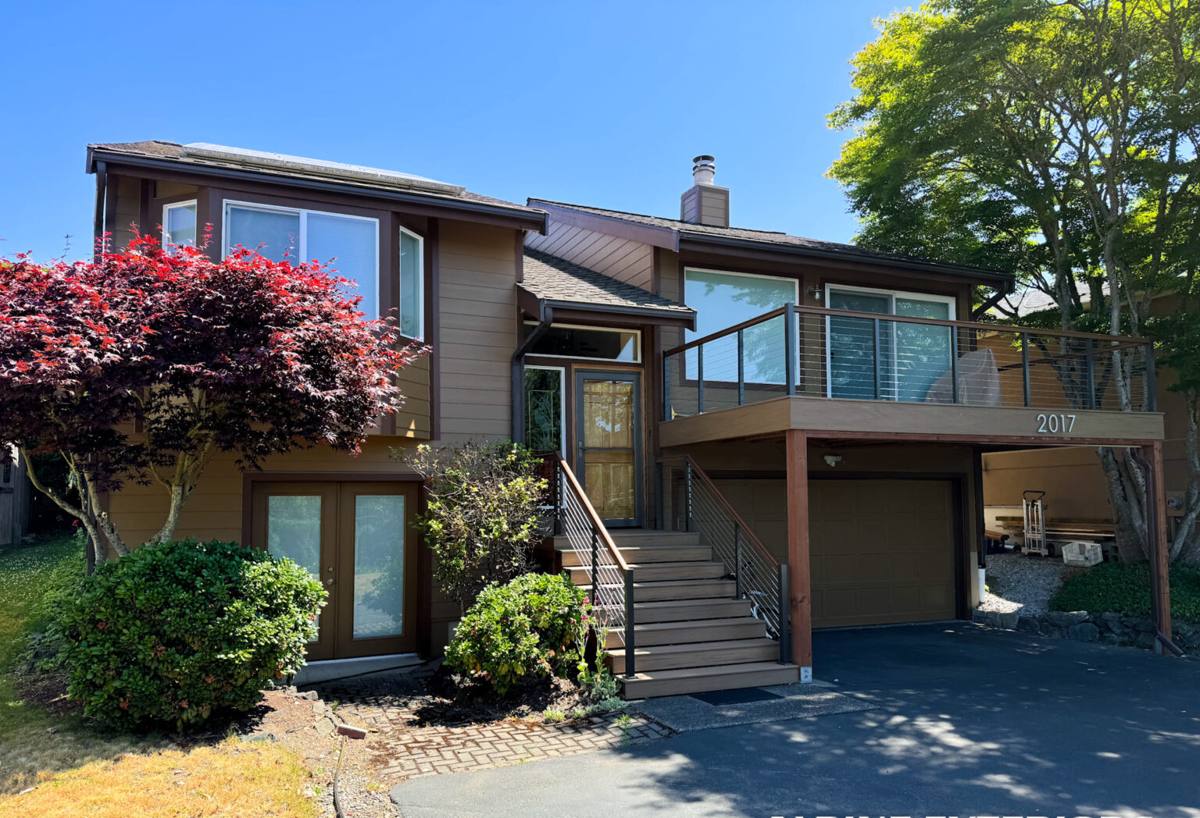
What James Hardie Brings to a Home Built for This Climate
We install James Hardie fiber cement exclusively, and in a climate like Issaquah's, the reasons are practical, not marketing. Hardie's HZ5 product line is engineered specifically for regions with prolonged wet weather and freeze-thaw cycling — which describes the Pacific Northwest foothills well. Fiber cement doesn't swell, rot, or delaminate the way wood-based or wood-adjacent products can when they stay damp for extended periods.
Hardie's ColorPlus finish is baked on at the factory under controlled conditions, rather than applied on-site or left to a field paint crew working around weather windows. That matters in a market where a dry, paintable stretch of days isn't guaranteed. A factory finish also resists the fading, chalking, and moss-friendly surface texture that field-applied paint can develop faster in shaded, damp conditions.
Fiber cement is also non-combustible. Issaquah homes near the wooded slopes of Cougar, Tiger, and Squak Mountain sit closer to wildland vegetation than homes in denser, flatter parts of King County. Non-combustible siding won't stop a wildfire on its own, but it removes one fuel source from the exterior envelope — something worth factoring in for homes backing up to greenbelt or forested buffer areas.
Choosing the Right Hardie Line and Profile
Hardie isn't a single product — it's a system of panel types, profiles, and finishes, and the right combination depends on the house.
Lap Siding, Panel, and Shingle Options
- HardiePlank lap siding — the most common choice for Issaquah's mix of traditional and craftsman-style homes; available in several exposure widths and textures.
- HardiePanel vertical siding — often used as an accent on gables, entries, or modern-style builds, and increasingly common on newer construction in the area.
- HardieShingle — a shaped-shingle profile for homes going for a cottage or craftsman look without the moisture sensitivity of real wood shingles.
- HardieTrim — matched trim boards that resist the same moisture and rot issues as the field siding, so the whole exterior envelope performs consistently.
Color and Finish Decisions
ColorPlus finishes come in a curated palette engineered to hold up under UV exposure and repeated wet-dry cycling, backed by a separate finish warranty from the substrate warranty. Homeowners who want a fully custom color can choose primed Hardie board and field-paint it, but that shifts the ongoing maintenance burden — including repainting on a normal cycle — back onto the homeowner. For a shaded, high-moisture area like Issaquah, we generally recommend ColorPlus for anyone who wants to minimize repainting.
What a Correct Installation Actually Involves
James Hardie siding is only as good as the installation behind it. The material is engineered to shed water, but the assembly around it — flashing, gaps, fastening, caulking — is what actually keeps water out of the wall.
Water Management Details
Correct installation means proper weather-resistive barrier and flashing at every window, door, and penetration; house wrap integrated with flashing so water sheds outward, not behind the siding; and kickout flashing wherever a roofline meets a wall to divert runoff away from the siding rather than letting it run down behind it. These details matter everywhere, but they matter more on Issaquah's shaded, slow-drying walls, where a small flashing mistake stays wet longer and does more damage before it's noticed.
Fastening, Clearances, and Gaps
Hardie's installation specifications call for specific nailing patterns, minimum clearances from grade, roof lines, and decks, and defined gaps at butt joints and trim that get sealed with the right sealant — not caulked shut where the product is designed to have a gap. Installers who don't follow Hardie's published fastening and clearance specs can void the manufacturer's warranty even though the material itself is installed.
Cutting and Dust Control
Fiber cement generates silica dust when cut, which is a job-site safety issue as much as an installation one. Hardie specifies dust-reducing cutting methods, and a crew that treats this as routine — not an afterthought — is a reasonable signal for how carefully they'll handle the rest of the details you can't see once the siding is up.
Comparing Siding Options for an Issaquah Home
| Factor | James Hardie Fiber Cement | Vinyl | Wood / Cedar |
|---|---|---|---|
| Moisture behavior in shaded, wet conditions | Resists moisture absorption; doesn't rot | Doesn't absorb water, but can trap moisture behind it if installed poorly | Absorbs moisture; prone to rot without diligent upkeep |
| Moss and mildew resistance | Factory ColorPlus finish resists surface growth | Can host surface growth in shaded areas | Highly susceptible in shaded, damp zones |
| Fire rating | Non-combustible | Combustible; can melt or warp | Combustible |
| Maintenance cycle | Occasional wash; repaint only if field-painted | Low, but cracks/fades over time | Regular repainting or staining required |
| Warranty | Long-term, transferable manufacturer warranty | Varies widely by manufacturer | Typically no material warranty |
Our Process, Start to Finish
- On-site assessment — we walk the exterior, check for existing moisture damage, moss buildup, and problem areas around windows, trim, and rooflines.
- Product and color selection — we go through Hardie profiles and ColorPlus color options based on the home's style and HOA or neighborhood guidelines where they apply.
- Written estimate — a clear scope of work, product specification, and price, with no pressure to sign on the spot.
- Tear-off and inspection — once old siding comes off, we inspect sheathing and framing for hidden moisture damage before anything new goes on.
- Weather barrier and flashing — house wrap, window and door flashing, and kickout flashing installed to Hardie's water management specifications.
- Hardie installation — panels, planks, or shingles installed to manufacturer nailing patterns, clearances, and gap specifications.
- Final walkthrough — we review the finished job with the homeowner before calling it complete.
Maintaining James Hardie Siding in Issaquah's Climate
One of the practical advantages of Hardie over wood or field-painted alternatives is how little ongoing maintenance it needs — but "little" isn't "none," especially on shaded, moss-prone walls.
- Rinse siding annually, focusing on shaded north and tree-covered walls where moss and grime build up fastest.
- Trim back vegetation and tree limbs that keep siding shaded and damp longer than necessary.
- Check caulking at trim joints and penetrations every year or two, and re-caulk where it's cracked or pulled away.
- Keep gutters and downspouts clear so overflow doesn't run down the siding face.
- Watch for any staining or discoloration near ground level, which can signal splashback or a grading issue rather than a siding defect.
Why Hiring a Crew That Already Works in Issaquah Matters
Issaquah's housing stock ranges from older homes closer to downtown to newer planned developments up toward the Highlands, many of which have HOA architectural guidelines governing exterior colors, materials, and sometimes specific profiles. A crew that already works in the area knows to check those guidelines before ordering material, not after.
Local experience also means knowing which elevations on a given lot are going to be the problem spots — the shaded, forest-adjacent walls that dry slowest — and building the flashing and gap details accordingly, rather than treating every wall the same way. And because King County's permitting requirements can differ depending on whether a project involves sheathing replacement or structural repair versus a straightforward re-side, it helps to work with a crew that handles that process regularly rather than learning it on your project.
Get a Free, No-Pressure Estimate
If your Issaquah home's siding is showing moss, paint failure, or soft spots — or you're planning ahead for a replacement — we're happy to take a look and walk you through what James Hardie siding would involve for your specific home. The estimate is free, there's no pressure to commit, and you'll get a straight answer about what your siding actually needs.