 King County
 Why Metal Roofing Makes Sense for Issaquah Homes
Issaquah sits where the flatter parts of King County start climbing into the foothills, and that location means local homes take weather from a couple of directions at once. Driving rain comes through in long fall and winter systems, moisture sits in shaded, tree-covered lots longer than it does out in the open, and the broader marine climate that brings salt air off Puget Sound to the western part of the county still shapes what happens here — cool, wet, and overcast for a good chunk of the year. Add tree cover from the surrounding hillsides and you get a long moss season that doesn't let up just because summer shows up for a few months.
A metal roof handles that combination better than most other roofing materials, but only when it's installed correctly for this specific climate. We install and replace metal roofing for homeowners throughout Issaquah and the rest of King County, and this page covers what that actually involves — not the generic pitch, but what we look at, what we install, and why the details matter here specifically.
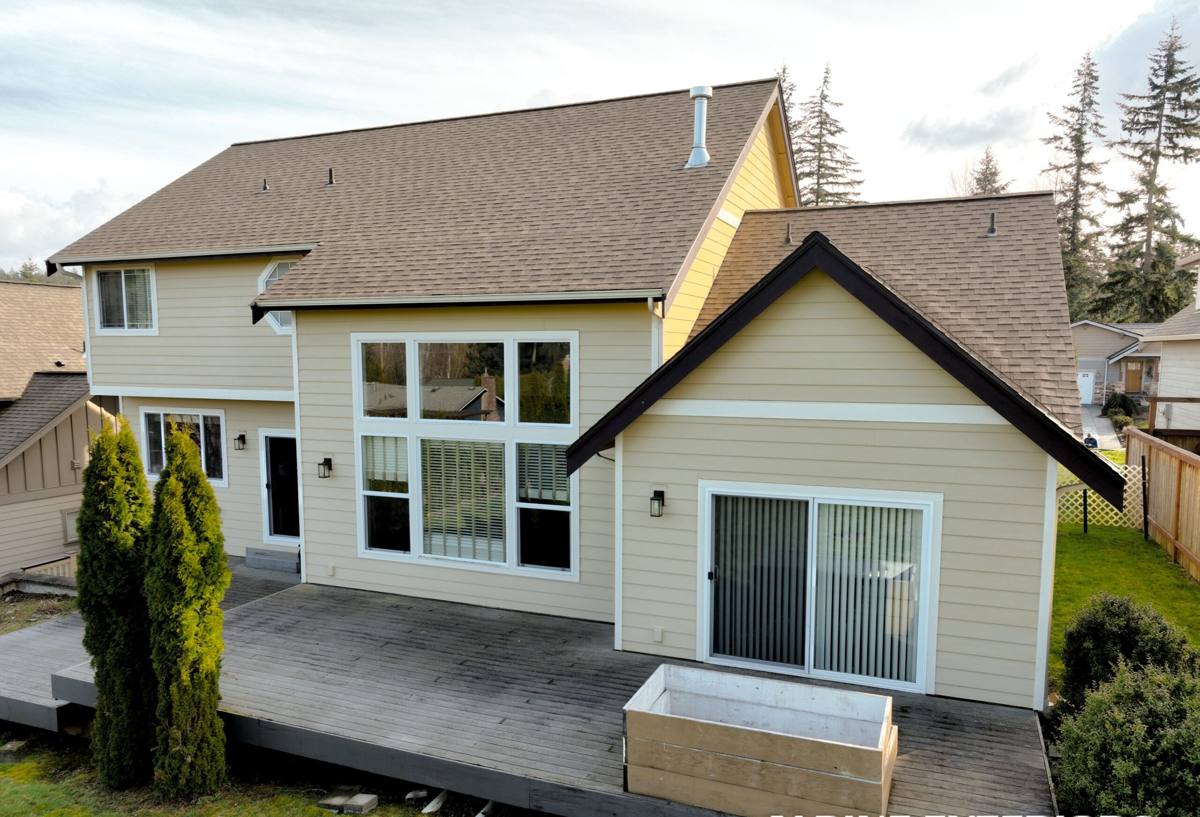
Metal Roofing Options for King County Homes
"Metal roofing" isn't one product — it's a category, and the right choice depends on your roof's pitch, your budget, and how the house looks. Here's how the main options compare for a home in this area:
| System | Best For | Moss/Rain Performance | Notes |
|---|---|---|---|
| Standing seam | Most roof pitches, modern or traditional homes | Excellent — concealed fasteners, smooth panel runs water off fast | Our default recommendation for full metal roof replacements |
| Exposed fastener panel | Shops, outbuildings, budget-conscious projects | Good, but exposed screws are the weak point over time | Lower upfront cost, more maintenance long term |
| Stone-coated steel | Homes wanting a shingle or tile look with metal durability | Very good — textured surface still sheds water well | Heavier than standard panel, check structural fit first |
For most Issaquah homes we recommend standing seam. The concealed fastener design means there are no exposed screw heads for water to find a way through over the years, and the smooth vertical panels don't give moss and debris anywhere easy to catch and build up.
What About Composite or Asphalt Instead?
Asphalt shingles are a reasonable, lower-cost option and we install them too when that's the right call for a homeowner's budget or timeline. But in a shaded, wet climate like ours, shingles absorb moisture, grow moss faster, and have a shorter realistic lifespan than metal. If you're planning to stay in the home long-term and want to stop dealing with moss and re-roofing on a 20-year cycle, metal is the better investment — that's a maintenance and lifespan conversation, not a claim that one product is "bad."
What Issaquah's Climate Demands From a Metal Roof
Three things drive most of the decisions we make on a metal roofing job in this area:
Sustained, Driving Rain
Storms here don't just drop rain straight down — wind pushes it sideways against the roof plane and up under laps and flashings if they're not detailed correctly. Every seam, valley, and penetration on your roof needs to be built assuming water will try to get under it, not just run over it.
Long Moss and Algae Season
Shaded lots, tree cover, and months of damp weather mean moss isn't a once-a-decade problem here — it's an ongoing condition metal roofing needs to be designed to resist. Smooth metal panels give moss spores far less to hold onto than a textured shingle surface, but panel selection, coating, and slope all still matter.
Foothill Wind and Snow Load
Homes closer to the surrounding hills can see heavier gusts and occasional snow accumulation that flatter, more open parts of the county don't deal with as often. Panel fastening, snow retention where needed, and structural fit all get checked against your specific site, not a one-size-fits-all spec.
What a Correct Metal Roof Installation Involves
Metal roofing looks simple from the ground, but a correct install has a lot of details underneath the panels that determine whether it performs for 40+ years or starts leaking in five. Here's what we check and install on every job:
- Full tear-off and deck inspection — soft or rotted decking gets replaced before anything new goes on, never covered up
- High-temp, self-adhered ice-and-water membrane at eaves, valleys, and around every penetration
- Synthetic underlayment across the full roof for a second line of defense under the panels
- Panel layout planned to minimize seams in high-water-flow areas like valleys
- Concealed fastener clips (on standing seam) that allow the metal to expand and contract without stressing the fasteners
- Custom-bent flashing at every wall intersection, chimney, and vent — not generic stock trim
- Ridge and hip caps installed with proper ventilation, not sealed shut
- Verified attic or roof-deck ventilation so trapped moisture isn't condensing against the underside of the panels
Skip any one of these and the roof can still look fine from the driveway for a few years while a problem builds underneath. This is where a lot of roofing failures actually start — not with the metal itself, but with shortcuts in the flashing, underlayment, or ventilation underneath it.
Our Metal Roofing Process
We keep the process straightforward and give you honest information at each step:
- On-site inspection. We walk the roof, check the decking and ventilation, and look at how water currently moves across your roof and yard.
- Written estimate. You get a clear scope of work and price — what panel system, what underlayment, what the flashing plan is, and why.
- Tear-off and deck prep. Old roofing comes off, decking is inspected and repaired as needed, and the surface is prepped before anything new goes down.
- Underlayment and flashing. Ice-and-water membrane, synthetic underlayment, and custom flashing go in at every vulnerable point first.
- Panel installation. Panels are installed to spec with proper fastening and expansion allowance for temperature swings.
- Final walk-through and cleanup. We check the completed roof with you, answer questions, and make sure the site is clean before we leave.
What a Metal Roof Costs — and What Moves the Price
Metal roofing costs more upfront than asphalt shingles, and the final number depends on several factors specific to your home. We won't quote a firm number without seeing the roof, but here's what typically moves the estimate:
| Factor | Why It Matters |
|---|---|
| Roof pitch and complexity | Steeper roofs and more valleys/dormers mean more labor and material for flashing |
| Panel system chosen | Standing seam costs more than exposed fastener panel but needs less long-term maintenance |
| Deck condition | Rot or soft decking found during tear-off adds repair cost, but skipping it isn't an option |
| Tear-off vs. layover | Full tear-off costs more but is almost always the right call on an older roof — layovers hide existing problems |
| Access and roof height | Steep or hard-to-access roofs take longer and require more safety setup |
Moss Prevention and Long-Term Maintenance
Metal roofing needs far less maintenance than shingles, but "far less" doesn't mean none — especially under Issaquah's tree cover. A few habits keep a metal roof performing at its best for decades:
- Keep gutters and valleys clear of needles and leaf debris that trap moisture against the panels
- Trim back overhanging branches to reduce shade and debris buildup where possible
- Have flashing and sealant points checked periodically, especially after major storms
- Address any moss growth early with gentle, roof-safe methods rather than pressure washing, which can damage coatings and seams
Why a Local Crew Matters for This Job
Metal roofing done wrong doesn't fail gracefully — a poorly flashed valley or an underlayment shortcut can send water into the house long before it shows up as a visible leak. A crew that already works roofs in Issaquah and the surrounding King County foothills has seen how this specific climate — the driving rain, the shade, the long wet season — actually plays out on real roofs over time, not just in a manufacturer's spec sheet. That local experience shows up in the small decisions: how a valley gets detailed, where extra ice-and-water membrane goes, how ventilation is balanced against a heavily shaded roof plane. It's the difference between a roof that's installed to code and one that's installed to actually hold up here.
Get a Free Estimate
If you're weighing a metal roof for your Issaquah home, we're happy to take a look, answer your questions honestly, and put together a written estimate with no pressure attached. Use the form below to get started.