 King County
 Siding Installation Built for Issaquah's Climate
Issaquah sits where the Puget Sound lowlands meet the Cascade foothills, and that location shapes what a home's siding has to deal with year-round. Heavy tree cover, valley humidity, and a long, wet stretch of fall through spring mean siding here is rarely given a chance to fully dry out between storms. Add in the marine air that moves through the greater King County region off Puget Sound, and you get a climate that's genuinely hard on exterior materials — not because any one factor is extreme, but because the combination of moisture, shade, and mild temperatures never really lets up.
That's the environment we design every Issaquah siding installation around. It's not just about picking a product and nailing it up — it's about details like flashing, ventilation gaps, and fastener placement that determine whether a siding job holds up for decades or starts showing problems in five years.
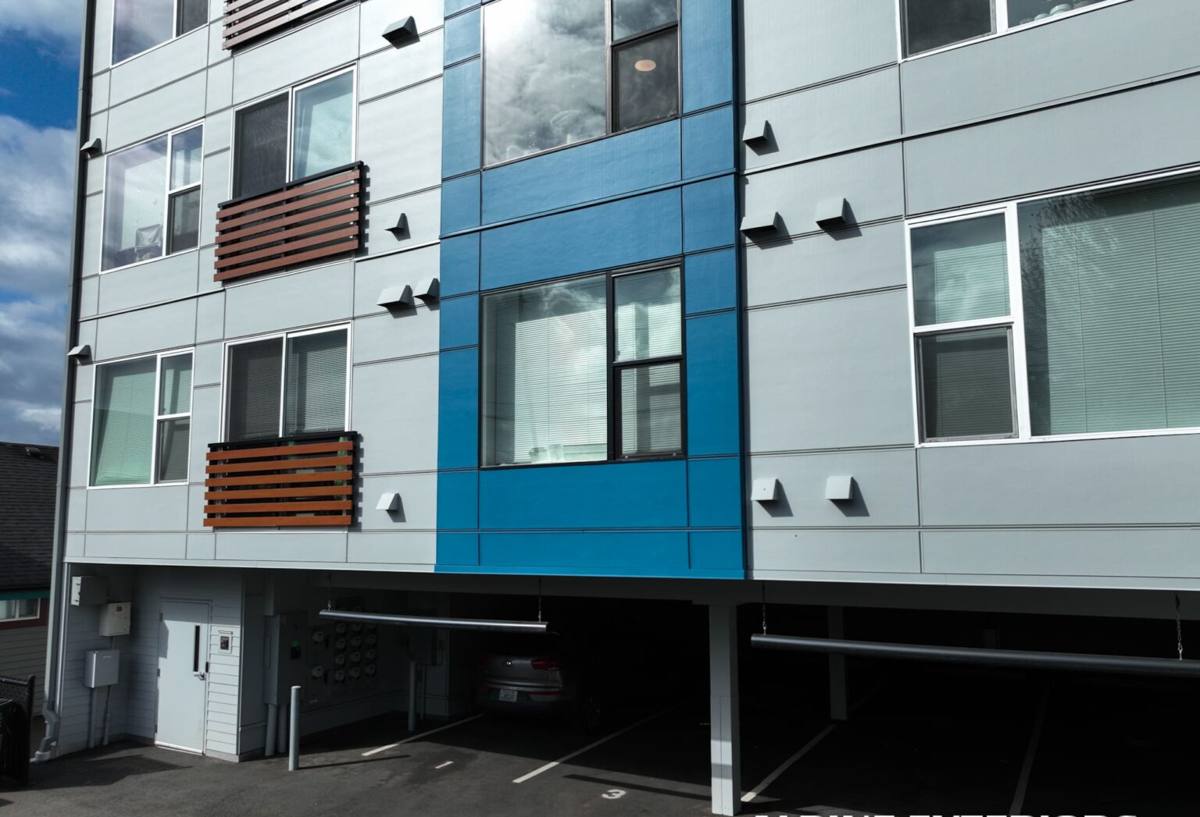
What Issaquah Homes Actually Need From Their Siding
Driving Rain and Wind-Driven Moisture
Storms coming off the Sound and through the valley don't just fall straight down — wind pushes rain sideways into wall assemblies, especially on exposed gables and upper stories. Siding and the water-resistive barrier behind it need to work together as a system, not just look good from the curb. Gaps in flashing or caulking that would be a minor issue in a drier climate become a real path for water intrusion here.
Extended Moss and Algae Season
Shaded lots, tree cover, and near-constant low-level moisture give moss, mold, and algae a long growing season on north-facing walls and anywhere siding stays damp longer than it should. Some siding materials handle this better than others — porous or wood-based products stay damp longer and give organic growth more to hold onto, while a dense fiber cement panel sheds moisture faster and resists that buildup.
Temperature Swings and Material Movement
Issaquah doesn't see extreme heat or cold, but the freeze-thaw cycles and daily humidity swings still cause siding materials to expand and contract. Products that aren't dimensionally stable can develop gaps, warping, or fastener pop over time, which then becomes an entry point for the moisture that's already abundant in this climate.
Why We Only Install James Hardie Fiber Cement
We made a deliberate call as a company to install James Hardie fiber cement siding exclusively — not vinyl, not LP SmartSide, not primed wood products, not other fiber cement brands. For a climate like Issaquah's, that decision comes down to how a material performs over 20-30 years of Pacific Northwest weather, not just how it looks on installation day.
- Non-combustible core: Fiber cement doesn't feed a fire the way wood-based or many engineered wood products can, which matters given King County's mix of forested lots and wildfire-adjacent conditions in surrounding areas.
- Moisture resistance by design: Hardie's fiber cement formulation is engineered to resist swelling, cracking, and rot from constant damp exposure — a direct answer to Issaquah's rain and shade combination.
- ColorPlus factory finish: A baked-on finish applied in a controlled factory environment holds color and resists fading and moisture penetration better than field-applied paint, which struggles to fully cure in a climate that doesn't offer many dry stretches.
- HZ5/HZ10 engineering: Hardie makes climate-specific product lines engineered for exactly this kind of high-moisture, freeze-thaw environment, rather than a one-size-fits-all product.
- Warranty backing: A strong, transferable manufacturer warranty means the material is backed by more than just our installation work.
We're not going to pretend other products don't have their place elsewhere. Vinyl is inexpensive and low-maintenance in the right setting. LP SmartSide has genuine fans. But for the specific combination of rain, shade, and long wet seasons that Issaquah homes deal with, we decided fiber cement — installed correctly — is the material that gives homeowners the fewest surprises down the road, and James Hardie is the fiber cement system we trust to back that up.
What a Correct Siding Installation Involves
The material is only half the equation. A huge share of siding failures we get called out to inspect aren't product failures at all — they're installation shortcuts. Here's what we consider non-negotiable on every job:
| Step | Why It Matters in Issaquah's Climate |
|---|---|
| Water-resistive barrier inspection/replacement | The barrier behind the siding is the last line of defense against the wind-driven rain this area gets — it has to be continuous and properly lapped |
| Flashing at windows, doors, and penetrations | These are the most common leak points on any home; flashing errors here show up as rot years later, often hidden behind the siding |
| Proper fastener type, placement, and spacing | Hardie specifies exact nailing patterns; incorrect fastening voids warranty coverage and can cause boards to crack or work loose over time |
| Rain screen / ventilation gap where called for | Allows any moisture that does get behind the siding to drain and dry instead of sitting against the wall sheathing |
| Correct board clearance from grade, decks, and roof lines | Siding installed too close to ground or hardscape wicks moisture and stays damp — a common cause of premature rot in shaded, damp lots |
| Caulking and sealant at joints and trim | Prevents the small gaps that become entry points during sustained rain events |
Our Process for an Issaquah Siding Installation
1. On-Site Assessment
We walk the property, check the condition of the existing siding and sheathing where accessible, and look at exposure — how much sun and wind each elevation actually gets, since a north wall under mature trees needs different attention than a south-facing wall.
2. Tear-Off and Sheathing Check
Old siding comes off and we inspect the sheathing underneath. This is often the first time hidden moisture damage becomes visible, and it needs to be addressed before anything new goes up — installing new siding over compromised sheathing just hides the problem.
3. Water Barrier and Flashing Installation
New or repaired water-resistive barrier goes on first, with flashing detailed at every window, door, and penetration. This step gets more attention than any other, because it's the part that's invisible once the job is done.
4. Hardie Panel Installation to Manufacturer Spec
Boards are installed following James Hardie's fastening schedule, clearances, and joint treatment — not a generalized approach borrowed from other siding types.
5. Trim, Caulk, and Final Inspection
Trim details and sealants are finished, and we walk the job with the homeowner before calling it complete.
Why Hiring a Crew That Already Works in Issaquah Matters
Siding installation isn't uniform across King County. A crew that mostly works drier, more open areas of the region can miss the details that matter in a shaded, rain-heavy pocket like Issaquah — the extra attention to drainage planes, the awareness of which elevations stay damp longest, the instinct to check for moss and moisture patterns before starting a tear-off. Local, repeat experience in this specific kind of terrain and weather pattern shows up in fewer callbacks, not in anything flashy.
We also know the practical side of working in this area — permitting expectations, common home ages and construction types in King County neighborhoods like Issaquah, and how to sequence a job around the region's unpredictable rain windows so materials aren't exposed to weather they shouldn't be.
Signs Your Issaquah Home May Need New Siding
- Visible cracking, warping, or soft spots, especially on shaded or north-facing walls
- Persistent moss, algae, or dark streaking that returns shortly after cleaning
- Paint that's peeling or bubbling repeatedly in the same areas
- Soft or spongy sheathing felt when pressing near the base of exterior walls
- Gaps, buckling, or fastener pop where boards meet trim or corners
- Rising energy bills that may point to compromised insulation behind failing siding
Any one of these on its own isn't necessarily an emergency, but a combination — especially paired with visible moisture issues — is worth having assessed before it turns into a sheathing or framing repair.
Cost Factors for Siding Installation in Issaquah
Every home is different, but the same handful of factors drive most of the variation in project scope and cost:
| Factor | Why It Affects the Job |
|---|---|
| Home size and elevation complexity | More corners, dormers, and roof lines mean more flashing and cutting |
| Existing sheathing condition | Hidden rot found during tear-off adds repair scope before new siding can go on |
| Siding profile and trim selection | Lap width, shingle-style panels, and trim detailing affect material and labor |
| Access and site conditions | Steep or heavily landscaped lots, common in Issaquah's foothill terrain, can add setup time |
| Scope of window/door flashing repair | Older homes often need more flashing correction, especially around original openings |
We provide a clear, itemized estimate after the on-site assessment rather than a rough number over the phone — the sheathing condition alone can shift scope significantly once tear-off begins.
Get an Estimate for Your Issaquah Home
If your siding is showing its age, dealing with moss and moisture issues, or you're just planning ahead for a home in a wet, shaded part of King County, we're happy to take a look. Reach out through the form below for a free, no-pressure estimate — we'll walk the property, give you a straight assessment of what's going on, and explain exactly what a correct James Hardie installation would involve for your home.