 King County
 Fremont's Climate Puts Real Demands on Siding
Fremont sits close to Seattle's waterways, which means homes here deal with a specific combination of stresses that inland King County neighborhoods see less of. Salt-tinged air off the water accelerates corrosion on exposed metal fasteners and trim. Driving rain, often pushed sideways by wind coming off the water, finds its way into gaps that would stay dry in a calmer microclimate. And the long, low-sun winter stretch that Seattle is known for gives moss and algae months at a time to take hold on shaded, north-facing walls.
None of this is exotic — it's the same basic marine-and-rain climate that affects most of western Washington. But Fremont's mix of older housing stock, mature tree cover, and closeness to the water means the effects show up faster and more visibly than they might a few miles inland. Siding that isn't built or installed for sustained moisture exposure tends to show it first in this kind of neighborhood: swelling at butt joints, peeling paint on south and west faces, and dark streaking or green growth where sun doesn't reach.
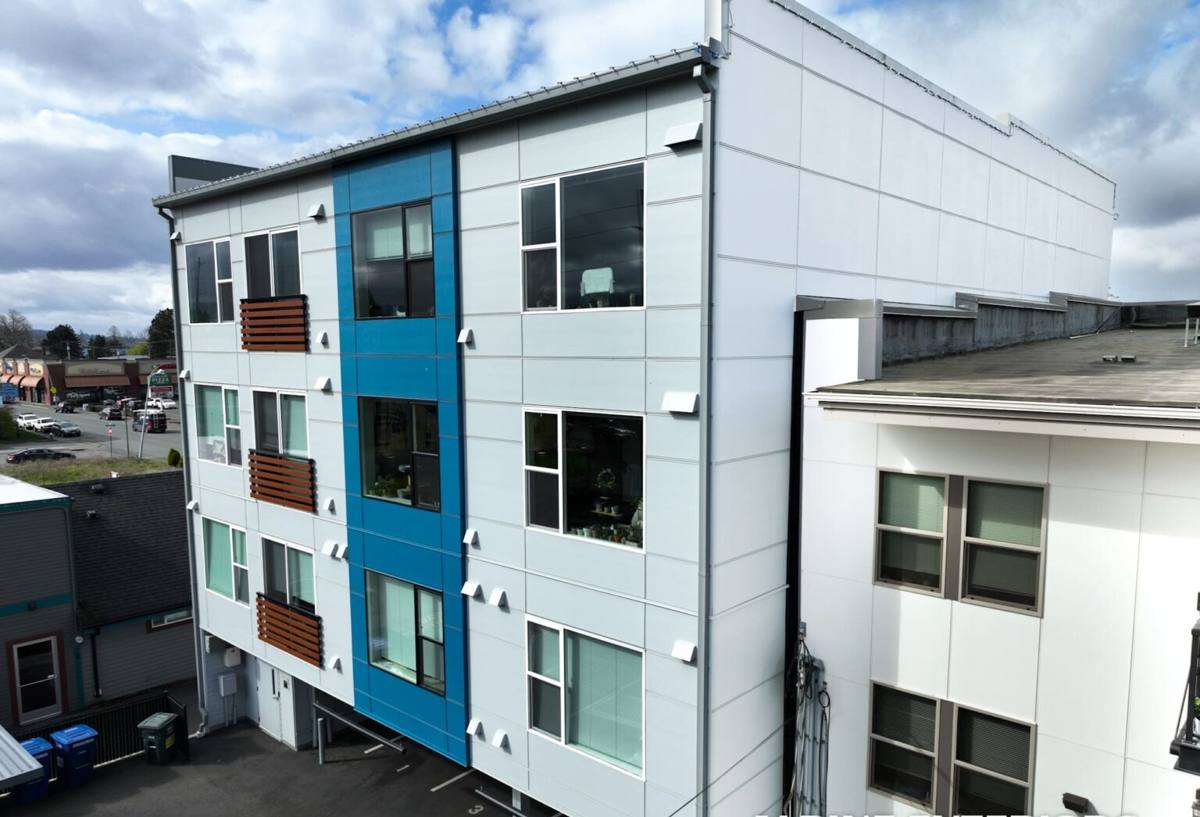
Why James Hardie Fits This Climate
James Hardie fiber cement is engineered specifically around moisture behavior, which is the number one variable in a climate like this. A few things matter for a Fremont home in particular:
- Dimensional stability: fiber cement doesn't swell, cup, or rot the way wood-based products can when they take on repeated wetting and drying cycles through a long wet season.
- HZ5 climate engineering: Hardie manufactures its siding in climate-specific formulations, and the HZ5 line is built for the wetter, more humid conditions found in the Pacific Northwest — it's not a generic product sold the same way in every region.
- ColorPlus factory finish: the color is baked on in a controlled factory process rather than field-applied after installation, which holds up better against the UV and moisture cycling that causes field paint to fail early on other siding types.
- Non-combustible core: not a climate factor specifically, but a real durability and insurance consideration for any King County homeowner.
This is also why we don't install vinyl, LP SmartSide, primed wood, or cedar as alternatives. Each of those products has legitimate uses elsewhere, but in a climate that gives moisture months to work on a wall, we've standardized on the one system that's engineered for exactly this exposure and backed by a strong transferable warranty when installed to spec.
What a Correct Installation Actually Involves
Hardie siding is only as good as the installation behind it. The material resists moisture well, but if water gets behind the panel and has no way to drain or dry out, you can still end up with rot in the sheathing or framing underneath — the siding itself just won't be the part that fails.
Water Management and Flashing
Every horizontal joint, window, door, and penetration needs proper flashing and a drainage plane behind the siding, not just caulk at the surface. In a neighborhood that gets sustained wind-driven rain, this layer matters more than the visible finish. A rainscreen gap behind the panels, where called for by the site conditions, gives any moisture that does get past the cladding a way to drain and the wall a way to dry.
Fastening and Clearances
Hardie specifies fastener type, spacing, and depth for a reason — over- or under-driven nails compromise the panel's ability to handle expansion and contraction. Ground clearance and clearance from roof lines, decks, and other flat surfaces also need to meet Hardie's minimums; skipping these is one of the most common ways an otherwise good product ends up with moisture problems at the bottom edge.
Caulking and Trim Details
Trim boards, corners, and joints need the right sealant used correctly and sparingly — caulk is a backup to good flashing detail, not a substitute for it. Over-caulking can actually trap moisture rather than shed it.
Our Installation Process in Fremont
The steps don't change from neighborhood to neighborhood, but how carefully each one gets handled does, especially in a climate this unforgiving of shortcuts.
- Site assessment: we look at the existing wall assembly, moisture history, sun/shade exposure on each face of the house, and any signs of hidden damage before quoting anything.
- Tear-off and sheathing check: removing old siding lets us actually see the sheathing and framing underneath, rather than covering up a problem that will keep going.
- Weather barrier and flashing: a code-compliant water-resistive barrier and flashing at every penetration and joint, installed before a single piece of siding goes up.
- Panel installation to spec: correct fastener schedule, clearances, and joint treatment, following Hardie's published installation instructions rather than shortcuts that void the warranty.
- Trim, caulk, and paint touch-up: factory-finished panels need minimal touch-up, which is one of the advantages of ColorPlus over field-painted alternatives.
- Final walkthrough: we go over the finished job with the homeowner and confirm everything that was promised in the estimate actually got installed.
What Influences Cost for a Fremont Project
Every home is different, but the same handful of factors drive most of the cost variation we see on siding projects in this part of King County.
| Factor | Why It Matters |
|---|---|
| Home size and number of stories | More surface area and access equipment for taller walls both add labor time |
| Condition of existing sheathing | Rot or moisture damage found during tear-off needs repair before new siding goes on |
| Trim and detail complexity | Multiple gables, dormers, and trim styles take more time than a simple rectangular wall |
| Site access | Tight side yards, fences, or limited street parking common in dense Seattle neighborhoods can slow staging and material handling |
| Color and profile selection | Some Hardie profiles and ColorPlus finishes carry different material costs than others |
We walk through these factors on-site rather than quoting blind, because the difference between a straightforward wall and one with hidden moisture damage can be significant.
Common Problems We See From Improper Installs
A lot of the siding failures we get called out to look at aren't a material problem — they're an installation problem. The pattern shows up often enough in this climate that it's worth naming directly:
- Missing or undersized flashing above windows and doors, leading to staining or rot at the corners over time
- Panels installed tight to grade or to a deck surface, with no clearance for water to shed away from the bottom edge
- Over-driven fasteners that crack the panel or restrict its ability to move slightly with temperature and moisture changes
- Gaps at joints and trim sealed with caulk alone, with no flashing behind it to actually stop water
None of these are unique to any one crew or product — they're the kind of shortcuts that show up anywhere installation quality varies, and they're exactly what a climate like Fremont's will expose the fastest.
Signs Your Siding Needs Attention
A quick self-check can tell you whether it's worth getting a professional look sooner rather than later:
- Persistent green or black staining on north- or shade-facing walls that pressure washing doesn't fully remove
- Soft spots, visible swelling, or a spongy feel when you press on the siding near the bottom of a wall
- Peeling or bubbling paint, especially on older wood or engineered wood siding
- Visible gaps or separation at butt joints and corner trim
- Nail heads showing rust streaks or popping out from the surface
Any of these can mean the siding is still functioning as a surface but no longer doing its job as a moisture barrier — worth a look before the next wet season, not after.
Why We Only Install James Hardie
We don't offer vinyl, LP SmartSide, Cemplank, Allura, or bare wood siding as options, and that's a deliberate standard rather than a limitation of what we're capable of installing. In a climate that gives moisture sustained time to work on a building envelope, we've found that fiber cement engineered for this specific region, finished at the factory rather than in the field, and backed by a real transferable warranty is the product that holds up the way homeowners expect siding to hold up. It's a narrower product lineup than some contractors offer, and that's the point.
Get a Local, No-Pressure Estimate
If you're weighing a siding replacement or repair for a Fremont home, we're happy to take a look and walk you through what we see — no pressure, no obligation. Use the form below to request a free estimate.