 King County
 Composite Decking in Kent: What Actually Matters Here
Kent sits in the Green River Valley, low and flat, with the kind of drainage patterns and moisture load that make decking decisions different than they'd be on the east side of the mountains. If you're weighing composite decking for a home in Kent, the climate is doing a lot of the deciding for you: long wet stretches from fall through spring, humid summers, and enough shade from mature trees on many lots that a deck rarely gets to fully dry out between rains. That combination is exactly what composite decking was designed to handle better than wood — but only if it's specified and installed correctly for this specific environment.
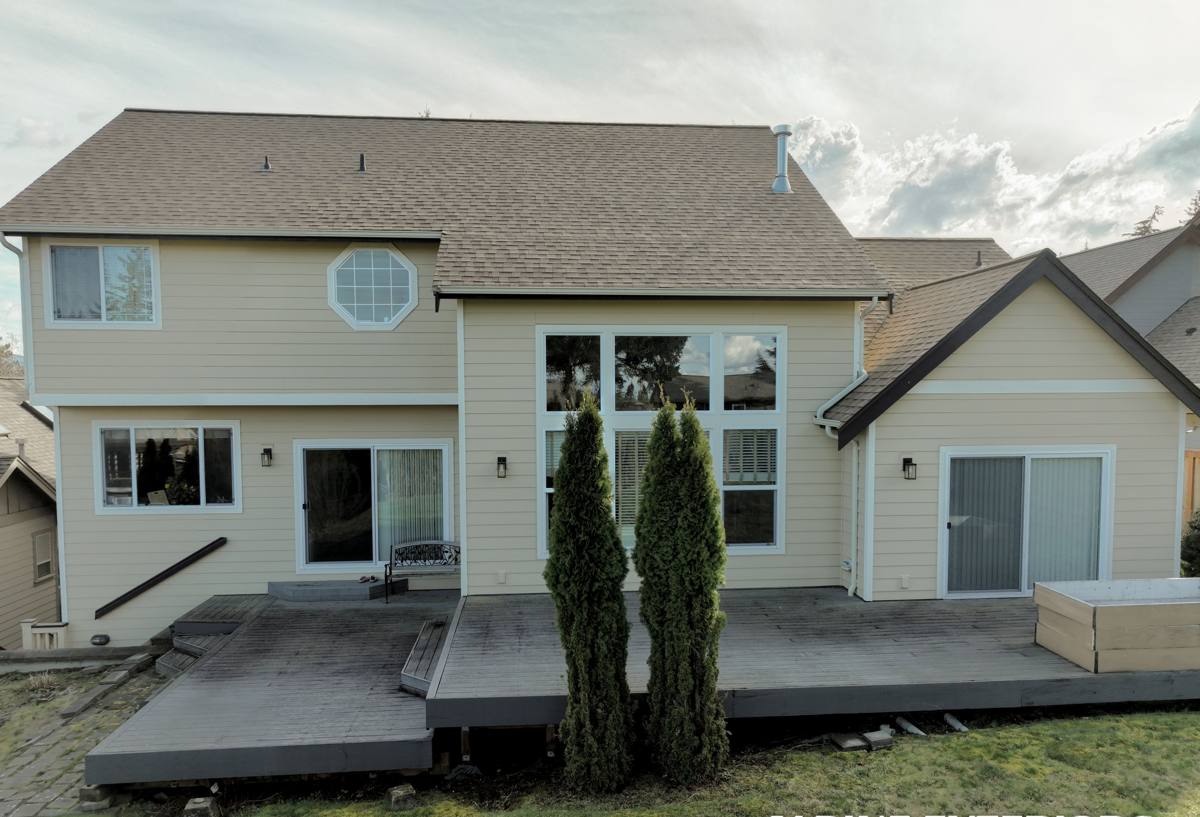
We work on decks throughout King County, and Kent jobs have their own pattern: older ranch and split-level homes with low-clearance decks close to grade, newer builds with taller decks over daylight basements, and a fair number of decks that were never properly vented underneath. Each of those situations changes how a composite deck should be built, not just what material sits on top.
Why the Local Climate Changes the Job
Rain and Standing Moisture
King County gets sustained rain rather than short heavy downpours, which means a deck's substructure spends more time damp than it does actually getting soaked. That's harder on framing than a hard rainstorm, because slow, prolonged moisture is what drives rot in joists and ledger boards. Composite boards themselves shrug this off, but the wood framing underneath them doesn't unless it's protected.
Moss and Algae
Low light, moisture, and mild temperatures are a moss factory. On any deck with partial shade — which describes a lot of Kent yards — moss and algae will colonize a deck surface faster than most homeowners expect, and faster on the north or shaded side of the house. Composite surfaces vary a lot in how they resist this, which is one of the biggest reasons board selection matters more here than in a drier climate.
Salt Air and General Corrosion
Kent isn't waterfront, but King County as a whole sees marine-influenced air moving in off Puget Sound, and that moisture carries enough salinity to accelerate corrosion on fasteners and hardware over years of exposure. It's a slower effect than what you'd see right on the water, but it still means hardware selection isn't a place to cut corners.
What a Correct Composite Deck Build Involves
A composite deck is only as good as what's underneath it. Here's what we treat as non-negotiable on every install:
- Pressure-treated or naturally durable framing lumber, rated for ground contact where the deck sits low
- Joist tape or a flashing membrane on top of every joist, so the composite board's fasteners don't create a path for water into bare wood
- Proper ledger flashing where the deck ties into the house, sealed to shed water away from the wall assembly, not into it
- Stainless steel or coated corrosion-resistant fasteners and hardware throughout — not standard galvanized in areas with prolonged moisture exposure
- Correct joist spacing for the specific composite product (this varies by brand and board profile, and undersized spacing is a common cause of deck flex and premature wear)
- Ventilation and clearance underneath the deck so the structure can actually dry between rain events
- Proper board gapping, since composite expands and contracts with temperature more than people expect
Skipping any one of these doesn't usually show up as a problem in year one. It shows up in year four or five, as soft spots in the framing, fastener staining, or a deck that never quite dries out. We build to hold up over the deck's full service life, not just to look right on install day.
Choosing the Right Composite Board for a Kent Property
Not all composite decking performs the same way in a wet, shaded climate. The differences that matter most for King County homes:
| Factor | Why It Matters Here |
|---|---|
| Capped vs. uncapped composite | A full polymer cap sheds moisture and resists moss/algae growth far better than uncapped boards, which can absorb moisture at the surface over time |
| Surface texture | Deeper wood-grain embossing can trap grime and moisture in shaded areas; a moderate texture is easier to keep clean without going slick when wet |
| Color | Very dark boards get hot in rare summer sun and show pollen/debris less, but also show water spotting differently than lighter tones — worth seeing samples in person |
| Warranty structure | Look closely at what's covered for staining, mold, and fade specifically, not just structural warranty — this is where composite brands differ most |
| Board profile | Grooved-edge boards with hidden fasteners look cleaner but require the correct clip spacing for the specific product to avoid movement over time |
We install a range of reputable composite lines and will walk you through actual samples rather than a catalog page — texture and color read very differently outdoors in Pacific Northwest light than they do indoors.
Composite vs. Wood vs. PVC: An Honest Comparison for This Climate
| Wood | Composite | PVC/Vinyl | |
|---|---|---|---|
| Moisture resistance | Requires regular sealing to prevent rot | Strong; core resists rot, cap resists surface moisture | Excellent; fully synthetic |
| Moss/algae resistance | Poor without frequent cleaning and treatment | Good to very good depending on cap quality | Very good |
| Upfront cost | Lowest | Mid-range | Highest |
| Long-term maintenance | Highest (annual staining/sealing) | Low (periodic washing) | Lowest |
| Appearance over time | Fades and grays without upkeep | Holds color well with a good cap | Holds color very well |
Wood is still a reasonable choice for homeowners who want the lowest upfront cost and don't mind annual maintenance. For most Kent homeowners looking at a deck they won't have to re-seal every year in a climate that doesn't give a deck much drying time, composite is the middle ground that makes sense — full performance without the PVC price jump.
Our Process for a Kent Composite Deck
1. On-Site Evaluation
We look at the existing structure (if there is one), grading and drainage around the deck footprint, sun/shade exposure, and how the deck ties into the house. This tells us what framing work is actually needed versus what can be reused.
2. Product Selection
We bring samples and talk through board options based on your home's exposure — a heavily shaded north-facing deck gets a different recommendation than one that sees full afternoon sun.
3. Framing and Flashing
This is where most of the long-term performance is decided. We build or reinforce the substructure to current standards, flash the ledger properly, and tape every joist before boards go down.
4. Installation
Boards are installed per manufacturer spec for spacing, fastening, and gapping — these specs exist because of exactly the temperature and moisture swings we get here, and they're not optional if you want the warranty to hold up.
5. Walkthrough
We go over basic care — what to hose off, what not to pressure-wash at close range, how to spot early moss buildup — so the deck stays looking right with minimal effort on your end.
Maintenance Checklist for King County Composite Decks
- Sweep debris (leaves, needles, pollen) off the surface regularly, especially under trees
- Rinse or wash the deck a few times a year to prevent moss and algae from establishing, more often in shaded areas
- Keep gutters and downspouts near the deck clear so runoff isn't draining directly onto or under it
- Check underneath periodically for ventilation blockage — stored items or overgrown landscaping can trap moisture
- Inspect fasteners and hardware every year or two for early signs of corrosion or loosening
- Avoid high-pressure washing directly on board surfaces or seams, which can force water where it shouldn't go
Why a Crew That Already Works Kent Makes a Difference
Deck-building fundamentals don't change from town to town, but the details that separate a deck that lasts from one that doesn't — framing choices for a low-clearance ranch home, ledger flashing details for a specific siding type, drainage handling on a flatter Green River Valley lot — come from having actually built decks in these conditions repeatedly. We're not learning King County's climate on your project. We already know how this area's rain pattern, shade, and moisture load treat a deck over time, and we build accordingly from day one rather than finding out the hard way at year three.
If you're ready to talk through options for your Kent property, we're happy to come take a look, walk you through real board samples, and give you a straightforward estimate — no pressure, no upsell script. Reach out using the form below to get started.