 King County
 Decks Built for Kent's Wet Climate
A deck in Kent has a different job than a deck in a dry climate. It's not just a place to put a grill and some chairs — it's a structure that has to shed water for most of the year, resist moss and algae growth in the shoulder seasons, and hold up under repeated wet-dry cycles that loosen fasteners and swell wood fibers over time. King County's long stretch of driving rain, combined with moisture-laden air moving in off the Sound, means decks here age differently than they do almost anywhere else in the country. We build and repair decks around Kent with that reality in mind, not as an afterthought.
This page is about deck building specifically for Kent homes — what the climate demands, what a correctly built deck actually involves, and how we approach the work so it holds up for decades instead of needing attention every couple of years.
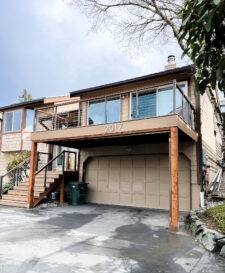
What Kent's Weather Does to a Deck Over Time
Understanding the failure points helps explain why we build the way we do. The issues aren't dramatic — they're slow and cumulative, which is exactly why so many decks look fine right up until they aren't.
Moisture that never fully dries out
Long stretches of overcast, damp weather mean decking boards, ledger boards, and framing members often don't get a real chance to dry between rain events. Wood that stays damp for weeks at a time is where rot starts — usually from the inside of a joist or the underside of a board, invisible until the damage is advanced.
Moss and algae on horizontal surfaces
Any flat, shaded, or north-facing surface in King County will grow moss and algae if it isn't detailed to drain and dry. On a deck, that's not just a slip hazard — moss holds moisture against the wood surface and accelerates surface breakdown, especially on softer woods.
Fastener and connector corrosion
Repeated wet cycles are hard on metal hardware. Ledger flashing, joist hangers, and fasteners that aren't rated for exterior, moisture-heavy exposure will corrode and weaken years before the wood around them fails — which is a hidden structural risk, not just a cosmetic one.
Ledger and house-attachment rot
The single most common serious deck failure point in this region is the ledger board — where the deck attaches to the house. Poor flashing at that joint lets water track behind the siding and into the wall framing, which can go undetected for years.
Choosing the Right Decking Material for This Climate
Every decking material available today can work in King County if it's installed correctly — but each one carries different maintenance obligations and different tolerance for the wet-heavy climate. We walk homeowners through these trade-offs honestly rather than just selling whatever is easiest to install.
| Material | How it handles our climate | Ongoing maintenance | Typical lifespan here |
|---|---|---|---|
| Pressure-treated wood | Good if kept sealed and ventilated underneath; softer wood is more moss-prone | Re-seal or stain every 1-2 years | 15-20 years with upkeep |
| Cedar | Naturally rot-resistant, but still needs finish to control moisture cycling and graying | Clean and re-oil or stain every 1-2 years | 20-25 years with upkeep |
| Composite / capped composite | Doesn't absorb water into the board itself; still needs surface cleaning to prevent moss and mildew film | Periodic cleaning, no staining | 25-30+ years |
| PVC decking | Fully moisture-inert surface; performs well in wet, shaded areas | Occasional washing | 25-30+ years |
Composite and PVC cost more up front, but for shaded, north-facing, or heavily rain-exposed decks — common throughout Kent's residential neighborhoods — the reduced maintenance burden and moisture stability usually make sense. Wood decking still has a place, especially where the homeowner wants a natural look and is willing to keep up a maintenance schedule; we're upfront that skipping that schedule is what shortens a wood deck's life, not the material itself being inadequate.
Structural Basics: Footings, Framing, and Code
The decking surface is what people notice, but the structure underneath is what determines whether the deck is actually safe and long-lasting. In our climate, a few structural details matter more than they would in a drier region.
Footing depth and drainage
Footings need to be set below the frost line and, just as importantly, in soil that drains rather than holds water against the concrete. King County's clay-heavy soils in some areas can trap moisture around footings if drainage isn't accounted for during excavation.
Ledger flashing done right
Correct ledger attachment means proper flashing that directs water away from the house wall, not just a bead of caulk. This is the single detail most responsible for either a deck lasting decades or causing hidden water damage to the home itself.
Joist spacing and hardware rated for wet exposure
We use structural connectors and fasteners rated for exterior, high-moisture exposure — not standard interior-rated hardware — and we follow current King County building code for joist spacing, beam sizing, and railing height and spacing requirements.
Ventilation underneath
Low decks or decks close to grade need enough clearance and, where possible, airflow underneath to let framing dry out between rain events. A deck built low to damp ground with no airflow is one of the more common causes of premature joist rot we see on older Kent homes.
Our Deck Building Process
We follow the same sequence on every project, adjusted for the specific lot, layout, and material choice:
- On-site assessment — we look at the house attachment point, grade, drainage, sun/shade exposure, and existing structure if this is a rebuild or replacement.
- Design and material selection — sizing, layout, and a material recommendation based on how that specific area of the yard actually drains and dries.
- Permitting — we handle the permit application and inspection scheduling required for King County or the City of Kent, depending on the property's jurisdiction.
- Demolition (if replacing an existing deck) — including checking the ledger and wall framing behind it for hidden moisture damage before rebuilding.
- Footings and framing — footings set to code depth, structural framing with wet-exposure-rated hardware, and ledger flashing installed correctly the first time.
- Decking, railing, and stairs — installed per manufacturer spec for composite/PVC products, or with proper fastening and gapping for wood.
- Final walkthrough and inspection — confirming the deck passes required inspections and that the homeowner understands the maintenance schedule for whatever material was installed.
Maintenance Realities by Material
Whatever material a Kent homeowner chooses, a little seasonal attention prevents most of the moisture and moss issues this climate causes. We give every client a simple checklist, not a sales pitch for a maintenance contract:
- Sweep debris and standing leaves off the deck surface regularly, especially in fall — trapped leaves hold moisture against boards.
- Clean moss and algae film off the surface at least once a year, before it gets thick enough to hold water.
- Check and clear gaps between boards so water can drain through rather than pooling.
- Inspect ledger flashing and the house attachment point yearly for any sign of water tracking or staining.
- Re-seal or re-stain wood decking on the schedule appropriate to the product — don't wait until it visibly fails.
- Check railing and stair connections annually; wet-dry cycling can loosen fasteners over a few seasons.
Permits and Local Considerations
Deck permitting requirements depend on the deck's height, size, and attachment to the house, and whether the property falls under City of Kent or unincorporated King County jurisdiction. Most elevated decks and any deck attached to the house structurally require a permit and inspection. We handle that process as part of the job rather than leaving it to the homeowner, and we build to the code requirements that apply — footing depth, guardrail height, stair geometry, and structural connections — so the finished deck passes inspection without rework.
Repair vs. Rebuild — When an Older Deck Isn't Worth Saving
Not every deck problem means starting over, but in this climate, rot and hardware corrosion tend to be more extensive than they look from the surface. Before quoting a repair, we check the parts of the deck that actually determine its remaining life:
- Ledger board and the wall framing directly behind it — if there's rot here, it's usually more efficient to rebuild that section properly than patch around it.
- Footings — cracked, heaved, or undersized footings are a rebuild issue, not a repair issue.
- Main structural beams and posts — surface wear on decking boards is cosmetic; rot in a beam or post is structural.
- Overall age relative to material — a wood deck past 20 years with no maintenance history usually has more going on underneath than a board-by-board repair can fix economically.
When a repair genuinely makes sense, we do the repair. When the underlying structure is compromised, we say so plainly and explain why, rather than patching a deck that will fail again in a season or two.
Why Hire a Crew That Already Works in Kent
A deck built by a crew that hasn't worked much in King County's climate can still look fine on installation day — the problems this region causes show up months or years later, in the form of moss buildup, a soft spot near the ledger, or corroded hardware nobody thought to spec for wet exposure. Working around Kent regularly means we've already seen how each material, footing approach, and flashing detail performs after a few full wet seasons, not just how it looks fresh out of the truck. That experience shapes every recommendation we make, from material choice to how low a deck can sit to grade before drainage becomes a problem.
If you're planning a new deck, replacing an aging one, or just want an honest read on whether yours needs repair or replacement, we're glad to take a look. Reach out for a free, no-pressure estimate using the form below — we'll walk the site, talk through material and design options suited to your yard, and give you a straight answer on what the job actually involves.