 King County
 Storm Damage Roof Repair in Kent, Washington
Kent sits low in the Green River Valley, close enough to Puget Sound to catch salt-laden air off the water and open enough to take the full force of winter windstorms rolling through from the south and west. That combination — salt air, driving rain, and a moss season that can run eight or nine months out of the year — is hard on a roof in ways that homeowners in drier climates never have to think about. When a storm comes through and does damage, the repair needs to account for all of that, not just patch the hole and move on.
We repair storm-damaged roofs across Kent and the surrounding King County area, and we've learned that a roof here rarely fails from one single dramatic event. Usually a storm exposes weakness that was already building — moss holding moisture against shingles, granule loss from years of wind-driven rain, flashing that's been slowly working loose. The storm is the trigger. Our job is to fix both the damage and the underlying vulnerability so the next storm doesn't do the same thing again.
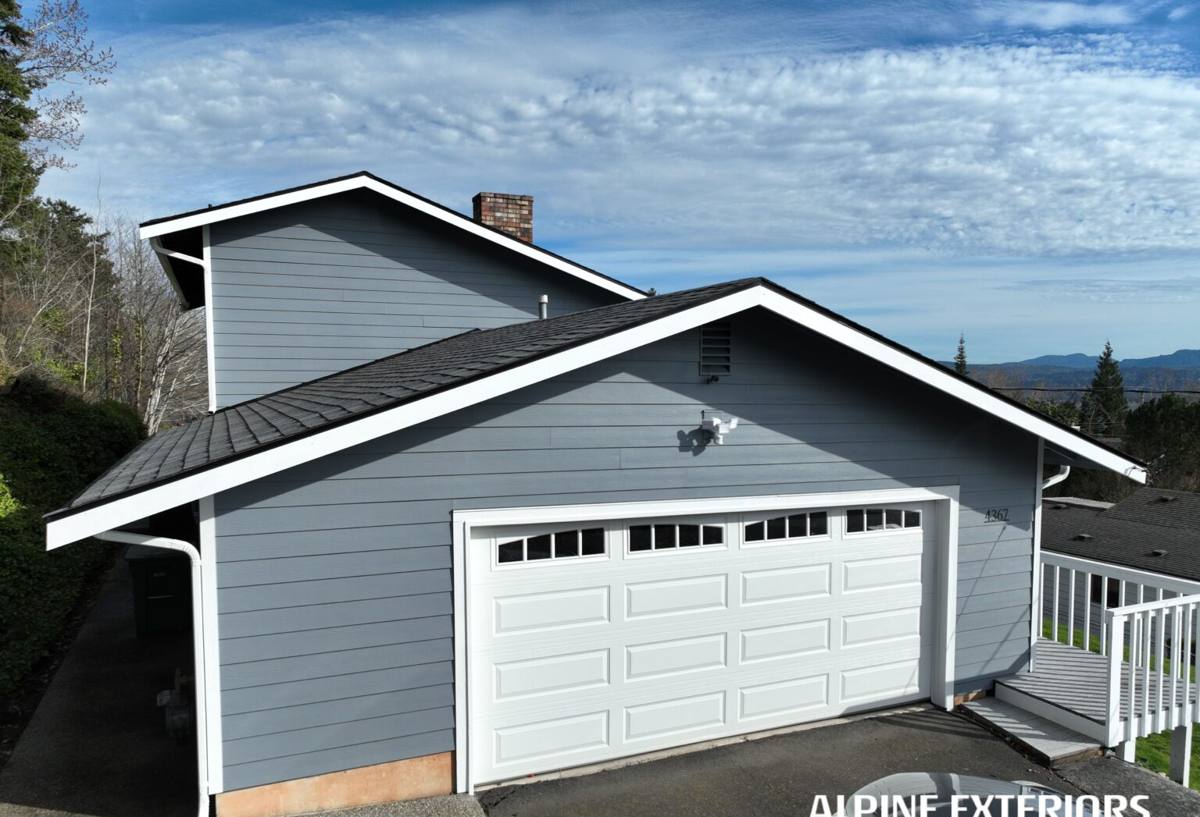
What Kent's Climate Does to a Roof Over Time
Salt Air and Moisture
Being close to Puget Sound means the air here carries more salt and moisture than an inland location would. Salt air accelerates corrosion on exposed metal — flashing, fasteners, gutter hardware — and it keeps roofing materials damp longer after a rain event. That extended damp period is exactly what moss and algae need to take hold.
Driving Rain and Wind
King County's winter storms don't just drop a lot of rain, they push it sideways. Wind-driven rain finds any gap in flashing, any lifted shingle tab, any point where a nail has backed out slightly, and forces water up and under roofing material instead of letting it run off the surface the way it's designed to. This is why storm damage often shows up as a leak somewhere well away from where the actual opening is — water travels along the roof deck before it finds a way into the attic or ceiling.
Moss and Extended Wet Season
Moss is probably the single biggest long-term threat to roofs in this part of King County. It thrives in shade, on north-facing slopes, and anywhere debris collects, and it doesn't just sit on top of shingles — its root structure works down into the granule layer and lifts material, creating small gaps that wind and rain exploit during a storm. A roof with an established moss problem is far more likely to sustain real damage in a windstorm than a clean one, because the moss has already compromised the shingle's grip and seal.
What Actually Counts as Storm Damage
Homeowners often assume storm damage means a visibly missing section of roof, but most of what we get called out for in Kent is less obvious than that. Recognizing it early is the difference between a straightforward repair and a much bigger problem once water has had time to work its way into the structure.
- Shingles that are cracked, curled, or torn but still in place — easy to miss from the ground
- Lifted or creased shingle tabs where wind got underneath the edge
- Bent, dented, or separated flashing around chimneys, vents, and roof valleys
- Granule loss showing up as bare, dark patches or granules collecting in gutters
- Fascia or soffit damage where wind pried at roof edges
- Debris impact damage from tree limbs, even without a full puncture
- New or worsening interior water stains after a windstorm
- Gutters pulled loose or downspouts disconnected, which redirects water back toward the roofline
Any one of these, left alone through another storm cycle, tends to get worse rather than better. Wind doesn't need much of an opening to widen it.
Our Storm Damage Repair Process
1. Immediate Assessment and Tarping
When there's active leaking or an exposed section of roof deck, the first priority is stopping water intrusion, not doing a full repair on the spot. We assess what's safe to walk and tarp any exposed area to protect the structure while we plan the actual repair. This isn't the fix — it's what keeps a bad situation from becoming a much more expensive one in the days that follow.
2. Full Roof Inspection, Not Just the Damaged Spot
We don't stop at the obvious damage. Because wind-driven rain can push water well past the entry point, and because a storm often reveals pre-existing weak spots elsewhere on the roof, we check the full roof surface, flashing points, and attic if accessible. A repair that only addresses the visible damage and misses a second compromised area isn't a complete repair.
3. Honest Scope and Written Estimate
We explain what we found, what needs to happen, and why — including whether a section can be repaired as-is or needs to be replaced to properly tie into the surrounding roof. You get this in writing before any work starts.
4. The Repair Itself
Work is matched to the existing roofing material where possible, with proper underlayment and flashing detail at every repaired section — this is where a lot of storm damage repairs go wrong elsewhere, when a patch is set on top of old material without addressing what let water in to begin with.
5. Cleanup and Final Check
We clear debris, check gutters and downspouts for storm-related damage or blockages, and do a final walk of the repair before calling it done.
Repair or Replace? How We Make That Call
Not every storm-damaged roof needs to come off. A lot of the time, a targeted repair is the right, honest answer. But there are cases where repairing a small section on an otherwise aging or moss-compromised roof just delays a bigger cost. We walk through this with you directly rather than defaulting to either extreme.
| Factor | Favors Repair | Favors Replacement |
|---|---|---|
| Age of roof | Under 12–15 years | Approaching or past expected lifespan |
| Extent of damage | Isolated to one section or slope | Spread across multiple areas |
| Moss/algae condition | Minor, recently treated | Long-established, granule loss underneath |
| Underlying deck condition | Solid, no rot found | Soft spots or water staining on decking |
| Matching materials | Shingle style/color still available | Discontinued, mismatch would be visible |
| Storm frequency exposure | Repair addresses the actual weak point | Same failure likely to recur elsewhere soon |
Materials and Methods We Use for This Climate
What goes into a storm repair matters as much as the labor. In a climate like Kent's, we pay particular attention to:
- Underlayment: a quality synthetic or self-adhering underlayment at repaired sections, since it holds up better against the extended moisture exposure common here than older felt products
- Ice-and-water shield at vulnerable points: valleys, eaves, and around penetrations, where wind-driven rain is most likely to force water backward
- Corrosion-resistant flashing and fasteners: salt air accelerates rust on standard-grade metal, so we use materials rated for coastal-adjacent exposure
- Proper shingle sealing and nailing pattern: a major cause of repeat wind damage is shingles that were never correctly fastened or sealed to begin with
We're straightforward about tradeoffs when they exist — for example, some lower-maintenance roofing products carry moisture-behavior or installation sensitivities that make them a poor fit for a heavy-moss, high-moisture area like Kent, and we'll tell you that directly rather than sell against our own judgment.
Insurance Claims for Storm Damage
Many storm repairs in King County are covered, at least in part, by homeowners insurance, depending on the cause and your policy. We provide clear photo documentation and a written scope of damage that you can submit with a claim. We're not a public adjuster and won't promise a specific claim outcome, but we make sure the documentation reflects what we actually found on your roof — not an inflated or padded scope designed to maximize a payout, which is a practice worth watching for with any contractor who shows up right after a storm.
Why It Matters That We Already Work in Kent
After a significant windstorm, it's common to see out-of-area crews going door to door offering fast repairs — sometimes called storm chasers. They're often gone before a repair shows its weaknesses, with no local presence to come back to if something wasn't done right. A crew that already works in Kent and the surrounding King County area has a reason to stand behind the work: we're not leaving town, and our reputation here depends on repairs that actually hold up through the next storm season, not just look finished on the day we leave.
Working locally also means we already understand how the Green River Valley's mix of exposure, tree cover, and moisture behaves on real roofs nearby, rather than applying a generic approach built for a different climate.
Preventing the Next Storm From Doing the Same Damage
A storm repair is a good moment to address the conditions that made the roof vulnerable in the first place. A few things worth doing at the same time as a repair, or shortly after:
Post-Storm Roof Check
- Look for granules collecting in gutters after any significant wind event
- Check for daylight or staining in the attic after heavy rain
- Have moss addressed before it re-establishes, not after it's spread
- Confirm gutters and downspouts are clear and properly attached before the next wet season
- Trim back branches that overhang the roof, since impact damage and shade-driven moss growth both start here
None of this prevents every storm from causing any damage at all — that's not realistic in this climate — but it meaningfully reduces how much damage a given storm causes and how often you need repairs.
Get a Free Storm Damage Assessment
If a recent storm left you with a leak, missing shingles, or damage you're not sure how serious it is, we're glad to come take a look. The estimate is free and there's no pressure to move forward — we'll tell you honestly what we find and what it would take to fix it right. Use the form below to request a free, no-obligation estimate.