 King County
 Why Kirkland Roofs Wear Differently Than You'd Expect
Kirkland sits close to Lake Washington, in a stretch of King County where tree cover, lake moisture, and the broader Puget Sound marine climate all combine to put real, ongoing stress on a roof. Homeowners who move here from drier climates are often surprised at how fast a roof can start showing its age — not because the shingles are bad, but because this region asks more of a roof than most parts of the country do. Salt-laden marine air moving through the corridor, long stretches of driving rain, and a moss season that can run eight or nine months out of the year all work on asphalt shingles in ways that don't show up in a manufacturer's spec sheet.
None of that means asphalt shingle roofing is a poor choice for Kirkland — it's still the most practical, cost-effective option for the vast majority of homes here. It means the installation has to account for local conditions from the start, not just meet a generic code minimum. That's the difference between a roof that looks fine for two years and one that actually performs for its full service life.
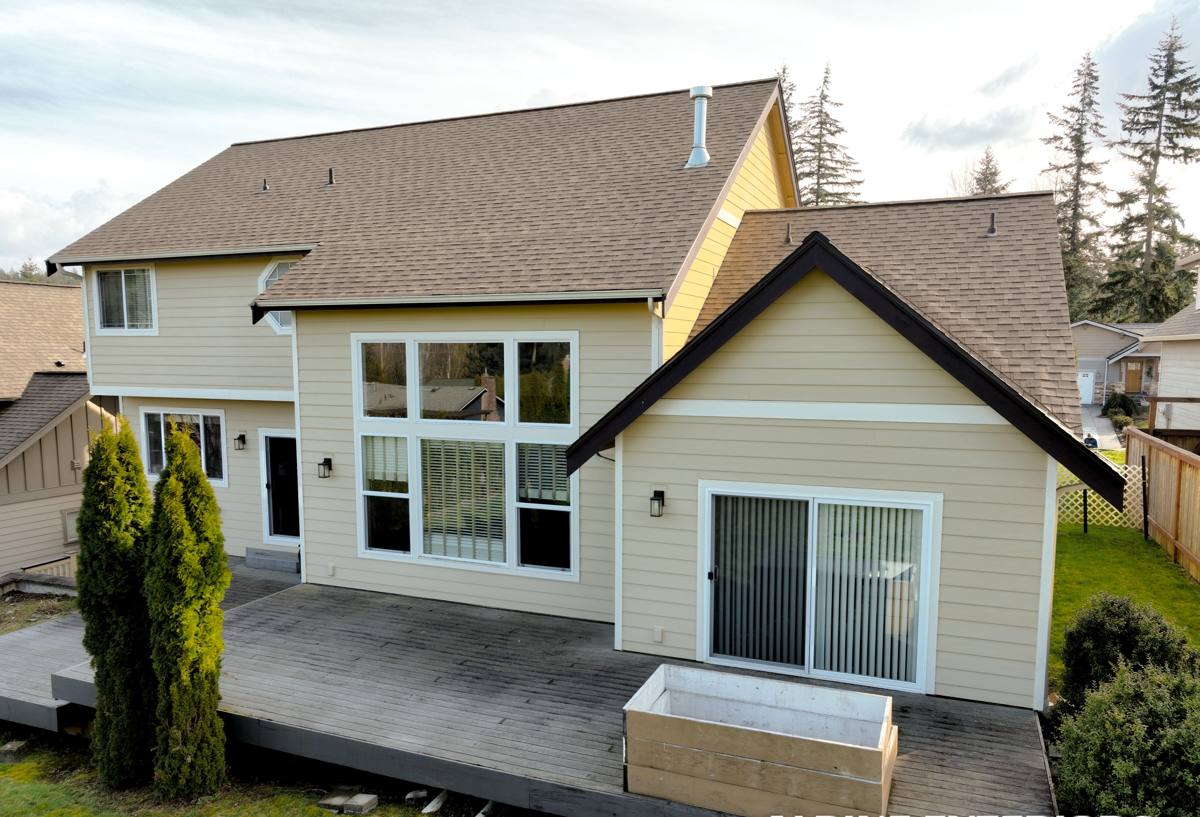
What "Correct" Actually Means for a Shingle Roof Here
A shingle roof is a system, not a single product. The shingles themselves get the attention, but in this climate the components underneath and around them usually determine how long the roof actually lasts.
Underlayment
In a region with this much sustained rainfall, a synthetic or self-adhered underlayment matters more than it does in drier climates. It's the backup layer that keeps water out if wind-driven rain ever gets past the shingles, and it buys time during the install itself if weather turns before the roof is dried in.
Flashing
Valleys, chimneys, skylights, and wall-to-roof transitions are where the majority of roof leaks in King County actually start — not in the open field of shingles. Flashing needs to be properly lapped, sealed, and tied into the underlayment, not just caulked over old metal.
Ventilation
Balanced intake and exhaust ventilation keeps the attic temperature and moisture level stable. Get this wrong and you shorten shingle life from the underside, regardless of how good the shingle itself is. We cover this in more depth below because it's one of the most commonly skipped steps on quick reroofs.
Fastening
Nail count, placement, and pattern affect wind resistance and warranty validity. Manufacturer specs exist for a reason, and cutting corners here is one of the most common causes of early shingle blow-off during winter storms.
Signs Your Kirkland Roof Needs Attention
Most roof problems in this area develop slowly, hidden by tree cover or simply because nobody looks up. A few minutes of observation from the ground can catch problems early, before they turn into interior damage.
- Granules collecting in gutters or at downspout discharge points
- Shingles that look cupped, curled at the edges, or visibly darker in patches
- Moss or algae streaking, especially on north-facing slopes that stay shaded most of the day
- Soft or spongy spots noticeable when walking the roof (a job for a professional, not a DIY check)
- Daylight visible through the attic roof deck, or damp insulation near the eaves
- Rust streaks or gaps around flashing at chimneys, vents, and skylights
- Ceiling stains or peeling paint on an interior wall below an exterior wall line
Any one of these on its own isn't necessarily an emergency, but they're all worth a professional look rather than a wait-and-see approach — moisture problems in this climate rarely improve on their own.
Moss: The Slow Damage Nobody Notices Until It's Expensive
Moss is often treated as a cosmetic nuisance, but it's more than that. Moss holds moisture against the shingle surface long after the rest of the roof has dried, which accelerates granule loss and can lift shingle edges as it grows. Left unaddressed through a full moss season, it can shorten the effective life of an otherwise sound roof by years.
Zinc or copper control strips near the ridge, installed at the time of a reroof, offer ongoing moss suppression without chemical treatments. On existing roofs, gentle removal (never pressure washing, which strips granules) combined with a light, roof-safe treatment is the safer path. We're honest with homeowners about which of these options fits their specific roof rather than upselling a strip system where it won't do much good — a heavily shaded, mature-tree lot needs a different plan than an open, sun-exposed roof.
Choosing the Right Shingle for This Climate
Not every asphalt shingle line performs the same way once it's dealing with sustained Pacific Northwest moisture. The table below outlines the practical differences homeowners should weigh, in plain terms.
| Shingle Type | Typical Lifespan | Best Fit For | Trade-offs |
|---|---|---|---|
| 3-Tab (economy) | 15-20 years | Budget-focused reroofs, rentals | Lower wind rating, less algae resistance over time |
| Architectural / Dimensional | 25-30 years | Most Kirkland homes | Higher upfront cost, but far better wind and moisture performance |
| Algae-Resistant (AR) coating | Same as base shingle | Shaded lots, north-facing slopes | Slightly higher cost; noticeably slower streaking in this climate |
| Impact-Resistant (Class 4) | 25-30+ years | Homes wanting insurance premium credits | Highest material cost; not all insurers offer the same discount |
For most homes in this area, an architectural shingle with algae-resistant granules is the practical middle ground — it costs more up front than 3-tab but holds up noticeably better against the moss and moisture cycle that defines a King County roof's real working life.
Our Process for Kirkland Roof Projects
1. On-Site Evaluation
We walk the roof, check the attic for ventilation and moisture signs, and look at flashing details before quoting anything. A roof estimate based only on a satellite photo misses the details that actually drive cost and scope.
2. Clear, Written Scope
You get a written breakdown of what's being replaced, what underlayment and ventilation changes are included, and what's not part of the job — no vague "and more" line items.
3. Tear-Off and Deck Inspection
Full tear-off lets us see the actual condition of the roof deck. Soft or rotted sheathing gets flagged and priced before it's covered up, not discovered — or ignored — after the fact.
4. Install to Manufacturer Spec
Correct nail pattern, proper flashing integration, and balanced ventilation, done in a weather window that lets materials perform the way they're designed to.
5. Cleanup and Walkthrough
Magnetic sweep for nails, debris hauled off, and a final walkthrough so you know exactly what was done and what warranty coverage applies.
Repair or Full Replacement?
Not every roof problem in Kirkland calls for a full reroof. The right call usually comes down to a few practical factors.
| Factor | Leans Toward Repair | Leans Toward Replacement |
|---|---|---|
| Roof age | Under 12-15 years | Approaching or past manufacturer life expectancy |
| Damage location | Isolated to one slope or flashing point | Spread across multiple slopes |
| Deck condition | Solid, no soft spots | Soft sheathing found in more than one area |
| Granule loss | Minor, localized | Widespread, bald patches visible |
| Insurance claim involved | Case-by-case | Often replacement if storm damage is documented |
We'll tell you honestly which side of that line your roof falls on. A well-timed repair can add several good years to a roof that isn't ready for full replacement, and there's no reason to push a bigger job than the roof actually needs.
Why a Crew That Already Works Kirkland Matters
Roofing crews that work across all of King County — rather than parachuting in from out of the region — bring a few real advantages. They already know how local jurisdictions handle permitting and inspections, they've seen how tree-shaded lots behave differently than open ones a few miles away, and they're not guessing at how a given shingle line holds up after a few Puget Sound winters — they've watched it happen on other roofs nearby. That local track record shows up in fewer callbacks and fewer surprises mid-project, not just in a sales pitch.
After the Install: Keeping It That Way
A correctly installed shingle roof still benefits from basic seasonal upkeep in this climate:
- Clear gutters and downspouts before the fall rains build up
- Trim back branches that keep a slope shaded and slow to dry
- Do a visual check after major windstorms for lifted or missing shingles
- Address moss regrowth early rather than letting it establish over a full season
- Have flashing points checked periodically, especially around chimneys and skylights
None of this requires a service contract — just a bit of attention a couple of times a year, which goes a long way in this climate.
If your Kirkland roof is showing wear, overdue for a look, or you're just weighing repair versus replacement, we're glad to walk it with you and give you a straight answer. Use the form below to request a free, no-pressure estimate.