 King County
 Kirkland sits right where Lake Washington humidity meets the broader Puget Sound weather pattern — long wet winters, driving rain that comes in sideways off the water, and a moss season that can stretch from October well into spring. That combination is hard on exterior materials that weren't built for it. Fiber cement siding, specifically James Hardie fiber cement, is the product we install on Kirkland homes because it holds up to exactly this kind of climate without the maintenance headaches that come with wood, vinyl, or lower-grade composite products.
What Kirkland's Climate Actually Does to Siding
Most homeowners don't think about siding until something goes wrong — a soft spot near a downspout, green streaks creeping up from the foundation, or paint that's peeling faster than it should. In Kirkland, those problems usually trace back to the same root cause: prolonged moisture exposure combined with limited drying time between storms.
The Puget Sound region moves salt-tinged marine air inland on a regular basis, and Lake Washington adds its own layer of ambient humidity on top of that. Siding here rarely gets a long, dry stretch to fully shed moisture the way it would in a drier climate. Add in the shade from mature evergreens common on King County lots, and you get ideal conditions for moss, algae, and mildew to take hold on anything porous or moisture-sensitive.
Wood-based products absorb that moisture and swell, crack, or rot over time, even with regular painting. Vinyl doesn't rot, but it can warp, fade, and doesn't stop moss from colonizing seams and low spots. Fiber cement, done right, resists all of it — it doesn't absorb water the way wood does, and its factory finish doesn't chalk or fade the way field-applied paint does.
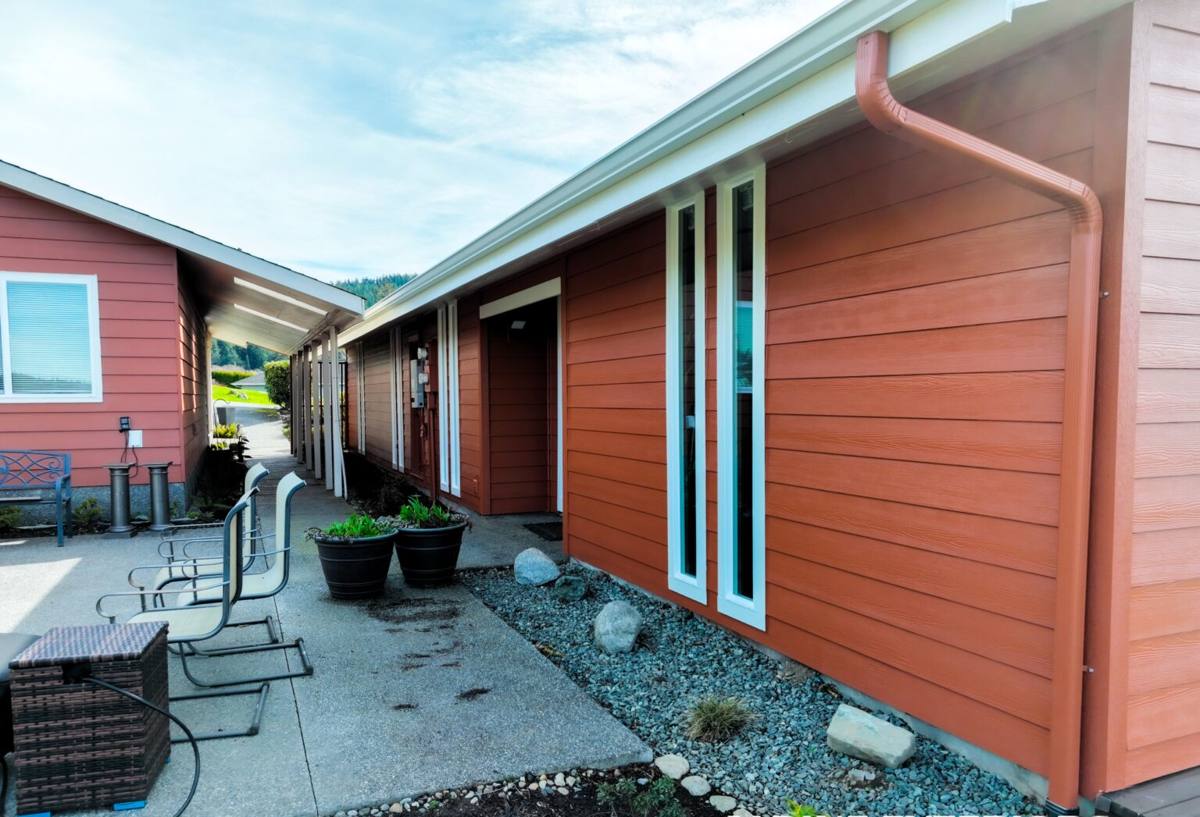
Why We Install Only James Hardie Fiber Cement
There are other fiber cement brands on the market, and there are wood-composite alternatives that get marketed as comparable. We install James Hardie exclusively because, in our experience, the difference shows up over years, not on install day.
- Non-combustible core — fiber cement doesn't feed a fire the way wood siding or wood-based composite products can.
- ColorPlus factory finish — baked-on color that resists fading and chipping far better than siding painted on-site, which matters when a home faces years of driving rain and UV exposure.
- Climate-engineered HZ product lines — Hardie manufactures different formulations for different moisture zones, and Western Washington falls into the HZ5 or HZ10 zone depending on the product line, meaning the material itself is built for exactly this kind of weather.
- Transferable warranty backing — a real manufacturer warranty that follows the home, not just the original owner, which matters at resale in a market like Kirkland's.
We're not going to pretend every other siding product is worthless — vinyl is inexpensive and low-maintenance in its own way, and cedar has a look some homeowners love. But we've made a professional call to standardize on one product we can install correctly, warranty confidently, and stand behind for decades. That's James Hardie.
What a Correct Fiber Cement Installation Actually Involves
Fiber cement siding fails early almost exclusively because of installation mistakes, not because the material itself is weak. This is a heavier, more rigid product than vinyl, and it has specific manufacturer requirements that get skipped by crews who are used to faster, more forgiving materials.
The details that matter most in a wet climate
- Proper weather-resistive barrier and rainscreen gap — a drainage plane behind the siding lets any moisture that gets past the surface drain and dry out instead of sitting against the sheathing.
- Correct flashing at every penetration — windows, doors, hose bibs, light fixtures, and vents all need step flashing or properly lapped flashing tape, not just caulk.
- Manufacturer-specified fastener placement — Hardie has specific nailing patterns and clearances; get them wrong and you create stress points that crack the board over time.
- Correct board gaps and clearances — siding needs to sit above grade, above roof lines, and away from decks with the clearances Hardie specifies, so water doesn't wick up into the bottom edge.
- Caulking only where Hardie specifies it — over-caulking traps moisture; under-caulking lets it in. Both are common mistakes.
None of this is exotic. It's just detail work that takes time and experience, and it's the difference between siding that looks good for two years and siding that performs for thirty.
Signs a Kirkland Home Is Due for Fiber Cement Siding
You don't need to wait for visible failure to start planning a siding project, but there are clear signals worth acting on:
- Green or black staining that returns shortly after pressure washing, especially on north-facing walls or under eaves
- Paint that's peeling, bubbling, or chalking well before its expected repaint interval
- Soft or spongy spots when you press on wood siding, particularly near the bottom courses or around windows
- Visible gaps, warping, or buckling in existing siding panels or lap boards
- Rising heating bills that suggest the wall assembly behind the siding isn't performing as insulation anymore
- Siding that's simply past its realistic service life for the material it's made from
How Our Process Works
1. On-site inspection and assessment
We walk the exterior, check for moisture damage behind the existing siding where accessible, and look at trim, flashing, and roofline details that affect how the new siding needs to be detailed.
2. Product and line selection
We talk through HardiePlank lap siding, HardiePanel for modern or accent applications, and trim options, matched to the home's style and to what performs best given sun exposure, shade, and moisture patterns on that specific lot.
3. Tear-off and prep
Old siding comes off, sheathing gets inspected and repaired if needed, and a proper weather-resistive barrier and drainage plane go on before a single piece of Hardie touches the wall.
4. Installation to manufacturer spec
Fastening, flashing, gapping, and caulking are done to Hardie's published installation requirements — not shortcuts that happen to look fine on install day.
5. Final walkthrough
We go over the finished work with the homeowner, cover basic care, and make sure everything matches what was agreed to before we call the job done.
Fiber Cement vs. Other Siding Options for a Kirkland Home
| Factor | James Hardie Fiber Cement | Vinyl Siding | Wood / Composite (LP-style) |
|---|---|---|---|
| Moisture resistance in PNW climate | Excellent — engineered HZ formulation | Good, but seams can trap moisture | Poor to fair — absorbs water, prone to swelling |
| Moss and algae resistance | Strong; factory finish resists staining | Moderate; moss can colonize seams and J-channels | Weak; porous surface holds moisture that feeds growth |
| Fire resistance | Non-combustible core | Combustible | Combustible |
| Finish longevity | Factory ColorPlus finish, resists fading/chipping | Color molded in, can fade over time | Field-painted; repaint every 5-8 years typical |
| Typical service life | 30+ years when installed to spec | 20-30 years | 10-20 years depending on exposure |
| Warranty structure | Manufacturer warranty, transferable | Manufacturer warranty, terms vary widely | Varies by manufacturer, often shorter |
This isn't to say vinyl or wood-composite products have no place — homeowners weigh budget, style, and priorities differently. It's simply why, when we're the ones putting siding on a Kirkland home and standing behind the work, fiber cement is what we recommend and what we install.
Why It Matters to Hire a Crew That Already Works in Kirkland
Siding installation isn't one-size-fits-all, even within King County. A crew that regularly works Kirkland and the surrounding Eastside communities already understands local permitting expectations, the moisture patterns tied to lots near the lake versus higher, more exposed sites, and the kind of architectural styles common in the area — from mid-century ramblers to newer construction with more complex rooflines and trim details.
That local familiarity translates into fewer surprises during the job: knowing which details tend to need extra attention on homes in this specific climate, understanding how HOA guidelines or city permitting typically play out here, and having a realistic sense of scheduling around the wet season rather than promising timelines that don't hold up against Pacific Northwest weather.
Ongoing care in a wet climate
Fiber cement is low-maintenance compared to wood, but "low-maintenance" doesn't mean "no maintenance." A short annual routine keeps it performing the way it's designed to:
- Rinse siding gently once or twice a year to keep moss spores and organic buildup from taking hold, especially on shaded or north-facing walls
- Keep gutters and downspouts clear so water isn't running down or pooling against siding
- Trim back vegetation and tree limbs that keep siding shaded and damp longer than necessary
- Check caulking at trim, window, and door joints every couple of years and touch up as needed
- Address any impact damage or chips promptly so the water-resistive layer underneath stays protected
Ready to Talk About Your Home
If your Kirkland home's siding is showing its age, or you're planning ahead before the next wet season sets in, we're happy to take a look and walk you through what a correct James Hardie installation would involve for your specific house. Fill out the form below for a free, no-pressure estimate.