 King County
 Why Siding Installation Deserves Extra Attention in Kirkland
Kirkland homes sit inside the broader Puget Sound climate system, and that system is tough on exterior materials. Marine air moves through the region most of the year, driving rain arrives sideways more often than straight down, and the wet, shaded months of fall through spring create a long moss and mildew season that many homeowners in drier climates never have to think about. Siding here isn't just cosmetic — it's the first line of defense against moisture intrusion that, left unchecked, works its way into sheathing, framing, and insulation.
That means the material you choose and the way it's installed matter more in King County than they would in a dry inland climate. A siding job that looks fine on day one but wasn't detailed correctly for wind-driven rain and sustained damp conditions can start showing problems within a few wet seasons. Installation quality and product choice both carry real weight here.
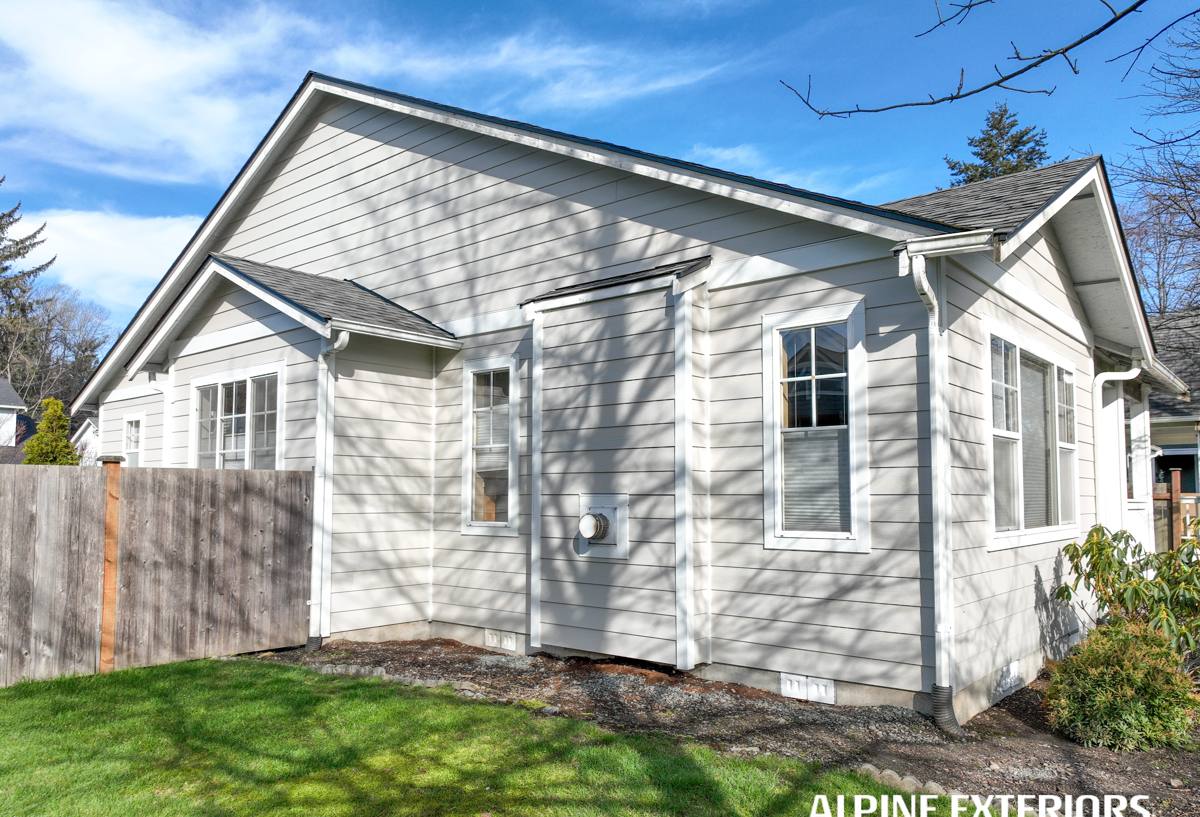
What Kirkland's Climate Actually Does to Siding
Moisture Load
Rain in this region doesn't fall straight down and drain away — it drives horizontally against walls during storms and lingers as fine mist and fog the rest of the time. Siding, trim, and the water-resistive barrier behind it need to shed that water and let any moisture that does get behind the cladding dry out, rather than trap it.
Moss, Algae, and Organic Growth
Long stretches of overcast, damp weather are exactly what moss and algae need to establish themselves on north-facing walls, under eaves, and anywhere sun exposure is limited. Porous or organic siding materials give these growths something to hold onto; a dense, factory-finished material gives them much less to work with.
Wet-Dry Cycling
Even in a mild climate, siding goes through repeated cycles of getting wet and drying out. Materials that absorb water and swell, then dry and shrink, are more prone to warping, cracking, and finish failure over time than materials engineered to resist moisture absorption in the first place.
Why We Install Only James Hardie Fiber Cement
We made a deliberate decision to install James Hardie fiber cement siding exclusively, and we don't install vinyl, LP SmartSide, primed wood, cedar, or other fiber cement brands. That's not a marketing position — it's a standard we hold because of what we've seen matter most in this climate over time.
- Non-combustible material — fiber cement doesn't contribute fuel to a fire the way wood-based products can.
- Engineered for moisture — Hardie's HZ5 product line is specifically formulated for the Pacific Northwest's wet, cool climate, which is the exact set of conditions Kirkland deals with.
- Factory-applied ColorPlus finish — the finish is baked on in a controlled factory environment rather than field-applied, which gives more consistent coverage and better resistance to fading and peeling than site-applied paint.
- Dimensional stability — fiber cement doesn't swell and shrink with moisture the way wood-based siding can, which matters through Kirkland's repeated wet-dry cycles.
- Warranty structure — Hardie backs its siding with a strong, transferable limited warranty, which also protects resale value if you sell the home.
We're not going to claim the products we don't install are without merit — vinyl is inexpensive and low-maintenance in mild climates, and cedar has a look some homeowners genuinely prefer. But when we weigh long-term performance in this specific climate against installation sensitivity, maintenance burden, and moisture behavior, fiber cement from a manufacturer that engineers specifically for our region is what we're willing to put our name behind.
What Correct Siding Installation Actually Involves
Fiber cement siding is only as good as the installation behind it. A product rated for Pacific Northwest conditions can still fail early if it's installed wrong. Correct installation includes:
- Removing old siding and inspecting the sheathing underneath for rot, soft spots, or existing moisture damage before anything new goes up.
- Installing or repairing the water-resistive barrier (house wrap) so it's continuous and properly lapped, shingle-style, to shed water downward.
- Flashing every penetration — windows, doors, hose bibs, light fixtures, vents — so water is directed out and away from the wall assembly, not into it.
- Maintaining proper clearance between the bottom of the siding and grade, decks, patios, and roof lines so splash-back and standing water don't sit against the material.
- Using the fastener spacing, nailing pattern, and gap tolerances James Hardie specifies — this is what keeps the manufacturer's warranty valid.
- Caulking and sealing joints correctly, with attention to which joints should be sealed and which should be left to drain and vent.
Skipping or rushing any one of these steps is how a siding job that looks good at installation ends up with hidden moisture problems two or three winters later.
Our Installation Process
When we install Hardie siding on a Kirkland home, the job generally moves through the following stages:
- On-site assessment — we look at your existing siding, sheathing condition, trim, and any trouble spots (north-facing walls, areas with limited sun, spots showing past moss or water staining).
- Product and color selection — choosing the right Hardie line and profile for your home's style and exposure, plus a ColorPlus finish or field-paint option.
- Tear-off and substrate check — removing old material and repairing any damaged sheathing before house wrap goes on.
- Weather barrier and flashing — installing house wrap and flashing details around every penetration.
- Siding installation — installed to Hardie's fastening and clearance specifications, panel by panel, board by board.
- Trim, caulking, and final detailing — finishing corners, trim boards, and joints.
- Final walkthrough — reviewing the completed job with you before we consider it done.
Signs a Kirkland Home Needs New Siding
Not every siding issue is obvious from the street. Common signs it's time for a closer look include:
- Visible moss or algae buildup that keeps returning after cleaning
- Soft spots, bubbling, or warping, especially on shaded or north-facing walls
- Peeling or chalky paint that no longer holds a fresh coat
- Gaps, cracks, or separation at seams and corners
- Rising energy bills that suggest the wall assembly is no longer performing as insulation
- Musty smells or visible staining on interior walls near exterior corners
Cost Factors for Siding Installation
Every home is different, and we'll only give you real numbers after seeing your project in person, but the table below outlines the main factors that influence cost on a siding installation project.
| Factor | Why It Affects Cost |
|---|---|
| Home size and wall complexity | More square footage and more corners, dormers, and trim details mean more material and labor time. |
| Sheathing condition | Rot or moisture damage found during tear-off requires repair before new siding can go on. |
| Product line and profile | Lap siding, shingle-style panels, and board-and-batten profiles vary in material and labor cost. |
| Finish choice | Factory-applied ColorPlus finishes cost more upfront than field paint but last longer with less upkeep. |
| Trim and accent work | Detailed trim packages and accent siding add labor and material beyond the base install. |
| Access and site conditions | Steep lots, limited access, or tall walls can affect equipment and labor requirements. |
Why Hiring a Crew That Already Works Kirkland Matters
Siding installation isn't a one-size-fits-all trade. A crew that regularly works in King County understands how to detail flashing and clearances for driving rain, how to plan a project around our wetter months, and where moss and moisture problems tend to show up first on homes in this area. That local, repeated experience shows up in the details — the kind that don't get noticed until years later, when a well-installed roof line or window flashing keeps water out and a poorly detailed one doesn't.
When you're vetting a siding contractor, a few things are worth checking regardless of who you hire:
- Are they licensed and insured to work in Washington State?
- Do they install to the manufacturer's written specifications, not just "how we've always done it"?
- Will they show you the sheathing before it's covered up, if damage is found?
- Do they explain their flashing and water-management approach clearly, or brush past the question?
- Do they stand behind both the product warranty and their own workmanship?
A Practical Pre-Installation Checklist
If you're planning a siding project on a Kirkland home, here's what's worth having ready or asking about before work begins:
- A clear look at any current moisture damage, soft spots, or staining
- Your priorities: appearance, low maintenance, longevity, or a mix
- Whether trim, fascia, or window flashing also need attention
- Your preferred Hardie color and profile, or openness to a recommendation
- Timeline flexibility, since siding work is easier to schedule around drier stretches of the year
- Questions about warranty coverage — both manufacturer and installer
After Installation: Keeping Hardie Siding Performing
One advantage of fiber cement is how little upkeep it needs compared to wood, but a small amount of maintenance still goes a long way in this climate. An occasional gentle rinse to knock off pollen, dust, and early moss growth, prompt attention to any caulking that starts to separate, and keeping gutters clear so water isn't running down the wall face will all extend the life of a correctly installed system. Because ColorPlus finishes are factory-cured, they generally don't need repainting on the same schedule field-applied paint does, which is a meaningful savings over the life of the siding.
If you're weighing a siding project on a Kirkland home and want a straight answer about what your walls actually need, we're happy to take a look and walk you through it. Reach out for a free, no-pressure estimate — the form below gets you started.