 King County
 Composite Decking Built for Mercer Island's Climate
Mercer Island sits in the middle of Lake Washington, wrapped in mature tree canopy and surrounded by water on every side. That combination gives homeowners here a specific set of deck problems: heavy shade that never fully dries out, driving rain that comes in sideways off the water during fall and winter storms, and a moss season that can stretch from October well into May. A deck built without those conditions in mind will show it within a few years, no matter what it's made of.
Composite decking has become the default choice for a lot of Mercer Island homeowners for good reason. It doesn't absorb water the way wood does, it doesn't need to be sanded, stained, or sealed on a recurring schedule, and it holds up better under the kind of persistent damp shade that's common on wooded, waterfront, and hillside lots around the island. But composite isn't zero-maintenance, and it isn't installed the same way as pressure-treated lumber. Getting it right matters more here than in a drier climate, because King County's wet season is longer and the margin for error is smaller.
What Local Homes Actually Need From a Deck
Shade and Moisture Load
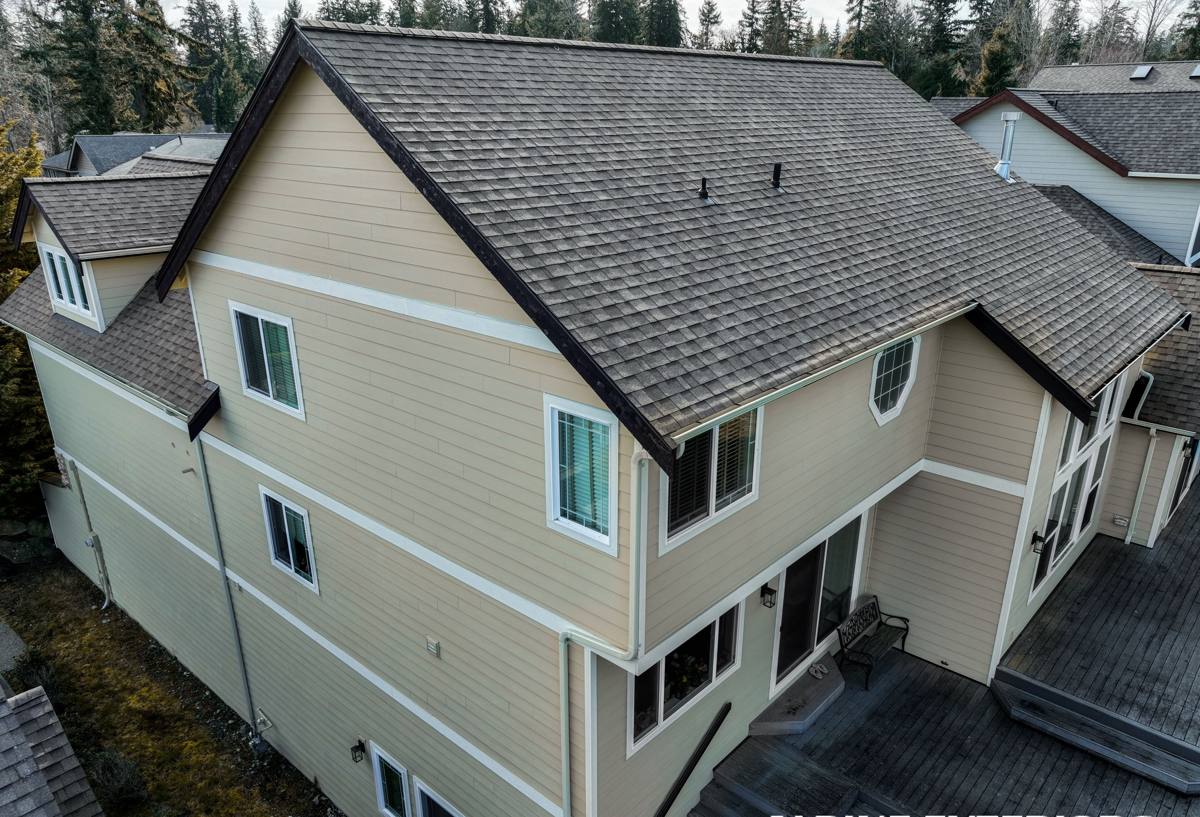
A lot of Mercer Island properties have significant tree cover, and many decks sit close to the lake or in the shadow of the house itself. That means less direct sun to dry a deck surface after rain, and more time for moisture to sit in joints, fastener heads, and anywhere debris collects. Decking that's rated for high-moisture exposure, with proper drainage built into the structure underneath, holds up noticeably better under these conditions than decking installed with dry-climate assumptions.
Moss and Organic Debris
Moss doesn't just grow on roofs. On a shaded deck with restricted airflow, moss and algae will take hold on composite boards the same way they do on any other exterior surface, especially in the grooves of grooved-edge boards where hidden fastener clips sit. Board selection, gap spacing, and substructure ventilation all affect how much moss buildup you'll actually deal with year to year.
Wind-Driven Rain
Storms crossing Lake Washington can drive rain at an angle, which pushes water into places a flat roof or level deck wouldn't normally see it — ledger connections, stair stringers, and the perimeter where the deck meets the house. Flashing and water management at these transition points matter as much as the decking material itself.
Composite vs. Wood vs. PVC: An Honest Comparison
There's no single right answer for every home, but here's how the common options actually compare for a wet, shaded King County lot like the ones common on Mercer Island.
| Material | Moisture Behavior | Maintenance | Typical Lifespan |
|---|---|---|---|
| Pressure-treated wood | Absorbs water, prone to cupping and splitting in persistent shade | Annual cleaning, periodic staining/sealing | 10-15 years before major repair |
| Capped composite | Resists moisture absorption; surface sheds water well | Periodic washing to prevent moss/algae film | 25-30 years, often with a manufacturer warranty |
| Uncapped composite | More moisture-sensitive at cut edges and fastener points | More frequent cleaning; edge sealing recommended | 15-20 years, shorter warranty coverage |
| PVC/cellular | Essentially non-absorbent | Low; occasional washing | 25+ years |
For most Mercer Island jobs, we steer homeowners toward capped composite as the baseline recommendation — it strikes a fair balance between upfront cost, appearance, and how it actually performs under long wet stretches without direct sun. We'll walk you through where PVC makes sense instead, usually on decks with very little airflow or heavy shade year-round, and where uncapped composite is a reasonable budget trade-off if you're prepared for a bit more upkeep.
What a Correct Composite Deck Installation Involves
The Substructure Comes First
The decking boards get most of the attention, but the framing underneath is what determines whether the deck lasts. That means joists spaced and rated correctly for composite's weight and flex characteristics (composite behaves differently than lumber and often needs tighter joist spacing than a wood deck would), proper ledger attachment with flashing that actually sheds water away from the house, and blocking at board ends and butt joints so nothing deflects underfoot over time.
Ventilation Underneath
On shaded, low-airflow sites — common where homes back up against trees or sit close to the water — the space under the deck needs to be able to dry out. That means grading, joist tape, and enough clearance for air movement. Skipping this step is one of the most common reasons a deck develops soft spots or persistent moss and mildew below the boards, even when the boards themselves are rated well.
Fastening and Board Layout
Hidden fastener systems keep the surface clean and reduce standing water at screw heads, but they need to be installed to the manufacturer's exact spacing and gapping tolerances — too tight and boards buckle when they expand in warm weather, too loose and you get more moss and debris collecting in the gaps. This is where a lot of the difference between a deck that looks good for two years and one that looks good for twenty actually comes from.
Moss, Drainage, and Long-Term Upkeep
Composite doesn't rot, but it isn't immune to organic growth. A few habits keep a Mercer Island deck looking good through the wet months:
- Sweep leaves and needles off the surface regularly in fall — trapped organic matter is what feeds moss and algae growth
- Rinse the deck and clear board gaps a few times a year, more often in heavy shade
- Keep gutters and downspouts near the deck clear so runoff isn't dumping extra water onto the surface
- Trim back overhanging branches where possible to let more light and air reach the deck
- Check that under-deck drainage or skirting vents haven't been blocked by landscaping or storage
- Inspect ledger flashing and stair connections annually for any signs of water intrusion
None of this is heavy labor, but skipping it is how a well-installed composite deck ends up with a moss film that's harder to remove than it would have been with routine attention.
What Drives the Cost of a Composite Deck
| Factor | Why It Matters Locally |
|---|---|
| Substructure condition | Older Mercer Island homes with existing decks may need joist or ledger repair before new decking goes down |
| Grade and drainage work | Sloped, wooded, or waterfront lots often need more site prep for proper drainage |
| Board tier (capped vs. uncapped vs. PVC) | Material cost and expected lifespan scale together |
| Railing and stair complexity | Multi-level decks and lake-view railings add labor and material |
| Access for equipment and material | Some island lots have limited access, which affects delivery and labor time |
We give a straight range once we've actually seen the site — anyone quoting a firm price over the phone for a job like this hasn't looked at your framing, your grade, or your access.
How Our Process Works
- On-site assessment. We look at the existing structure (if there is one), drainage, shade exposure, and access before recommending a material tier.
- Straightforward proposal. You get a clear scope of work and pricing, including what substructure repairs are actually needed versus optional.
- Permitting. Deck work on Mercer Island often requires a permit through the city, particularly for attached decks or anything involving structural changes — we handle that process rather than leaving it to you.
- Installation. Substructure first, then decking, railing, and stairs, with attention to the fastening and ventilation details that matter most in a wet, shaded climate.
- Final walkthrough. We go over basic care so you know what upkeep actually looks like for the specific product installed.
Why It Matters That We Already Work on Mercer Island
Mercer Island isn't like every King County suburb. Access can be tight on some lots, tree cover and slope vary block to block, and the city's permitting process has its own quirks compared to neighboring jurisdictions. A crew that's already done deck work here knows what inspectors look for, how to sequence a job around limited staging space, and which drainage details actually hold up against a full Puget Sound-area wet season rather than just looking fine on a dry install day.
That local familiarity is also why we're comfortable giving straight answers about material trade-offs instead of just upselling the most expensive board on the shelf. Composite decking is a real investment, and on a lot with heavy shade and moss pressure like a lot of Mercer Island properties have, the installation details matter as much as the product label.
Get a Straight Answer for Your Property
If you're weighing a new composite deck or replacing an aging one, we're glad to come take a look, walk the site with you, and lay out honest options for your specific lot and budget. There's no pressure and no obligation — just a straightforward assessment from a crew that already knows what Mercer Island decks are up against. Use the form below to request a free estimate.